Balancing academic commitments with professional experience is a top priority for many international students moving to Europe to pursue higher education. If you are studying in Italy on a non-EU student visa backed by a valid residence permit for study (permesso di soggiorno per motivi di studio), you are legally permitted to take on part-time employment to support your living expenses and gain valuable career exposure. However, Italian immigration and labor laws enforce strict, non-negotiable boundaries regarding how many hours you can work each week and throughout the calendar year.
Understanding the fine print of the 20-hour-per-week rule is essential to safeguarding your legal status, avoiding administrative penalties, ensuring seamless annual permit renewals, and funding your daily life during the 2026 or 2027 academic terms. In this comprehensive guide, we will break down everything you need to know about student employment thresholds, legal prerequisites, contract types, taxation, and common pitfalls to avoid.
The Core Legal Framework: 20 Hours Per Week and 1,040 Hours Per Year
Italian employment and immigration frameworks outline clear quantitative boundaries for working students to ensure that professional endeavors never overshadow academic duties.
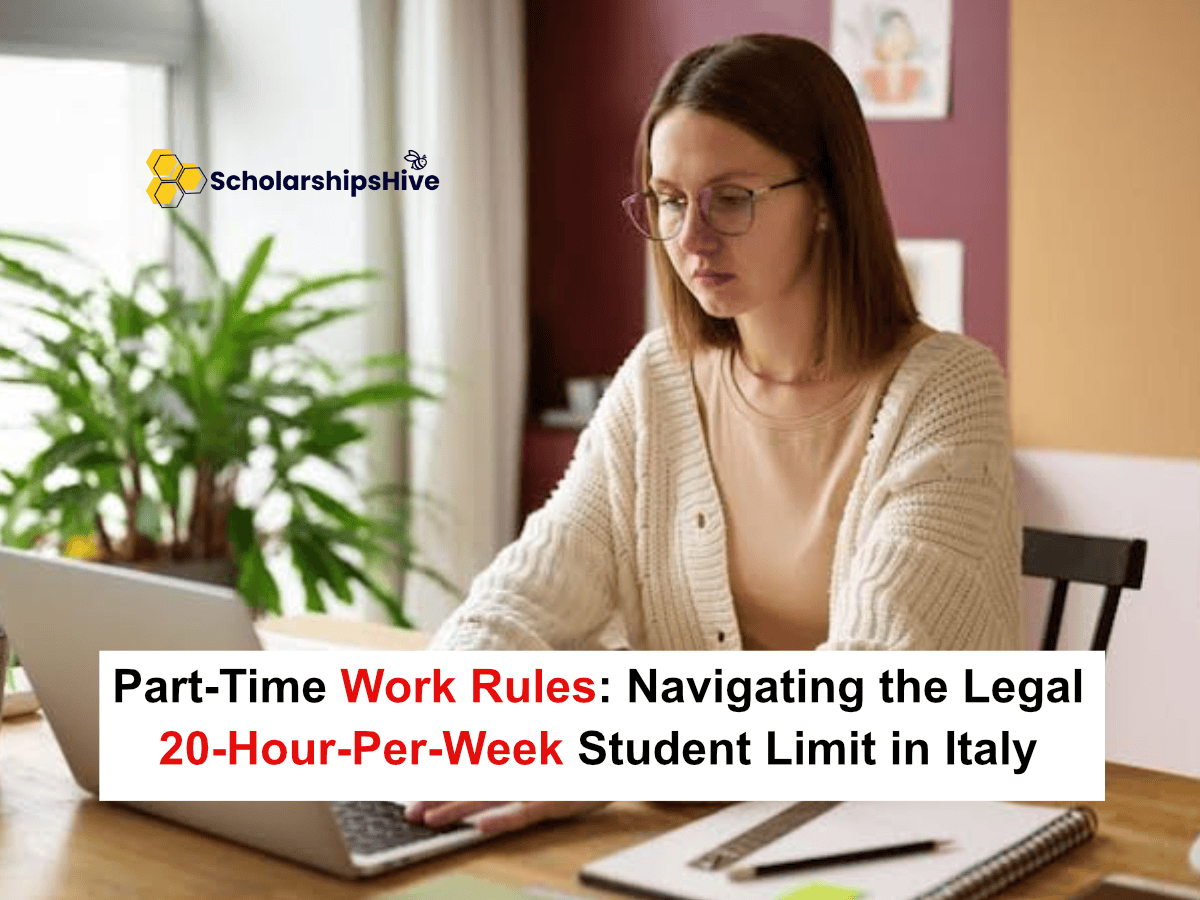
- Weekly Cap: You are legally allowed to work a maximum of 20 hours per week of paid employment under a standard student residence permit. This cap is designed to ensure your primary purpose in Italy remains academic progression and university attendance.
- Annual Cap: The law caps your total cumulative working hours at 1,040 hours per year (calculated across a 52-week period). This ensures that even if you take a few weeks off, your total volume of employment respects the yearly legislative ceiling.
- Combined Totals Across Multiple Jobs: If you hold more than one part-time job simultaneously—for instance, working as a private language tutor on the side while also handling a weekend retail shift—your total combined hours across all employers cannot exceed 20 hours in any given week. Exceeding this limit, even across multiple minor contracts, constitutes a violation of your residence permit conditions.
Check this: The Codice Fiscale: How to Generate Your Italian Tax Code for Free Online in Italy
Essential Prerequisites Before Starting Work in Italy
Before you can legally sign an employment contract, receive a formal payroll registration, or collect your first paycheck in Italy, you must secure two critical administrative elements:
- The Codice Fiscale (Tax Code): This unique 16-character alphanumeric code is mandatory for virtually every administrative procedure in Italy, including opening a local bank account, signing a residential lease, registering with the National Health Service, and entering an employer’s payroll system. You can obtain your Codice Fiscale for free from any local territorial office of the Agenzia delle Entrate (Revenue Agency) by presenting your valid passport and your residence permit or postal receipt (ricevuta postale).
- A Valid Permit to Stay (Permesso di Soggiorno): Your permesso di soggiorno per motivi di studio automatically grants you the inherent right to engage in part-time work up to the legal threshold without needing an extra work permit conversion. However, you must ensure that your permit application has been correctly filed at the post office within your initial 8 days of arrival and that you hold the official postal receipt or physical card.
You may also like this: Translating to Italian: When Do You Need an Official Legal Translation for Documents in Italy?
Navigating the Italian Job Market: Top Part-Time Roles for Students
Because of the strict 20-hour weekly limitation, international students typically target flexible jobs that align smoothly with university lecture timetables, laboratory sessions, and intensive exam preparation periods:
- Private Language Tutoring: Teaching your native language (such as English, Spanish, French, or Mandarin) or offering private academic tutoring provides highly flexible scheduling, autonomous hours, and attractive hourly rates, particularly in major university hubs like Milan, Rome, Bologna, and Padua.
- Campus Roles (Collaborazione 150 Ore): Italian public universities offer highly competitive 150-hour administrative, library, archive, or laboratory assistant contracts specifically reserved for enrolled students. These roles are integrated directly into campus life, pay reasonable stipends, and strictly respect student schedules.
- Hospitality, Tourism, and Retail: Cafes, restaurants, bookstores, boutique hotels, and retail clothing chains frequently hire students for weekend shifts, evening work, or seasonal tourism rushes. These positions offer great opportunities to practice conversational Italian while earning steady income.
Check this out: Entry Scores: Minimum SAT/TOLC Scores Required for Italian Undergraduate Funding
Common Misconceptions and Legal Pitfalls to Avoid
Navigating foreign labor laws often leads to misunderstandings that can jeopardize your legal residency. Avoid these common legal mistakes:
- “Can I work full-time during semester breaks or summer holidays?” Unlike some other European nations or North American study visa frameworks, Italian student residence permits do not automatically allow full-time work during summer or winter holiday breaks. The 20-hour weekly threshold is treated as a strict, consistent ceiling throughout the entire calendar year. Working full-time hours without a formal permit conversion is illegal and can lead to the rejection of your permit renewal.
- “Can I average out my working hours across multiple months?” The weekly cap is strictly evaluated on a week-by-week basis by labor inspectors and social security authorities (INPS). Working 30 hours one week and 10 hours the next week to “balance out” to an average of 20 hours is non-compliant. Each individual week must independently respect the 20-hour limit.
- “Can I work on a freelance basis without a VAT number (Partita IVA)?” Occasional autonomous work (lavoro occasionale) is permitted under certain financial thresholds, but habitual freelance work requires opening a Partita IVA. Most students find traditional subordinate employment (lavoro subordinato) much safer and easier to manage under student status.
Taxation, Wages, and Social Security for Student Workers
Understanding how you get paid and what deductions apply helps you budget effectively while living in Italy.
- Minimum Wage Standards: Italy does not possess a single national statutory minimum wage set by federal decree. Instead, wages are governed by National Collective Bargaining Agreements (CCNL – Contratti Collettivi Nazionali di Lavoro) specific to each commercial or professional sector. Most entry-level student jobs in hospitality, retail, or tutoring pay hourly rates ranging roughly from €7 to €12 gross per hour.
- Income Tax Obligations: If you earn income through a legal employment contract (lavoro subordinato), your earnings are subject to national income tax (IRPEF). However, Italian tax law provides generous personal income tax exemptions and deductions (effectively exempting earnings up to roughly €8,500 per year from direct taxation), meaning the vast majority of part-time students fall below or near the minimum taxable threshold. Your employer will automatically manage tax withholding via your monthly payslip (busta paga).
- Transitioning to Full-Time Work: Upon successfully completing your degree program (such as a Bachelor’s or Master’s degree), you are legally eligible to convert your student residence permit into an employment-seeking or standard work residence permit, lifting the 20-hour restriction entirely and allowing you to integrate fully into the Italian labor market.
Official Legal & Administrative Resources
To review up-to-date labor regulations, verify your documentation requirements, and stay informed on legal updates for the 2026 or 2027 cycles, consult these official portals:
- Italian Police Guidelines: Polizia di Stato Foreigner Guidance
- EU Immigration Portal: European Commission Student Guidelines for Italy
- Join our WhatsApp Channel for the latest updates on international scholarships and deadlines.
FAQs
What is the minimum wage in Italy for student jobs?
Italy does not have a single national statutory minimum wage. Instead, wages are governed by national collective bargaining agreements (CCNL – Contratti Collettivi Nazionali di Lavoro) specific to each sector. Most entry-level student jobs in hospitality or retail pay roughly €7 to €12 per hour depending on the region and the specific collective agreement applied by the employer.
Do I have to pay taxes on student income in Italy?
Yes, if you earn income through a legal employment contract (lavoro subordinato), it is subject to national tax laws. However, Italy offers baseline personal income tax exemptions (no federal income tax on earnings up to roughly €8,500 per year), meaning most part-time students working limited hours fall below or near the taxable threshold. Any minor deductions are handled transparently by your employer through your monthly payslip.
Can I transition from a student permit to a full-time work permit?
Yes. Upon successfully completing your degree program (such as a Bachelor’s or Master’s degree) at an accredited Italian university, you are legally eligible to convert your student residence permit into an employment-seeking residence permit (attesa occupazione) or a direct work permit outside quota limits, completely lifting the 20-hour restriction.
Final Thoughts and Advice From ScholarshipsHive
Final thoughts and advice from scholarshipshive: Managing part-time work while studying in Italy is an exceptional way to gain professional exposure, practice conversational Italian, build a European network, and supplement your daily living budget. For the 2026 intake, always ensure your employer registers your employment contract formally with the social security authorities and that you strictly monitor your working hours to stay safely under the 20-hour-per-week and 1,040-hour annual legislative thresholds. By respecting these legal boundaries, you protect your academic standing and ensure a smooth, stress-free residency renewal process.