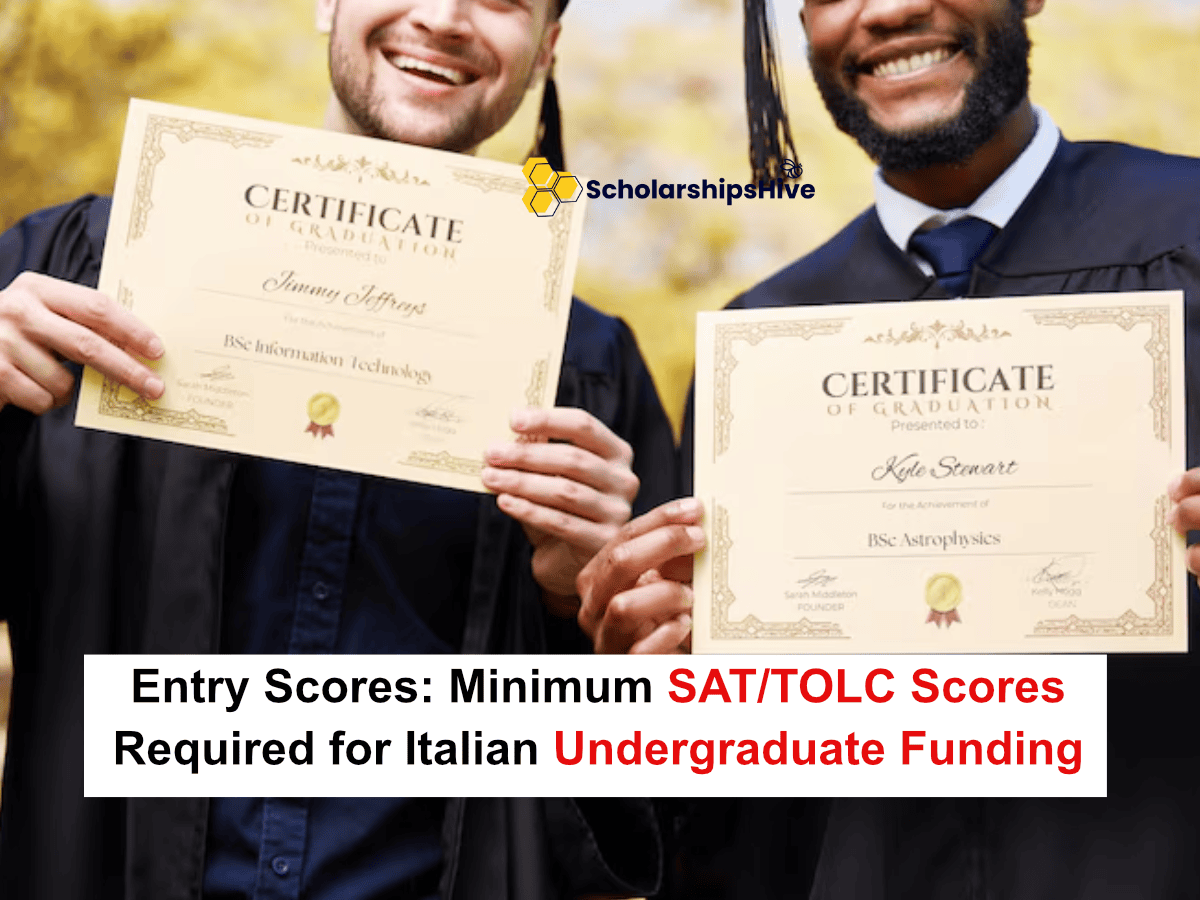
For international students aspiring to study in Italy, understanding the landscape of standardized testing is the first step toward securing a spot in a top-tier degree program. Whether you are aiming for a competitive scholarship or a merit-based admission, standardized exams like the SAT and the TOLC (Test On Line CISIA) act as the benchmark for your academic readiness.
In 2026, the Italian university system continues to prioritize merit. For many English-taught programs, these test scores are not just a prerequisite; they are a critical component of your scholarship application. This guide breaks down the requirements, score expectations, and the strategic importance of these tests for your 2026 application.
Understanding the Role of Standardized Tests
Italian universities do not apply a “one-size-fits-all” policy to admissions. Instead, the reliance on tests depends heavily on your chosen field and the institution.
The SAT (Scholastic Assessment Test)
While the SAT is a US-based examination, several prestigious Italian universities—such as Bocconi, LUISS, and various public institutions—accept or require it for international students applying to English-taught Bachelor’s degrees.
- Why it matters: It serves as a neutral metric to evaluate candidates from diverse educational systems across the globe.
- What to aim for: While there is no official “national minimum,” scores above 1300 are generally considered competitive for top-tier international programs. For highly selective institutions like Bocconi, candidates often target 1400+.
Check this: University of Trento Social Science Fellowships: PhD and Master’s Positions, Italy | Fully Funded
The TOLC (Test On Line CISIA)
The TOLC is the standard entrance exam developed by CISIA and is widely used across Italian public universities. It is specifically designed to assess foundational knowledge in disciplines like engineering, economics, and sciences.
- TOLC-E: Often required for Business and Economics.
- TOLC-I: The standard for Engineering.
- TOLC-S / TOLC-PSI: Used for Sciences and Psychology.
- What to aim for: Engineering programs often set a floor of 18–20 out of 50. However, for merit-based funding, aiming for the 80th percentile (40+) is highly recommended to stand out in the ranking.
Why Test Scores Are Critical for Funding
In Italy, the path to a “fully funded” experience is rarely just about financial need; it is largely merit-based. Universities use your entry test scores to determine who qualifies for prestigious tuition waivers and stipends.
- Merit Rankings: Most public universities generate an admission ranking list. If your score is high, you secure a seat. If your score is exceptionally high, you move to the top of the scholarship pool.
- Institutional Excellence Scholarships: Universities like Padua, Bologna, and Politecnico di Milano offer excellence scholarships that are tied directly to your pre-selection test scores or your academic profile.
- Regional DSU Scholarships: While these are primarily need-based, you must maintain a certain academic pace once enrolled to keep the funding. Having a strong entry score ensures you start your journey in a strong position.
You may also like this: University of Siena International Excellence Grants: Humanities and Culture Awards, Italy | Partially Funded
Setting Your 2026 Prep Strategy
To succeed in your application for 2026, you must treat your test preparation as a formal part of your academic portfolio.
1. Identify Your Requirement
Always verify if your specific course requires a test. Check the “Call for Applications” (often called Bando di Concorso) on your university’s website. Some programs may offer a choice between an internal university test and an external standardized score like the SAT.
2. Master the English Language Requirement
For English-taught programs, you will need a B2 level of proficiency, typically proven by IELTS (5.5+) or TOEFL (80+). Remember that a high score on the English section of the TOLC can sometimes supplement your application, but it does not replace official language certifications required for your visa.
3. The Timeline
- Preparation (3–6 months): If you are targeting a competitive score, start prep early. Utilize official CISIA practice materials for TOLC or College Board resources for the SAT.
- Registration: Register for your test as soon as dates become available for 2026. Test centers fill up quickly, especially for international sessions.
- Application: Submit your test scores through the official university portal by the deadlines. Missing a deadline for score submission usually results in immediate exclusion from the ranking.
Check this out: Invest Your Talent in Italy (IYT): Specialized Corporate-Backed Master’s Grants | Fully Funded
Common Misconceptions
- “I don’t need a test because I have good grades.” While some universities admit based on transcripts alone, competitive programs and scholarships almost always require a standardized test to differentiate between thousands of excellent international applicants.
- “I can take the test after I arrive.” For the majority of undergraduate programs, you must have your test score before you apply for pre-enrollment on the Universitaly portal.
- “All Italian universities use the same minimum score.” This is false. Each department sets its own threshold. A score that grants admission at one university might not be sufficient for a scholarship at another.
Official Scholarship Resources & Support
To ensure your 2026 application is successful, keep these official links handy:
- CISIA Portal: Register for your TOLC
- College Board: SAT Information
- Universitaly: The Official Gateway for International Students
- Join our WhatsApp Channel for the latest updates on international scholarships and deadlines.
FAQs
Is there a universal minimum SAT or TOLC score for all Italian universities?
No. There is no national minimum score set by the Italian government. Each university or specific degree program determines its own requirements. Always check the specific “Call for Applications” for your program.
Can a high TOLC score help me get a full scholarship in 2026?
Yes. While many scholarships have a need-based component, strong performance on entrance tests significantly boosts your merit profile. Many universities use these scores as a primary filter for selecting candidates for tuition fee waivers and excellence awards.
What should I do if I have not received my secondary school diploma yet?
In many cases, you can take the SAT or TOLC before obtaining your final school-leaving certificate. This allows you to include the score in your early application, which is crucial for meeting competitive deadlines for the 2026 intake.
Final Thoughts and Advice From ScholarshipsHive
Final thoughts and advice from scholarshipshive: Achieving a competitive entry score is your best investment for your future in Italy. For the 2026 intake, treat your SAT or TOLC preparation with the same intensity you bring to your high school studies. A high score not only opens doors to elite programs but often acts as the “golden ticket” to merit-based financial aid. Start your preparation early, familiarize yourself with the specific test format required for your degree, and keep your documentation organized. Your dream of studying in Italy is built on these foundational steps, and with a proactive approach, you can ensure your application stands out in a competitive field.