📲 Join our WhatsApp for Daily Fully Funded Scholarship Alerts
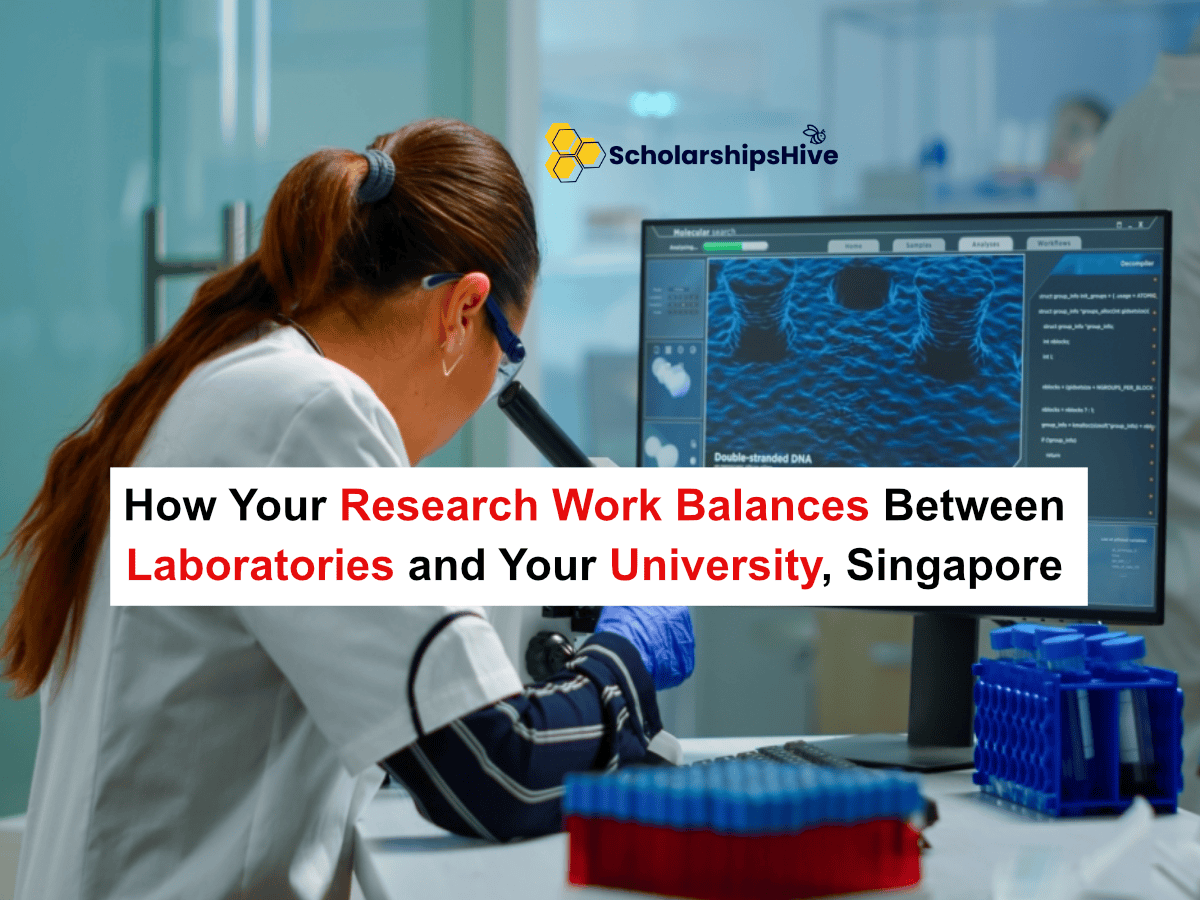
For aspiring international researchers planning to pursue a fully funded doctoral degree in Asia, understanding the operational heart of Singapore’s scientific ecosystem is crucial. When you secure the prestigious Singapore International Graduate Award (SINGA), your academic journey does not take place within a single isolated classroom. Instead, it operates through a unique, highly synergistic dual-institution framework bridging the Agency for Science, Technology and Research (A*STAR) research institutes and Tier-1 partner universities like NUS, NTU, SUTD, SMU, or SIT.
This dual setup offers the best of both worlds: access to billion-dollar, industry-grade national R&D laboratories alongside official doctoral degree accreditation from a globally elite university. This exhaustive guide breaks down how A*STAR research institutes function, how your daily schedule is balanced between cutting-edge labs and campus departments, and how to navigate this dual-mentor ecosystem successfully for the 2026 cohort.
1. Decoding the Dual Structure: A*STAR Institutes vs. Partner Universities
To understand where you will spend your time as a SINGA scholar, it is vital to distinguish between the two primary entities shaping your doctoral training:
- A*STAR Research Institutes (The R&D Powerhouses): These are autonomous public-sector research entities located primarily across iconic innovation hubs like Biopolis (specializing in biomedical and clinical sciences) and Fusionopolis (focused on physical sciences, engineering, and digital technology). This is where your core laboratory experiments, data generation, machine learning model training, or cleanroom fabrications take place, supervised by senior A*STAR scientists and principal investigators.
- The Partner Universities (The Academic Credentialers): While your bench research is conducted inside an A*STAR facility, your official PhD degree is conferred by a partner university—such as the National University of Singapore (NUS) or Nanyang Technological University (NTU). The university manages your formal coursework registration, qualifying examinations, thesis committee formations, and final doctoral graduation.
2. How Your Time and Research Work Are Balanced Day-to-Day
Balancing your time between an A*STAR research institute and a university campus requires understanding how responsibilities are distributed across the four years of your candidature:
Phase 1: The Coursework and Lab Integration Period (Months 1 to 12)
- University Campus Presence: During your initial semesters, you will spend considerable time commuting to your host university campus (NUS, NTU, SUTD, etc.) to complete rigorous graduate-level core modules and elective coursework required for your doctoral candidacy.
- Simultaneous Lab Rotations: Concurrently, you report to your assigned A*STAR research institute lab, familiarizing yourself with specialized equipment, safety protocols, and introductory literature reviews under your A*STAR supervisor.
Phase 2: Full-Time Laboratory Immersion (Months 13 to 48)
- Primary Base at A*STAR: Once your coursework requirements are fulfilled and you clear your Qualifying Examination (QE), roughly 80% to 90% of your daily schedule shifts entirely to your A*STAR research institute.
- Access to Elite Infrastructure: You will work daily alongside professional research fellows, senior engineers, and clinical collaborators, utilizing state-of-the-art facilities—ranging from high-throughput genomics sequencers and electron microscopes to advanced quantum computing clusters and cleanroom fabrication lines.
3. The Dual-Mentorship Advantage: Navigating Supervisors
A defining feature of the SINGA program is its collaborative supervision model, which provides you with unmatched guidance:
- The A*STAR Primary Supervisor: Your day-to-day mentor who oversees your experiments, manages project funding, guides your data analysis, and pushes you toward high-impact journal publications and patent applications.
- The University Co-Supervisor / Academic Advisor: Appointed by your host university department to ensure your dissertation meets all institutional academic standards, thesis formatting guidelines, and rigorous examination thresholds.
- Collaborative Synergy: This dual setup ensures that your research remains both fundamentally rigorous from an academic standpoint and commercially or technologically relevant to industry partners.
You may also like this: Medical Fitness Reports: The Specific Laboratory Checks Required for Saudi University Clearance, Saudi Arabia
4. Step-by-Step Roadmap to Thriving in the A*STAR-University Ecosystem
Navigating two distinct institutional cultures demands strategic organization. Follow this structured roadmap to maximize your productivity:
Step 1: Map Out Administrative Deadlines Early
A*STAR institutes and universities operate on slightly different academic calendars. Maintain a synchronized calendar tracking university semester registration deadlines alongside A*STAR internal milestone reviews to avoid administrative friction.
Step 2: Align Your Research Scope with Industrial Impact
A*STAR’s core mission is economic-oriented research with real-world application. Ensure your dissertation objectives balance fundamental scientific discovery with practical translational outcomes, opening doors to both academic postdocs and elite corporate R&D careers.
Step 3: Leverage Cross-Institutional Networking
Take full advantage of seminars, symposiums, and networking mixers hosted across both Biopolis/Fusionopolis and your university campus. Building relationships across both spheres expands your professional network exponentially.
Check this out: The Foreign Police Clearance Certificate: Formatting Your Local Non-Criminal Background Check in Saudi Arabia
Official Scholarship Links & Resources
- Official SINGA Portal & Guidelines: A*STAR SINGA Application Portal
- A*STAR Research Institutes Overview: A*STAR Research & Facilities Directory
- National University of Singapore Graduate School: NUS Graduate Education Portal
- Join our WhatsApp Channel for the latest updates on international scholarships and deadlines.
Frequently Asked Questions
Do I have to attend classes on the university campus while doing lab work at A*STAR?
Yes. During your first year, you will balance coursework attendance at your host university campus (such as NUS or NTU) with research training at your A*STAR institute. Once coursework is completed, your time is overwhelmingly dedicated to full-time research at A*STAR.
Who determines the specific research topic I will work on?
You select your research project during the application stage from a curated list of pre-approved projects jointly proposed by A*STAR scientists and university faculty members. Once accepted, your project roadmap is guided directly by your A*STAR primary supervisor.
Will my degree certificate explicitly mention A*STAR?
Your official doctoral degree certificate will be conferred and issued by your participating host university (e.g., NUS, NTU, SUTD, SMU, or SIT), while your training record and research credentials highlight your tenure as an elite A*STAR-SINGA scholar.
Final thoughts and advice from scholarshipshive
Navigating the dual environment of A*STAR research institutes and university departments under the SINGA scholarship is an exhilarating professional challenge. By mastering your coursework early, immersing yourself fully in world-class laboratory experimentation, and communicating proactively with your dual mentors, you position yourself at the cutting edge of global scientific innovation. Prepare your applications meticulously, embrace the collaborative research culture in Singapore, and step forward with absolute confidence toward your doctoral future!