📲 Join our WhatsApp for Daily Fully Funded Scholarship Alerts
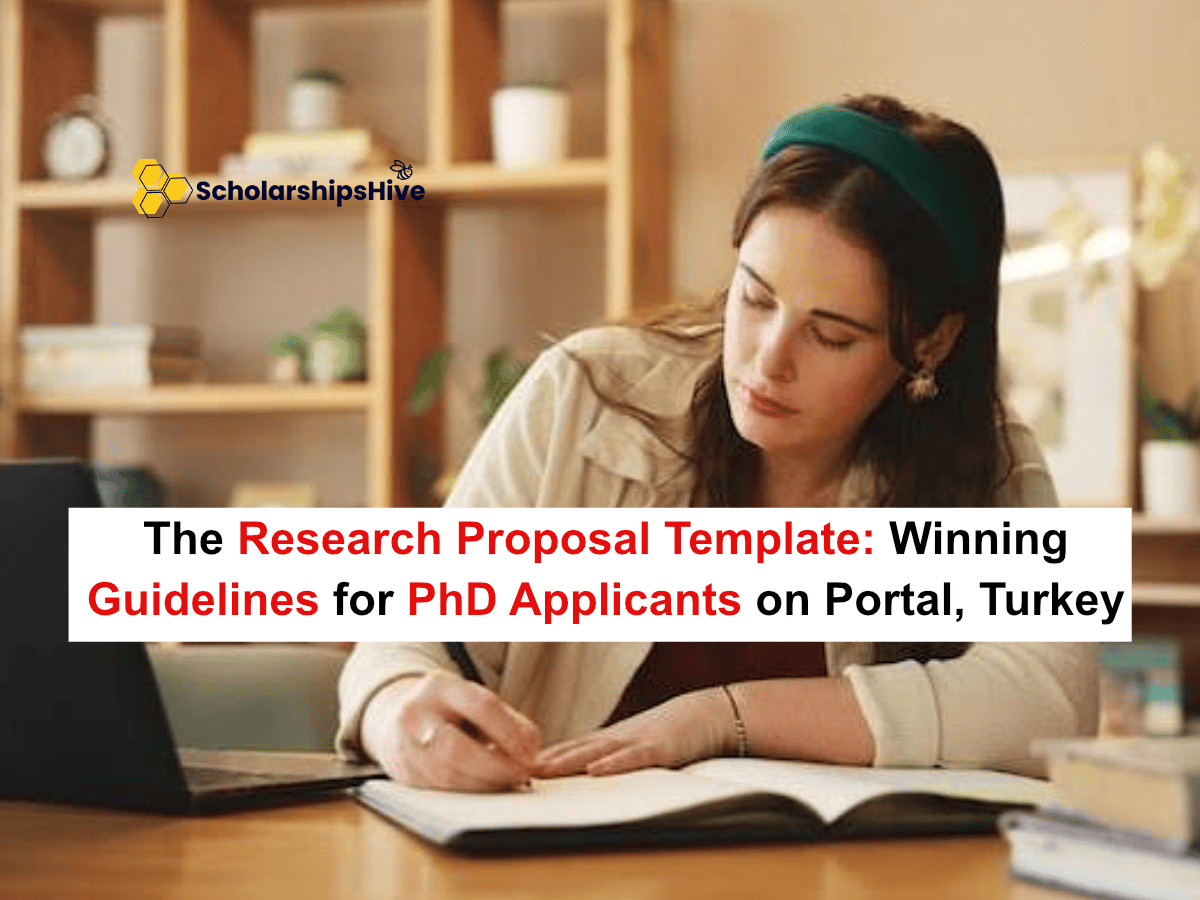
Securing admission and full financial backing for doctoral studies abroad requires much more than a stellar academic transcript. For doctoral candidates applying through the official Türkiye Scholarships Information System (TBBS) portal, the Research Proposal stands as one of the most heavily scrutinized components of the application file. While master’s applicants submit general study plans and undergraduate students rely on standard motivation letters, PhD hopefuls must demonstrate genuine academic maturity, methodological clarity, and innovative scientific potential through a tightly structured research framework.
Operating under a robust partially funded public university framework, Turkish state institutions and the Presidency for Turks Abroad and Related Communities (YTB) evaluate these proposals to measure a candidate’s capacity to execute independent, high-impact doctoral research over a three-to-four-year timeline.
This comprehensive guide details the structural anatomy of a winning PhD research proposal for the TBBS portal, provides an actionable drafting template, highlights common pitfalls to avoid, and maps out a strategic preparation timeline for 2026 and 2027.
Check this: International Relations at Ankara University: Political Science Grants for Diplomats, Turkey | Fully Funded
1. Why the Research Proposal Matters on the TBBS Portal
When evaluation committees review thousands of doctoral submissions on the TBBS platform, they look for specific indicators of research readiness:
- Demonstrating Originality: Reviewers want to see that your proposed study addresses a genuine gap in existing academic literature rather than repeating previously answered questions.
- Feasibility within Turkish Infrastructure: A strong proposal signals that your project can realistically be executed using the laboratories, library archives, or field resources available at Turkish state universities.
- Alignment with Global and National Priorities: Proposals that tie innovative scientific inquiry into broader technological, social, or economic frameworks often capture the attention of multidisciplinary selection panels.
2. Anatomy of a Winning PhD Research Proposal Template
To satisfy the expectations of YTB evaluation boards, your proposal should follow a clean, professional academic structure without experimental results or final findings:
Title Page and Working Title
- Guidelines: Keep your title concise, descriptive, and directly reflective of the core variables or phenomena you intend to investigate. Avoid overly poetic or vague phrasing.
Section 1: Introduction and Statement of the Problem
- Contextual Background: Introduce the broader academic field and establish why the topic matters globally.
- Problem Statement: Clearly identify the specific gap, contradiction, or unresolved issue in current literature that your doctoral study aims to solve.
Section 2: Research Objectives and Questions
- Primary Aim: State the overarching goal of your dissertation project in one clear paragraph.
- Specific Research Questions: Outline 3 to 4 focused secondary questions or testable hypotheses that will guide your chapters.
Section 3: Literature Review and Theoretical Framework
- Thematic Synthesis: Summarize key foundational studies and recent scholarly debates surrounding your topic.
- Theoretical Grounding: Identify the specific theories, models, or conceptual frameworks you will use to interpret your future data.
Section 4: Proposed Methodology and Research Design
- Methodological Approach: Specify whether your study relies on qualitative, quantitative, or mixed-methods frameworks.
- Data Collection Techniques: Detail how you will gather data (e.g., laboratory experiments, surveys, archival reviews, or semi-structured interviews). Mention if ethics committee approvals will be necessary.
- Data Analysis Plan: Briefly describe the statistical software, coding techniques, or textual analysis methods you plan to employ.
Section 5: Expected Outcomes and Significance
- Academic Contribution: Explain how your findings will advance theoretical knowledge or fill gaps in international literature.
- Practical Implications: Highlight how your research outputs can be applied by industries, policymakers, or institutional frameworks in Turkey and globally.
You may also like this: The KATİP Program: Special Turkish Language Scholarship for Foreign Public Officials, Turkey | Fully Funded
3. Navigating Turkey’s Partially Funded Public University Framework
Aligning your proposal with Turkey’s public higher education system enhances your placement viability:
- Leveraging State Infrastructure: Public research universities across Istanbul, Ankara, Izmir, and regional hubs feature advanced research centers and laboratories funded by state allocations. Referencing how your methodology utilizes these institutional environments demonstrates thorough planning.
- Tuition Waivers and Living Grants: Successful PhD scholars approved through the TBBS portal receive complete tuition fee waivers alongside monthly stipends, health insurance, and language training, allowing you to dedicate 100% of your energy to executing your proposed research.
4. Strategic Tips for Uploading and Formatting on the TBBS Portal
Technical presentation matters just as much as academic content when submitting files online:
- Strict File Formatting: Convert your finalized research proposal into a clean, text-selectable PDF document. Ensure standard font sizes (such as Times New Roman 12-point or Arial 11-point) with 1-inch margins and double-spacing.
- Word Count Management: While requirements vary slightly by discipline, aim for an optimal length of 1,500 to 2,500 words—providing enough depth to prove feasibility without overwhelming reviewers with unnecessary filler.
- Proofread for Absolute Clarity: Because international evaluation panels read thousands of pages, your writing must be clear, concise, and free of grammatical errors. Have an academic mentor or native English speaker review your draft before uploading.
5. Execution Roadmap for 2027 PhD Applicants
To ensure your doctoral application stands out during the competitive application cycle, follow a structured schedule:
- Refine Your Topic (Autumn): Identify a niche research area that matches your master’s thesis background and aligns with the faculty expertise available at target Turkish universities.
- Draft and Iterate (Winter): Write out your literature review, methodology, and expected outcomes systematically. Secure feedback from academic references.
- Submit via TBBS Portal (Spring 2026): Upload your completed research proposal alongside your master’s transcripts, diplomas, and reference letters well before the annual portal deadline.
Check this out: Media and Journalism Studies: Communication Tracks, Turkey | Fully Funded
Official Portals and Resources
- Official Scholarship Portal: Türkiye Scholarships Information System (TBBS)
- Higher Education Council Research Frameworks: YÖK Academic Hub
- Join our WhatsApp Channel for the latest updates on international scholarships and deadlines.
FAQs
Is a research proposal mandatory for all degree levels on the TBBS portal?
No. A research proposal is strictly required for PhD applicants. Master’s applicants submit a generalized study plan, while undergraduate applicants submit a standard motivation letter.
How long should my PhD research proposal be for Türkiye Scholarships?
An ideal research proposal ranges between 1,500 and 2,500 words, providing a comprehensive overview of your problem statement, literature review, and methodology without experimental results.
Do I need to secure an acceptance letter from a Turkish professor before submitting my proposal?
While having pre-admission correspondence or an advisor’s support letter can strengthen your file, it is not strictly mandatory for the initial TBBS online application phase, as YTB manages centralized university placements.
Final thoughts and advice From ScholarshipsHive
Drafting a compelling PhD research proposal is your definitive gateway to unlocking fully funded doctoral studies in Turkey. By focusing on originality, maintaining a rigorous methodological structure, leveraging Turkey’s partially funded public university infrastructure, and executing your submission precisely during 2026 for 2027 entry, you can secure your path toward a debt-free global academic career.