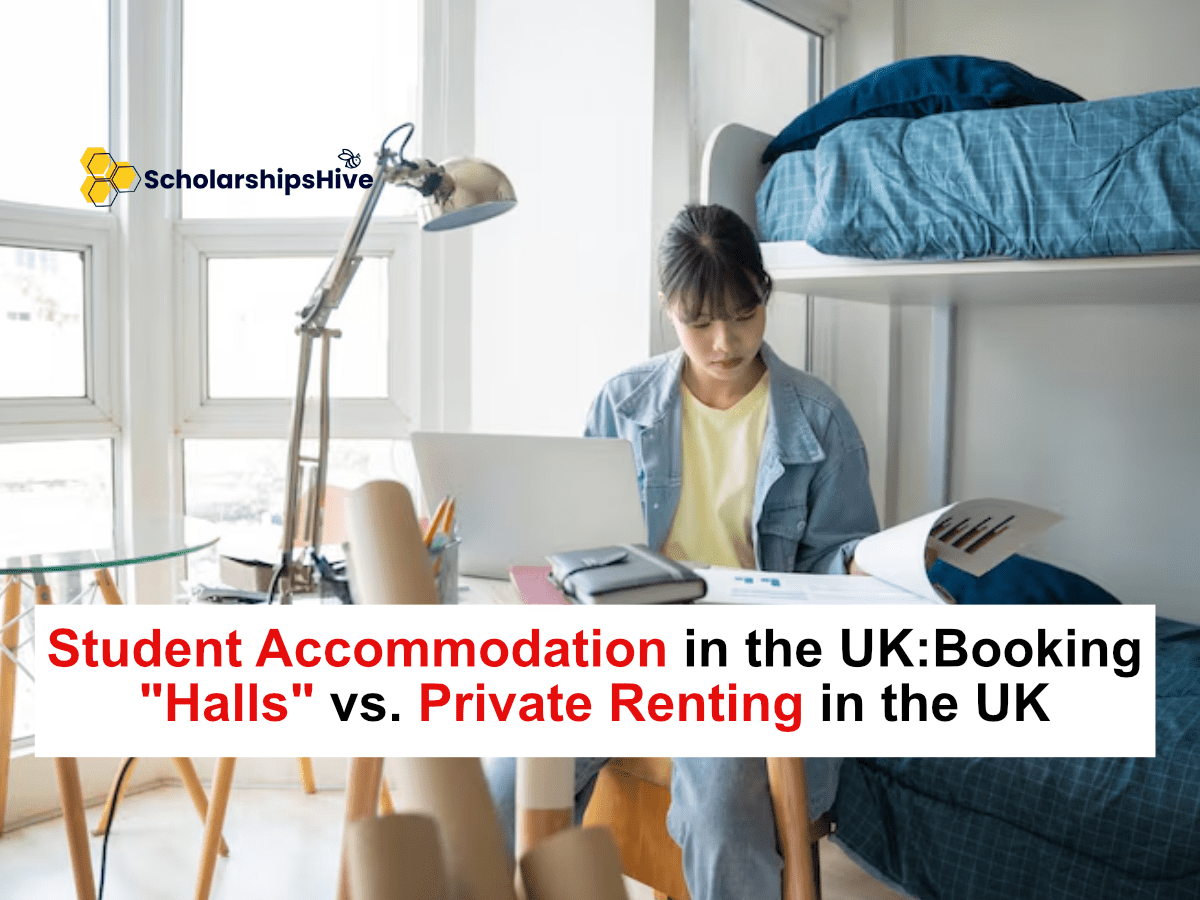
Arriving in the United Kingdom as an international student means checking off a long list of important tasks. While putting together a strong portfolio for a Fully Funded scholarship or planning out how to stretch your monthly Stipend takes up a lot of mental energy, figuring out where you are going to live is an absolute priority. Your choice of housing will affect your daily budget, how long you spend commuting to class, and your entire introduction to British life.
The UK student housing market generally splits down the middle: university-managed Halls of Residence versus the Private Renting sector (which includes shared student houses or Purpose-Built Student Accommodation, known as PBSAs). Each route has completely different rules regarding upfront costs, utility bills, and legal contract lengths. As you plan your arrival for the 2026 and 2027 intake cycles, understanding these differences will protect your budget from costly surprises.
The Core Comparison: Halls vs. Private Properties
Choosing between university housing and a private landlord is about balancing upfront costs against personal independence.
| Operational Metrics | University Halls of Residence | Private Shared Student Houses (HMOs) | Private Purpose-Built Student Accommodation (PBSA) |
|---|---|---|---|
| Average Cost Structure | £120 to £220/week outside London (£160 to £300+ in London). | £90 to £160/week outside London (£150 to £250+ in London). | £150 to £250/week outside London (£250 to £400+ in London). |
| Utility Bills & Wi-Fi | 100% all-inclusive within the rent. | Often excluded (split among housemates monthly). | 100% all-inclusive within the premium rate. |
| Typical Contract Length | 39 to 42 weeks (matches the undergraduate academic year). | 48 to 52 weeks (requires paying over summer months). | 44 to 51 weeks (fixed calendar timelines). |
| UK Guarantor Demanded | No; open directly to international students. | Yes; requires a UK resident guarantor or 6 to 12 months’ rent upfront. | Yes; though many accept third-party corporate guarantors. |
Check this: Graduate Route Visa: Stay for 2 Years After Your Degree in the UK
University Halls of Residence: The Low-Friction Entry
University-owned halls are the traditional landing spot for international students, and many institutions prioritize or guarantee spaces for foreign arrivals in their first year.
The All-Inclusive Budgeting Safety Net
The single biggest advantage of university halls is simplicity. Your weekly rent covers electricity, gas, water, high-speed campus internet, and basic content insurance. For students arriving from abroad with no local credit history or experience dealing with British utility companies (like British Gas or Octopus Energy), this takes away a massive amount of moving stress.
Zero Guarantor Boundaries
When you rent via the university registry, you do not need to show a UK-based financial guarantor. The university already holds your academic records and deposit, which bypasses the strict financial background checks that private real estate agencies run.
You may also like this: Scholarships for January Intake: Don’t Wait for September!
Private Renting: Shared Student Houses & Flats
Moving into a private shared house (often called a House in Multiple Occupation, or HMO) or an independent studio apartment is highly popular among postgraduate Master’s students, couples, and returning second-year cohorts.
The Hidden Cost of Setup and Split Bills
While a room in a private house might show a lower baseline weekly rent than university halls, you must calculate the extra operational expenses. You will need to set up individual accounts for utilities, internet, and sometimes water.
The Council Tax Exemption Check: Full-time international students are completely exempt from paying British Council Tax. However, if you live in a private house and even one housemate is working a part-time job or studying part-time, the local council will issue a property bill. You must submit your official university student enrollment certificate to your local council portal immediately after moving in to secure your individual exemption exemption.
Navigating the UK Guarantor Hurdle
Because private landlords do not know your international background, they will almost always demand a UK Guarantor—a permanent British citizen who legally agrees to pay your rent if you default. If you cannot provide a local guarantor, private landlords routinely demand that international students pay 6 to 12 months of rent completely upfront before handing over the keys.
The Strategic Accommodation Booking Sequence
To secure the safest, most budget-friendly living space before arriving at the airport, organize your housing hunt using this sequence:
1.Determine Your True Maximum Monthly Living Budget:
Calculate how much of your savings or stipend can safely go toward housing, keeping in mind that London accommodation runs 60-65% more expensive than northern hubs.
2.Explore University-Managed Options and Guarantee Deadlines First:
Even if you lean toward private apartments, apply for university halls early to establish a reliable, bill-inclusive backup space.
3.Research Vetted Private Listings If Choosing the Independent Housing Route:
Only browse through secure, university-approved portals (like StudentPad or Unipol) to ensure the landlord is fully registered and compliant with local housing standards.
4.Read the Full Tenancy Agreement and Secure Your Deposit Token:
Ensure your rental deposit is safely placed into a government-backed scheme (like the DPS) and verify your exact check-in date matches your travel plans.
Check this out: How to Write a Personal Statement: The “UCAS” vs. “Master’s” Format in the UK
Official Housing Directories and Regulatory Resources
Official Unipol National Student Code Directory — The primary regulatory compliance body used to verify that your student accommodation provider operates under strict safety and management codes.
Official GOV.UK Tenant Deposit Protection Guide — The official statutory Home Office portal explaining your legal rights regarding security deposits and the mandatory protection schemes landlords must use.
Join our official WhatsApp Channel to get instant alerts on upcoming UK research deadlines and step-by-step proposal tips.
Frequently Asked Questions
What is a PBSA and how does it differ from standard university halls?
A Purpose-Built Student Accommodation (PBSA) is a large, modern building designed specifically for students but owned and managed by private corporations (such as Unite Students or iQ) rather than a university. They offer similar benefits to university halls—like all-inclusive utility bills and 24/7 security—but usually feature premium amenities like private on-site gyms, cinema rooms, and study lounges, which comes with a higher weekly price tag.
Can international students live off-campus in a private house during their first year?
Yes, you are completely free to live off-campus in a private house right from your first day in the UK. There is no legal rule forcing you to stay in university halls. However, navigating private contracts, dealing with utility setups, and arranging upfront rent payments can be incredibly challenging while you are still settling into a new country, which is why most arrivals prefer halls for their first year.
What happens to my security deposit after I sign a private rental contract?
By British law, your landlord or rental agency cannot simply hold your deposit cash in their personal bank account. They are legally required to place your funds into an official, government-backed Tenancy Deposit Protection (TDP) scheme within 30 days of receiving it. This ensures you get your money back safely at the end of your stay, provided the property is left clean and free of damage.
Final Thoughts & Advice by Scholarships Hive
Choosing the right accommodation is all about finding the right balance between cost, convenience, and how you like to live. If you are moving to the UK for the first time, opting for university-managed halls or an all-inclusive PBSA is usually the wisest choice. It takes away the headache of setting up utility accounts, offers built-in social circles to meet fellow students, and keeps your monthly budgeting incredibly predictable. If you prefer the independence of a private house or apartment, just make sure to start your search early, double-check your contract lengths, and verify that your deposit is legally protected. Take your time, budget carefully, and we wish you a wonderful and highly successful move to your new student home in the United Kingdom!