
Part-Time Work Restrictions: Navigating the Legal Work Limits for Foreign Students in Turkey 2026
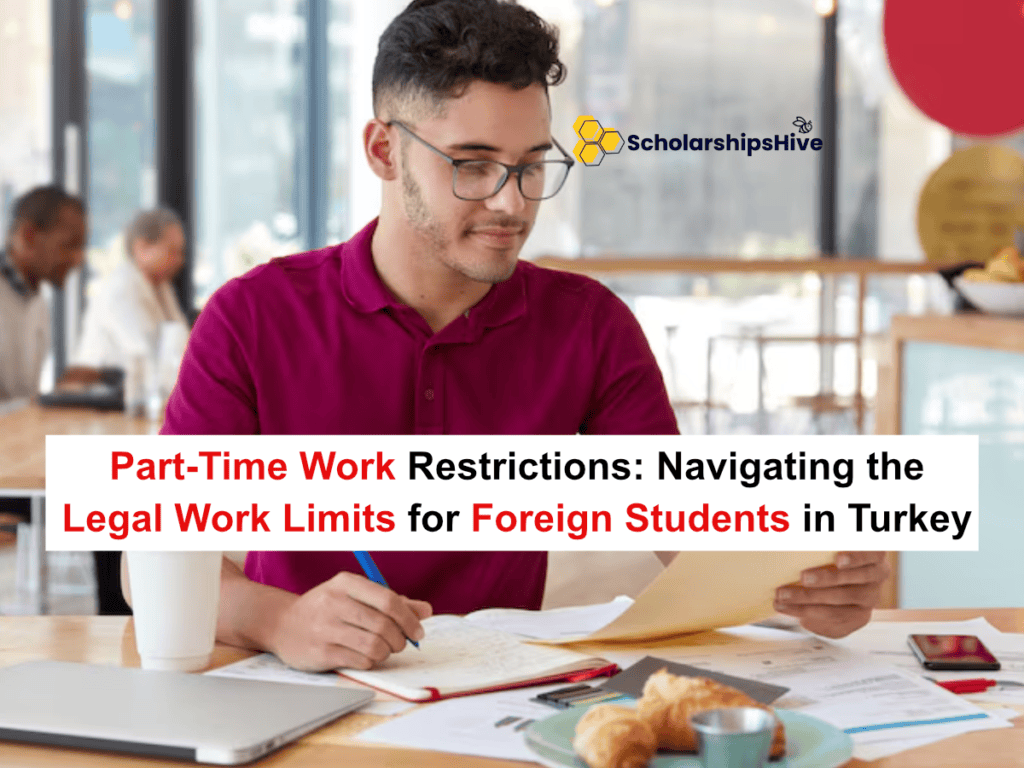
For international students navigating higher education abroad, balancing living expenses and gaining practical career experience through part-time employment is a vital priority. When studying in Turkey—particularly under institutional frameworks like the globally recognized Türkiye Scholarships (TBBS) program or standard self-funded tracks—understanding the legal boundaries governing foreign labor is essential.
While Turkey offers an accessible economic environment and diverse professional hubs, its regulatory framework strictly controls how, when, and for how long international students can work. Operating outside these boundaries carries severe legal penalties.
This comprehensive guide breaks down undergraduate versus graduate timelines, weekly hour caps, the official work permit application workflow, and practical compliance strategies for 2026 and 2027.
1. The Legal Framework: Undergraduate vs. Graduate Timelines
Turkey’s labor laws—governed by Law No. 6735 on International Labour Force—distinguish strictly between degree levels to ensure that employment never compromises a student’s primary educational purpose:
www.study-abroad.org
- Undergraduate Students (Associate & Bachelor’s): First-year undergraduate students are legally restricted from working during their initial academic year. You must successfully complete your first full academic year before you become eligible to apply for a formal part-time work permit. This buffer period allows students to adapt to cultural shifts, master foundational TÖMER language courses, and stabilize their grades.
- Graduate Students (Master’s & PhD): Graduate scholars enjoy a much faster timeline. Master’s and doctoral candidates can apply for a formal work permit starting from their first semester of enrollment. This accommodates advanced research assistantships, university-backed academic projects, and specialized professional placements.
Check this: Dokuz Eylül University: Business, Maritime and Tech Scholarship Tracks, Turkey | Partially Funded
2. Working Hour Caps: Term Time vs. Official Holidays
To safeguard academic performance, the Ministry of Labour and Social Security enforces strict limits on active working hours:
- During Active Semesters: Regardless of your degree level, international student work permits cap employment at a maximum of approximately 24 hours per week during active academic terms. Exceeding these hours or failing to maintain satisfactory academic progress can lead to the revocation of both your work permit and your student residence permit.
- During Official University Holidays: When semesters conclude for official summer or winter breaks, student work caps expand significantly. With a valid active work permit, international students are legally permitted to transition to full-time employment during official university holiday windows.
3. The Official Work Permit Application Process
In Turkey, international students cannot apply for a work permit independently. The legal mechanism requires employer sponsorship:
- Secure a Job Offer: Find a registered Turkish employer or university department willing to hire you and sponsor your legal paperwork.
- Employer Portal Submission: The employer must initiate the application through the official e-Government (e-Devlet) automation system managed by the Ministry of Labour. Required files include your valid passport, active student residence permit, university enrollment certificate, and formal job description.
- Digital Approval: The Ministry evaluates the application within a window of 30 to 45 days. Once approved, a digital work permit is generated, which often acts in tandem with or replaces standard residency identification requirements.
You may also like this: Boğaziçi University Scholarship: English Proficiency Rules and Academic Admission Criteria, Turkey | Partially Funded
4. On-Campus Employment and Special Exemptions
Navigating employment is often streamlined if you look inward at your own academic institution:
- University-Affiliated Roles: Working on campus—such as assisting in university libraries, language centers, administrative offices, or professor-led research initiatives—often features simplified institutional paperwork handled directly by university international offices.
- Mandatory vs. Voluntary Internships: If an internship is a mandatory graduation requirement for your degree curriculum, it operates under simplified university-coordinated rules. Voluntary internships outside the curriculum require standard work permits and must respect standard part-time limitations. By law, formal interns must receive at least 30% of the gross national minimum wage.
5. Risks of Informal Work and Strategic Compliance Tips
Engaging in informal, cash-in-hand “under-the-table” work (such as uncontracted cafe work or informal private tutoring) carries severe legal risks in Turkey:
- Legal Sanctions: Working without a formal permit violates immigration laws. If discovered by authorities, it can result in heavy daily administrative fines, the immediate cancellation of your student residence permit, official deportation proceedings, and a temporary re-entry ban.
- Protecting Your Status: Always ensure your employer registers your hours, pays proportional wages relative to the national minimum wage standards, and contributes to social security (SGK) if your income meets mandatory thresholds.
Check this out: Middle East Technical University (METU) Scholarship: Campus Guide and Scholarship Rules, Turkey | Partially Funded
Official Portals and Resources
- Ministry of Labour & Social Security: Türkiye e-Permit Portal
- Official Higher Education Framework: YÖK Student Affairs Directorate
- Join our WhatsApp Channel for the latest updates on international scholarships and deadlines.
FAQs
Can undergraduate students work during their first year in Turkey?
No. Turkish law strictly prohibits first-year undergraduate students from obtaining a work permit, requiring them to complete their initial academic year first.
What is the maximum number of hours an international student can work per week?
During active semester periods, international students are restricted to a maximum of approximately 24 hours of work per week.
Can I apply for a Turkish work permit on my own?
No. The work permit application must be submitted by your prospective employer through the official state e-Government portal.
Final thoughts and advice From ScholarshipsHive
Balancing part-time work with demanding higher education schedules in Turkey requires strict adherence to legal hour caps and formal permit procedures. By respecting undergraduate waiting periods, utilizing university-backed positions, securing proper employer sponsorship, and planning your career milestones strategically during 2026 for 2027 entry, you can gain valuable professional experience safely and legally.
Similar scholarships
 Alumni Network (TÜMED): How the Scholarship Keeps You Connected to Turkish Trade After Graduation, Turkey 2026
 Bringing Your Family: Can a Spouse Join You on a Turkish Student Visa Dependent Path? 2026
 Post-Graduation Careers: Finding a Corporate Job or Continuing to a PhD in Turkey 2026
 The “Istanbul Cliché” Red Flag: What NOT to Say During Your Panel Interview in Turkey 2026
 Opening a Ziraat Bank Account: Managing Your Monthly Scholarship Payments in Turkey 2026
 Cost of Living in Turkey: Istanbul and Ankara vs. Affordable Cities Like Konya or Erzurum 2026