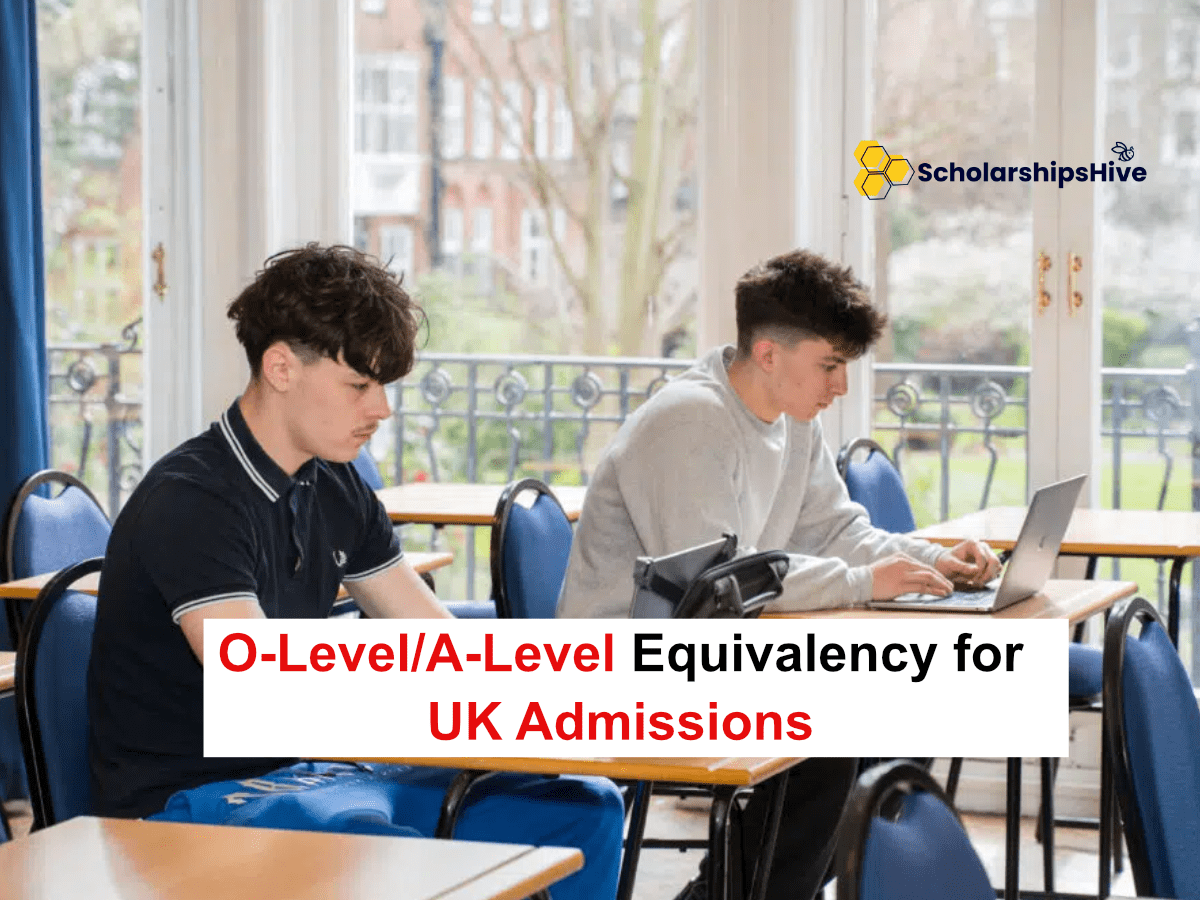
Navigating the transition from the British curriculum (Cambridge IGCSE, O-Level, and A-Level) into the higher education landscape of Pakistan involves checking off several strict academic milestones. While many international applicants focus on checking off their Application Process, maintaining a competitive merit standing, or projecting future financing paths, local students face a unique bureaucratic requirement: converting their British letter grades into local marks.
The Inter Boards Coordination Commission (IBCC) enforces this conversion process with absolute authority. Whether you are aiming for a top-tier business program, an engineering track, or a highly competitive medical admission, you cannot submit your raw Cambridge certificates directly to local university registries. To secure a seat for the 2026 and 2027 academic terms, you must translate your O and A Level achievements into the equivalent Secondary School Certificate (SSC) and Higher Secondary School Certificate (HSSC) metrics. Let’s break down exactly how this metric system works, the compulsory subjects you must pass, and how to protect your final aggregate score.
The Official IBCC Grade Conversion Architecture
The IBCC does not use a direct percentage calculation based on individual raw exam marks. Instead, they apply a standardized conversion matrix that maps each Cambridge letter grade directly to a fixed numerical value out of 100.
Check this: Graduate Route Visa: Stay for 2 Years After Your Degree in the UK
The Grade-to-Marks Mapping Grid
| Cambridge Letter Grade Achieved | Assigned IBCC Internal Marks (Out of 100) | National Academic Performance Rating |
|---|---|---|
| A* | 90+ (Subject-specific variance based on session percentile) | Outstanding |
| A | 85 | Excellent |
| B | 75 | Good |
| C | 65 | Satisfactory |
| D | 55 | Acceptable |
| E | 45 | Minimum Passing Threshold |
| F / G / U | 0 (Automatically rejected for equivalency calculation) | Non-Equating |
Compulsory Subject Demands for Local Equivalency
The IBCC categorizes applicants based on where they sat their examinations. If you are a Pakistani national completing your studies within local borders, your subject portfolio must fulfill strict structural mandates.
The 8-Subject O-Level Rule (SSC Equivalence)
To secure a full SSC equivalence certificate, you must present a minimum of 8 distinct O-Level/IGCSE subjects. This list must include 5 non-negotiable compulsory subjects alongside 3 academic electives:
- The 5 Compulsory Anchors: English Language, Mathematics, Urdu, Islamiyat, and Pakistan Studies.
- The Exemption Boundary: If you hold a dual nationality or completed both your O and A Levels entirely outside Pakistan, you are legally exempt from the Urdu, Islamiyat, and Pakistan Studies requirement. However, if you sit even a single exam paper locally, these three subjects become entirely mandatory.
The 3-Subject A-Level Rule (HSSC Equivalence)
Once your 8 O-Level blocks are cleared, your HSSC intermediate equivalent is determined by passing a minimum of 3 principal A-Level subjects with a grade of E or above. Your choices here must match your targeted university major stream:
- Pre-Medical Stream: A-Level Physics, Chemistry, and Biology.
- Pre-Engineering Stream: A-Level Physics, Chemistry, and Mathematics.
- Computer Science Stream: A-Level Physics, Mathematics, and Computer Science.
You may also like this: Scholarships for January Intake: Don’t Wait for September!
The Step-by-Step Equivalency Procurement Sequence
To secure your official, hologram-protected equivalence credentials from the IBCC without hitting last-minute application delays, organize your filing timeline using this precise sequence:
1.Compile and Organize Your Complete Academic and Identity Documentation:
Ensure you have pristine photocopies of all academic papers, as the IBCC requires two full, attested backup sets alongside your original documents.
2.Execute the Online Registration and Data Entry Protocol:
Double-check that the spelling of your name matches your passport and national identity records precisely to prevent printing errors.
3.Process the Non-Refundable Document Verification and Equivalency Fees:
Keep your stamped customer copy of the deposit receipt safe, as you will need to present this physical token to track your application status.
4.Submit the Physical Verification Packet for Final Security Screening:
The evaluation team will verify the authenticity of your Cambridge certificates against regional board databases before stamping your final equivalence score.
How the Conversion Formula Impacts Your Aggregate
The total scaling math used by the IBCC adjusts your cumulative score to match Pakistan’s 1100-mark intermediate framework. The calculation formula aggregates your performance across both blocks:
Combined Equivalence=(Total Number of Evaluated Subjects×100Sum of O-Level Marks+Sum of A-Level Marks)×1100
The Merit Reality Check: Because a perfect A* grade converts to a maximum of 90-94 marks rather than a full 100, international system students automatically experience a slight structural markdown when compared to local board Matriculation/FSc students who frequently secure 95%+ raw scores. This makes achieving high marks in university entry tests (like the NET, ECAT, or MDCAT) absolutely critical to safeguarding your final admission merit placement.
Check this out: How to Write a Personal Statement: The “UCAS” vs. “Master’s” Format in the UK
Official Portals and Institutional Resource Links
Official Inter Boards Coordination Commission (IBCC) Web Portal — The primary national regulatory platform used to initiate equivalence applications, verify subject requirements, and track live application processing.
Official Cambridge Assessment International Education (CAIE) Pakistan Hub — The primary source network used to request official duplicate statements of results or verify seasonal grading milestones.
Join our official WhatsApp Channel to get instant alerts on upcoming UK research deadlines and step-by-step proposal tips.
Frequently Asked Questions
Can I apply for university admission using a provisional or estimated IBCC calculation?
Yes, the vast majority of local universities allow you to submit a provisional application using a self-calculated estimate or a temporary “Hope Certificate” issued by your school principal while your final A-Level results are pending. However, your admission will remain strictly conditional until you present your final, official IBCC equivalence certificate before the university’s final verification deadline.
What happens if I took more than 8 O-Level subjects? Will my extra subjects be counted?
If you took more than the mandatory 8 subjects, the IBCC calculation team will automatically select your 5 compulsory subjects first, and then pick your 3 highest-performing elective subjects to calculate your final conversion score. The lower grades in any remaining extra subjects are completely disregarded, ensuring your final equivalence percentage remains as high as possible.
Is it possible to claim an equivalence certificate if I have an E grade in an A-Level subject?
Yes, an E grade is legally recognized as the minimum passing threshold by Cambridge International Examinations, and the IBCC accepts it for equivalence, mapping it directly to 45 marks. However, while it keeps your application eligible, an E grade will heavily drag down your overall cumulative percentage, which can hurt your chances of getting into highly competitive public sector universities.
Final Thoughts & Advice by Scholarships Hive
Navigating the IBCC equivalence framework is a mandatory step that requires early planning and attention to detail. The key to a smooth conversion process is keeping your documents organized and understanding the subject requirements well in advance. Do not leave your application until the final weeks before your target university portal closes, as regional processing queues can lengthen significantly during peak result seasons. Ensure your compulsory blocks are fully cleared, calculate your estimated aggregates early to manage your academic expectations, and prepare thoroughly for your institutional entry exams. We wish you the absolute highest success as you convert your international credentials and take your next major step toward university life!