📲 Join our WhatsApp for Daily Fully Funded Scholarship Alerts
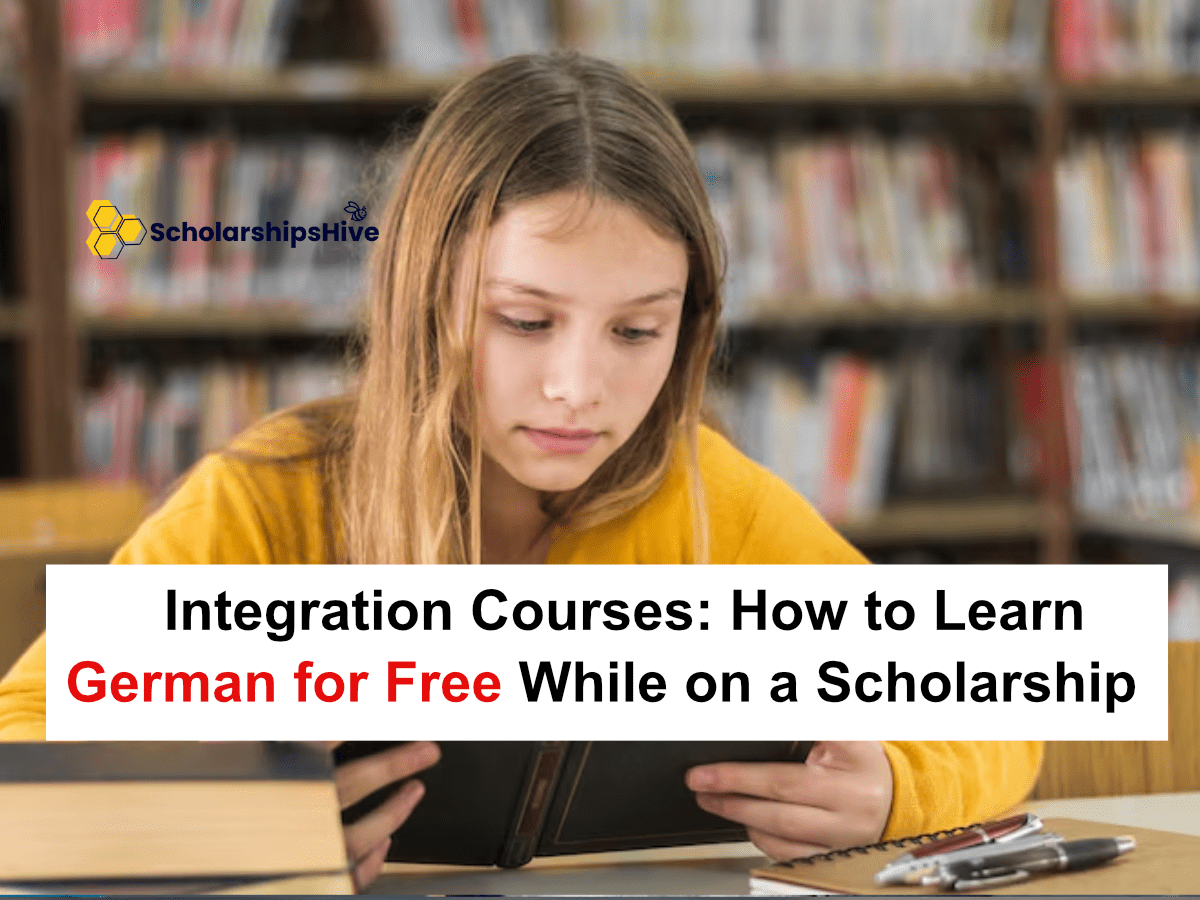
Mastering the local language is the most powerful tool for academic integration, cultural immersion, and long-term career growth in Germany. While private language schools can cost thousands of euros, the German Federal Government heavily subsidizes a comprehensive learning framework known as the Integration Course (Integrationskurs).
Managed directly by the Federal Office for Migration and Refugees (BAMF), this national curriculum is designed to take newcomers from absolute beginners up to an independent B1 language proficiency level. Best of all, if you are currently living in Germany on a modest student or research scholarship, you can structurally navigate the system to waive your personal fees entirely.
The Structure of an Integration Course
An integration course is far more comprehensive than standard conversational language workshops. It spans a total of 700 teaching units (hours) divided into two distinct academic components:
- The Language Component (600 Hours): Divided into 6 progressive blocks of 100 hours each (spanning levels A1 to B1). This focuses on reading, writing, and speaking for daily life, interacting with local authorities, and professional career networking.
- The Orientation Component (100 Hours): The final block of the course, which focuses exclusively on German history, culture, legal frameworks, and essential democratic civic values.
The course concludes with two mandatory, fully funded federal examinations: the Deutsch-Test für Zuwanderer (DTZ) to certify your B1 language level, and the Life in Germany (Leben in Deutschland) test. Passing both awards you the official Zertifikat Integrationskurs, which unlocks fast-tracked permanent residency pathways later.
Understanding the Costs and the “Scholarship Hardship” Loophole
Normally, participants who are not receiving core citizen social benefits (Bürgergeld) must pay a co-payment of €2.29 per teaching unit, totaling €1,603 for the entire 700-hour course.
However, under BAMF administrative guidelines, you can apply for a Full Cost Exemption (Befreiung vom Kostenbeitrag) if paying the fee presents an unreasonable financial or personal hardship based on your current budget.
How Scholars Qualify: If your net monthly scholarship stipend matches or sits near the baseline cost-of-living index, BAMF case workers frequently classify this as financial need. Alternatively, if your lower income has already qualified you for municipal Housing Benefit (Wohngeld) or an exemption from the national Broadcasting Fee (Rundfunkbeitrag), providing that proof guarantees your admission into the course 100% free of charge.
Check this: Health Insurance: TK vs. AOK for International Students in Germany
The Application and Exemption Sequence
You do not need to wait for a formal invitation from the immigration authorities to begin. As a scholarship holder, you can proactively request entry and cost waivers concurrently by following this path:
1.Complete the Application for Course Admission:
Download and fill out the official application for permission to attend an integration course. Ensure your personal data strictly matches your passport spelling.
2.Apply Concurrently for the Full Cost Exemption:
Complete the fee waiver request form. Attach printed copies of your official scholarship award letter, your current bank statements, your apartment rental lease contract, and your address registration (Meldebescheinigung).
3.Receive Your Eligibility Certificate (Berechtigungsschein):
The BAMF regional branch will review your financial records. Once approved, they will mail you an official certificate of eligibility (Berechtigungsschein) which formally states your 100% cost waiver.
4.Register with a Local Approved Language School:
Locate an authorized local course provider (Kursträger) like the Volkshochschule (VHS). Hand them your physical eligibility paper. They will administer a free placement test to ensure you start at the correct block.
You may also like this: Step-by-Step: German Student Visa Process from Pakistan
The 50% Reimbursement Reward Strategy
If your scholarship stipend is deemed too high to qualify for the initial emergency hardship waiver, you should still enroll immediately. Germany rewards academic success through a unique financial refund rule:
If you complete the entire course itinerary and successfully pass both the B1 language exam and the orientation test within 2 years of your initial eligibility certificate issue date, you are legally entitled to apply for a 50% cash refund of all the personal contributions you paid. You simply fill out the short Antrag auf Rückerstattung des Kostenbeitrags form and mail it to BAMF alongside copies of your certificates to receive roughly €800 of your money back.
Check this out: Fintiba vs. Expatrio: Which Blocked Account is Better for Pakistanis in Germany?
Official Portals and Resource Links
BAMF Central Portal: Integration Course Cost Overview — Read the complete national breakdown of baseline hourly fees, exceptions, and eligibility rules.
BAMF-NAvI National Search Tool Engine — The interactive map database to locate approved schools, upcoming course schedules, and specialized evening modules in your city.
Join our WhatsApp Channel for the latest updates on international scholarships and deadlines.
Frequently Asked Questions (FAQs)
Can I attend an integration course part-time while studying or working on a scholarship?
Yes. While standard courses are intensive (running 4 to 5 hours every morning or afternoon), many authorized schools offer specialized Evening Courses (Abendkurse) or weekend configurations. These modules proceed at a slower weekly pace but cover the exact same 700-hour federal material, allowing you to maintain your university laboratory or research hours during the day.
What happens if I fail the B1 language exam at the end of the course?
Under recent BAMF structural regulations, the automatic 300-hour funded retake extension for general integration courses has been restricted. If you do not reach B1 on your first try, you can still live with your partial A2 result or continue learning independently. For fully funded additional blocks, you must apply to transition into a specialized Vocational Language Course (Berufssprachkurs) through the job center or pass strict administrative hardship reviews.
Can I change language schools mid-course if I relocate to another city?
Yes. Your eligibility certificate is valid nationwide across Germany. If you have to move for a new university semester or a research placement, request a formal transfer confirmation statement from your current school showing exactly how many modules you completed. You can then hand this to any authorized provider in your new city to resume your training from the exact same block.
Final thoughts and advice from scholarshipshive
Navigating the BAMF integration course framework is one of the smartest investments you can make while living in Germany on a scholarship. Do not let the initial paperwork deter you—the system is highly structured, and case workers routinely process fee waivers for international researchers and academic scholars. Learning German up to B1 level not only simplifies your everyday encounters at the local supermarket or Bürgeramt, but also drastically enhances your post-graduation prospects should you decide to transition onto a German work visa. Take it one module at a time, stay consistent with your evening reviews, and make the most of this heavily subsidized language pathway!