📲 Join our WhatsApp for Daily Fully Funded Scholarship Alerts
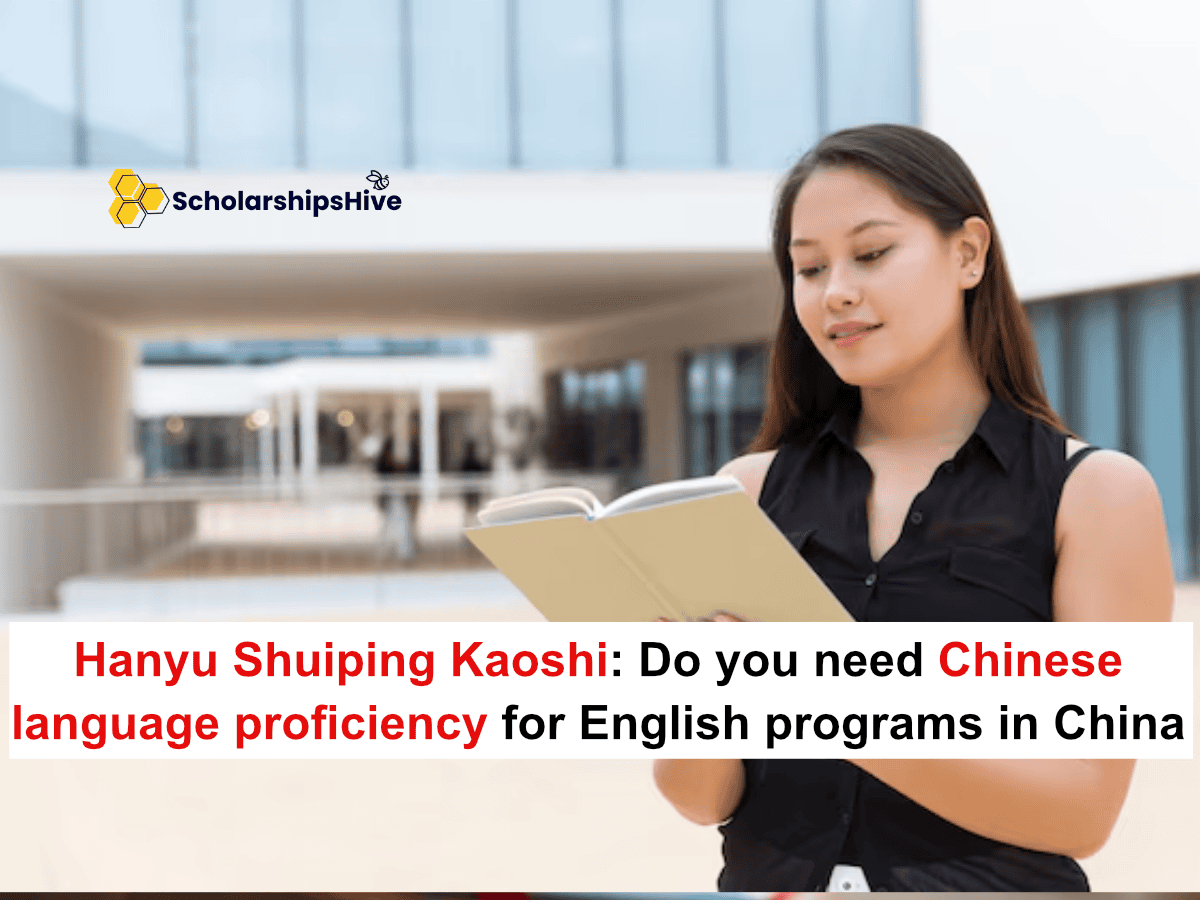
Are you planning to study in China in 2026 or the upcoming 2027 intake? Many international students mistakenly believe that they must master the Hanyu Shuiping Kaoshi (HSK) before applying for a degree in China. The good news is that if you are targeting an English-taught program, the landscape is much more flexible.
In 2026, Chinese universities have streamlined their application process to attract global talent. Whether you are aiming for a fully funded scholarship or a self-funded degree, understanding the nuance between English-taught and Chinese-taught programs is the first step toward a successful admission.
Do You Need HSK for English-Taught Programs?
The short answer is: No. For the vast majority of English-taught degree programs, you do not need an HSK certificate for admission. Universities prioritize your academic credentials and your ability to engage with course material in English.
The Language Proficiency Split
- English-Taught Programs: These are designed for international students. To prove your English proficiency, most universities require an IELTS (typically 6.0+) or TOEFL (typically 80+) score. If your home university does not offer these, many institutions now accept a Medium of Instruction (MOI) certificate, which acts as formal proof that your previous education was entirely in English.
- Chinese-Taught Programs: If you select a program delivered in Chinese, HSK is mandatory. Most top-tier universities require at least HSK Level 4 or 5 (180+ points) for admission.
Check this: MOFCOM Scholarship: Master’s for Government Officials, China | Fully Funded
The “Hidden” Requirement: Graduation Thresholds
While you may not need an HSK certificate to enter an English-taught program in 2026, you should be aware of graduation requirements. Many Chinese universities mandate that all international students achieve a basic level of Chinese proficiency before they can be awarded their final degree.
- Undergraduate Degrees: Often require HSK Level 4.
- Master’s/PhD Degrees: Frequently require HSK Level 3.
These requirements act as a “floor,” not a ceiling. The goal is to ensure that even if your studies are in English, you are capable of navigating daily life and basic professional interactions in Chinese by the time you graduate.
Strategic Benefits of Learning Chinese
Even if your program doesn’t strictly enforce an HSK exit requirement, proactively learning Mandarin provides a significant advantage for international students:
- Scholarship Security: Scholarship committees, particularly for the Chinese Government Scholarship (CSC), prefer candidates who demonstrate a genuine interest in Chinese culture. Highlighting your HSK progress in your study plan shows you are committed to long-term integration.
- Career Prospects: Graduates who possess both a specialized technical degree and professional Chinese language proficiency are highly sought after by multi-national corporations.
- Daily Convenience: Life in China—from banking to hospital visits and local transport—is infinitely smoother when you can handle basic daily communication.
You may like this: Tianjin University Engineering Scholarships: Chemical and Industrial Engineering Grants, China | Partial Funding
How to Navigate the Application Process
If you are preparing for the 2026 or 2027 cycle, follow this simplified roadmap:
- Step 1: Check the Prospectus: Visit your target university’s official website to confirm if your desired program is indeed “English-taught.”
- Step 2: Prepare Proof of English: Gather your IELTS/TOEFL scores or request an MOI certificate from your previous institution’s registrar.
- Step 3: Document Everything: Ensure all academic transcripts and diplomas are notarized. If they aren’t in English or Chinese, provide a professional translation.
- Step 4: Use Official Portals: Always submit your application through the verified China Scholarship Council (CSC) portal or the university’s official admissions system.
Check this out: Xiamen University Scholarships : Coastal Campus Programs and Student Support, China | Fully Funded
Official Scholarship Links
To lodge your official digital portfolio and lock in your 2026 placement, use these certified channels:
- China Scholarship Council (CSC) Official Portal: https://www.campuschina.org
- CSC Student Login Gateway: https://studyinchina.csc.edu.cn/#/login
- HEC Scholarship Portal (For Pakistan-based Type A applicants): https://scholarship.hec.gov.pk
Join our WhatsApp Channel for the latest updates on international scholarships and deadlines.
Frequently Asked Questions (FAQs)
Can I apply for a fully funded scholarship without HSK?
Yes. You are fully eligible for a fully funded scholarship (which covers tuition, accommodation, and a monthly stipend) for English-taught programs without an HSK certificate. HSK is only a requirement if you apply for a program taught in Chinese.
Is an MOI certificate enough to bypass IELTS?
In 2026, most universities accept a formal Medium of Instruction (MOI) certificate as a valid substitute for IELTS/TOEFL for English-taught programs. Ensure the document is on official university letterhead, signed by your registrar, and clearly states that your entire degree was delivered in English.
Can I learn Chinese after I arrive in China?
Absolutely. Most Chinese universities include mandatory or elective Chinese language courses in their international curriculum. Taking these courses not only helps you meet graduation requirements but also provides a deeper understanding of the local environment during your scholarship tenure.
Final Thoughts and Advice by Scholarships Hive
Navigating the language requirements for studying in China is less daunting than it first appears, especially when you focus on English-taught programs. By prioritizing a strong academic application, securing your MOI or English test scores early, and showing a genuine willingness to learn the basics of the local language, you put yourself in the strongest possible position to secure a fully funded placement. Start your documentation process today, stay aligned with official deadlines, and keep your goals clearly defined to make your academic journey in China a reality.