
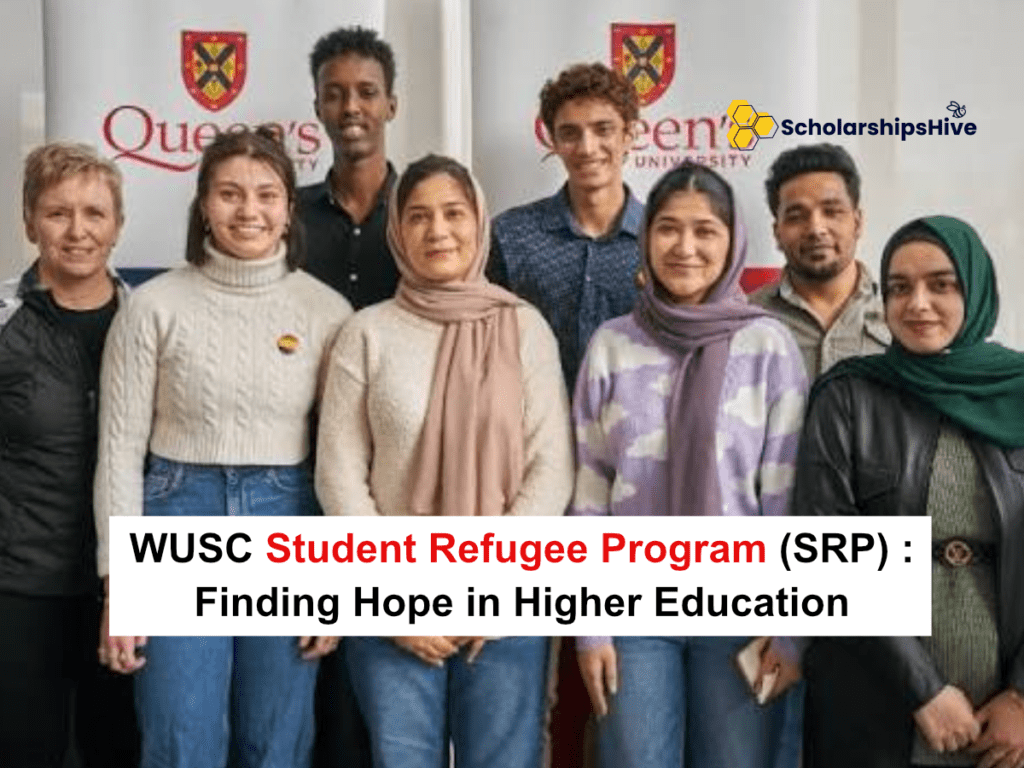
WUSC Student Refugee Program (SRP) 2026: Finding Hope in Higher Education
Key facts
- Country
- Canada
- Funding
- Fully Funded
For thousands of young refugees around the world, the journey to academic success is often interrupted by displacement. The World University Service of Canada (WUSC) Student Refugee Program (SRP) serves as a vital bridge, combining the promise of resettlement to Canada with the life-changing opportunity to pursue post-secondary education.
Since 1978, this unique program has empowered over 2,000 young refugees from 39 countries of origin to continue their education in a safe, supportive environment. As you navigate your path toward 2027, this comprehensive guide outlines how the SRP works, how you can apply, and what you need to know to potentially participate in this life-changing initiative.
1. What is the WUSC SRP?
The Student Refugee Program is the only initiative of its kind that integrates resettlement with higher education. Unlike traditional scholarships that only cover tuition, the SRP is built on a “youth-to-youth” sponsorship model.
- Financial & Social Support: Successful candidates receive full financial sponsorship for their first year of study, covering tuition, books, and living expenses. This is made possible by Canadian students on campuses across the country who raise funds and provide day-to-day integration assistance.
- Permanent Residency: Students arrive in Canada as Permanent Residents, allowing them to focus on their studies without the uncertainty of temporary status.
- A Campus Community: Local Committees—groups of students, faculty, and staff at participating universities—act as a vital support network, helping newcomers adapt to life in a new country. They provide guidance on course selection, navigating campus life, and social integration.
Check this: Queen’s University International Admission Scholarship, Canada: Merit-Based Partial Funding
2. Who is Eligible for the SRP?
The program is highly competitive and has specific requirements to ensure candidates are prepared for the rigors of Canadian university life and the realities of resettlement. To be eligible for the 2026 or 2027 cycles, you generally must meet the following criteria:
- Residency: You must be currently living as a refugee in one of the specific countries of asylum where WUSC operates (historically including Kenya, Jordan, Lebanon, Tanzania, and Uganda). You must have resided there for a continuous period, typically at least 3 years.
- Age: Be between 18 and 25 years old as of January 1st of the application year.
- Education: Have completed secondary school and possess original diplomas and transcripts. (Minimum academic grades typically start around 65%).
- Status: Be single (unmarried) with no children.
- Language: Demonstrate proficiency in English or French (oral and written).
- Refugee Eligibility: You must be eligible for resettlement under Canada’s Private Sponsorship of Refugees program. This means you must have a formal refugee claim verified by local authorities or the UNHCR.
Note: Individuals who are already being sponsored on a post-secondary scholarship or who have already completed a university degree should not apply, as the program is designed for those who have not yet had the chance to complete an undergraduate education.
You may also like this: McMaster University: International Undergraduate Entrance Awards – Partial Funding in Canada
3. How to Apply in 2026
The application process is handled through a formal “Call for Applications” launched annually in designated countries of asylum.
- Monitor the Official Portal: The SRP does not accept referrals from third parties. You must monitor srp.wusc.ca/students/ for the annual launch of the application window. Calls for applications typically open in the early months of the year.
- Prepare Documentation: Ensure you have digital copies (PDFs or clear photos) of your official secondary school certificates, transcripts, and refugee identification documents.
- Complete the Online Form: Applications are strictly online. WUSC provides a list of questions in advance of the application opening to help you prepare your responses. If you lack access to technology, WUSC’s local partner offices in your country of asylum are often available to provide support at zero cost.
- Selection Steps:
- Academic Review: WUSC verifies all documents. Any discrepancies in your biodata (name, date of birth) must be resolved with the UNHCR or relevant local authorities before you apply.
- Language Testing: Shortlisted candidates are invited for English or French proficiency tests.
- Interviews: Finalists undergo in-person or virtual interviews to assess their academic potential and readiness for integration.
Warning: The program is entirely free. WUSC has a zero-tolerance policy for fraud; you should never pay any fees or provide favors to anyone to access the program.
4. The Selection and Resettlement Timeline
The sponsorship process can take up to two years or more, as it involves coordination between WUSC, Canadian universities, and federal immigration authorities.
- Preliminary Selection: WUSC makes the initial selection based on academic merit and refugee status.
- Final Verification: After the interview, a final round of verifications occurs with local organizations and the UNHCR.
- Immigration Assessment: Once selected by WUSC, candidates must still pass Canada’s immigration eligibility and admissibility assessments. Only after this federal clearance are you approved for travel to Canada.
Check this: Carleton University: International Entrance Scholarships, Canada– Merit-Based Partial Funding
5. Life as an SRP Student in Canada
Once you arrive in Canada as a Permanent Resident, you are not alone.
- Local Committee Support: During your first 12 months, your campus Local Committee provides intensive support. This includes help with finding housing, navigating the Canadian healthcare system, budgeting, and making friends.
- Domestic Tuition Rates: Because you arrive as a Permanent Resident, you qualify for domestic tuition rates, which are significantly lower than international student rates.
- Self-Sufficiency: After your first year, SRP students transition to self-sufficiency, often using a combination of student loans, government bursaries, and part-time employment to fund their remaining years of study.
- Career Outcomes: Data shows that the vast majority (over 85%) of SRP graduates find work in their chosen fields shortly after graduation, demonstrating the incredible success of the program.
Official Scholarship Resources
- WUSC SRP Official Portal: Your primary source for the latest Call for Applications and country-specific instructions.
- EduCanada Scholarship Search: While the SRP is a unique sponsorship model, you can use the official government portal to understand the broader Canadian education landscape.
Join our WhatsApp Channel for the latest updates on international scholarships and deadlines.
Frequently Asked Questions
Can I apply for the SRP from inside Canada?
No. The WUSC SRP is specifically designed for refugee youth currently living in countries of asylum who require resettlement. The program cannot support anyone who has already reached Canada.
Does the SRP have quotas for specific nationalities?
No. The selection process is individual and merit-based. There are no targets or quotas for the SRP by nationality or ethnicity. Refugees from any country of origin are welcome to apply, as long as they reside in one of the current SRP selection countries.
Can two members of the same family apply together?
Yes. Siblings are encouraged to apply if they meet the eligibility requirements. However, they are assessed individually, and WUSC cannot guarantee that they will be placed on the same campus.
Final Thoughts and Advice From ScholarshipsHive
The WUSC Student Refugee Program is more than a scholarship—it is a pathway to a new life. In 2026, as you prepare your documentation and look toward the opportunities available in 2027, prioritize honesty and academic rigor. While the application process is demanding, the doors it opens to higher education and permanent residency are life-changing. Stay informed, monitor the official WUSC website, and keep your focus on your long-term goal of academic and personal success.
Similar scholarships
 How to Email Professors for Research Supervision (Ph.D. & Master’s Cold Email Templates)
 Banting Postdoctoral Fellowships: Securing a Canadian Host Institution
 McCall MacBain Scholarship at McGill University 2026, Canada: Fully Funded
 Vanier Canada Graduate Scholarships 2026: Fully Funded PhD in Canada
 Fully Funded Banting Postdoctoral Fellowships Canada 2026
 Sanctuary Scholarships: University-Specific Funding for Displaced Students 2026