
The Free Umrah & Hajj Benefit: How Saudi Student Visas Handle Travel Inside Holy Cities 2026, Saudi Arabia | Fully Funded
Key facts
- Country
- Saudi Arabia
- Funding
- Fully Funded
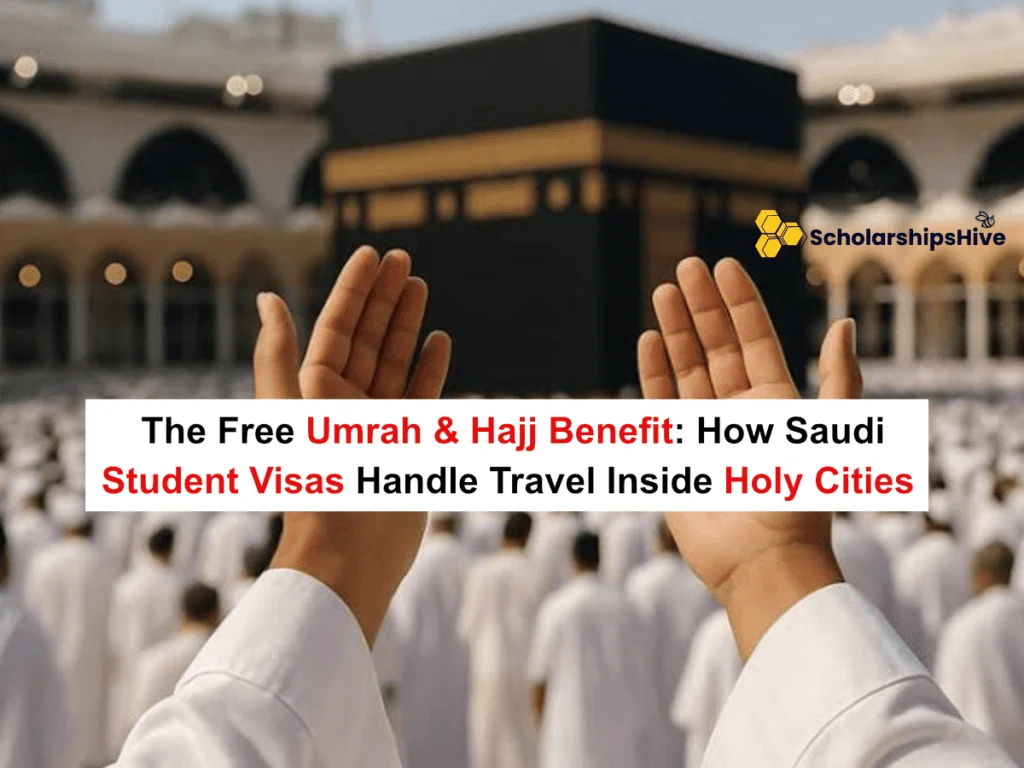
For international scholars relocating to the Kingdom of Saudi Arabia on a fully funded academic fellowship, the experience extends far beyond lecture halls, advanced laboratories, and campus libraries. One of the most profound privileges of holding an official Saudi student residence visa (Iqama) is the unique legal framework governing domestic mobility, spiritual pilgrimage, and access to the holy sanctuaries of Makkah and Al-Madinah Al-Munawwarah.
Unlike standard tourist or short-term pilgrimage visas—which are bound by strict seasonal windows, mandatory electronic platform bookings, and designated port-of-entry restrictions—registered international students navigate internal travel under resident-tier regulatory privileges. Understanding how the Saudi student visa manages domestic movement, regional travel permissions, and access to holy sites during peak seasons is essential for every incoming scholar aiming for the 2026/2027 academic cycle.
1. The Legal Distinction: Student Visas vs. Standard Pilgrimage Visas
To comprehend how travel inside the holy cities functions for university scholars, it is vital to distinguish between standard visa classes and an institutional residence visa issued under a Ministry of Education sponsorship.
Short-Term Pilgrimage and Tourist Frameworks:
- Umrah eVisa Holders: Restricted to specific validity periods, mandatory pre-booked accommodation packages through approved platforms like Nusuk, and predetermined entry ports.
- Hajj Visa Holders: Subject to rigid national quotas, specialized Ministry of Hajj and Umrah operational codes, strict transit limitations, and mandatory departure deadlines following the pilgrimage rites.
The Saudi Student Residence Visa Framework:
- Domestic Freedom of Movement: Once an international student arrives on a sponsored student visa and completes their formal Iqama (residency permit) issuance, they possess legal resident status within the Kingdom.
- Elimination of Pre-Approval Hurdles: Routine domestic travel between university cities (such as Riyadh, Dammam, or Dhahran) and the holy sanctuaries of Makkah and Madinah does not require secondary tourist visa applications or commercial travel agency intervention.
2. Performing Umrah as a Resident Student
For international scholars enrolled at public institutions like King Saud University, KFUPM, or Umm Al-Qura University, performing Umrah throughout the academic year is streamlined due to their resident status.
How the Nusuk Platform Interacts with Student Iqamas:
- Digital Integration: Resident students utilize their official Iqama number to log into national spiritual applications (such as Nusuk).
- Permit Generation: While resident status grants physical entry access into the western region, securing specific time slots for Tawaf and prayers inside the Rawdah or the Grand Mosque requires booking through official government applications using active residency credentials.
- Frequency and Flexibility: Unlike tourist visitors who face fixed visa durations, students can perform Umrah multiple times throughout the year, aligning their spiritual journeys with semester breaks, weekends, and holiday periods without incurring secondary visa fees.
You may also like this: Cybersecurity Research Grants: Public University Admission Criteria for Tech Experts, Saudi Arabia | Fully Funded
3. Navigating Hajj Regulations for International Scholars
While Umrah is accessible year-round for resident students, performing the annual Hajj pilgrimage involves distinct regulatory pathways governed by the Ministry of Hajj and Umrah.
The Official Domestic Hajj Framework:
- Ineligibility for Free Foreign Quotas: International students residing in Saudi Arabia on student visas generally do not participate in their home country’s official foreign Hajj quota system because they are already legally domiciled within the Kingdom during the pilgrimage season.
- Mandatory Registration via Domestic Portals: Students wishing to perform Hajj must apply through official domestic channels designated for residents and citizens (such as the authorized electronic domestic Hajj portal).
- Permit Enforcement: Saudi authorities enforce strict security checkpoints surrounding Makkah weeks prior to Hajj. Attempting to enter Makkah without an official Hajj permit or a verified resident Iqama designated for local presence results in heavy legal penalties, fines, and potential academic sanctions. Universities routinely issue advisory circulars guiding students through legal domestic registration channels.
4. Regional Travel Protocols and Transportation Access
Traveling within the holy cities and transiting between western provinces is heavily supported by Saudi Arabia’s advanced public infrastructure, offering distinct conveniences for university scholars.
High-Speed Rail and Domestic Transit:
- Haramain High-Speed Railway: Connecting Makkah, Jeddah, King Abdulaziz International Airport, and Madinah, this electric rail network provides rapid, affordable, and comfortable transit for students visiting the holy sites during weekends.
- University-Sponsored Delegations: Many public universities regularly organize subsidized or free spiritual trips (such as Umrah caravans and cultural excursions) for international scholarship recipients as part of their student welfare programs.
5. Step-by-Step Compliance Roadmap for Student Travelers
To ensure smooth transit and adherence to national regulations while traveling to Makkah and Madinah, students should follow a structured compliance protocol:
- Finalize Iqama Issuance: Ensure your physical or digital Iqama is fully processed and active through the Absher platform before planning independent travel to the western province.
- Monitor Seasonal Checkpoints: Review annual Ministry of Interior announcements regarding seasonal entry restrictions into Makkah, particularly during the weeks leading up to the Dhul-Hijjah pilgrimage season.
- Secure Official Permits: Utilize government-approved mobile applications to secure required time slots for ritual performance, ensuring full compliance with crowd-management protocols.
- Carry Official Identification: Always carry your university student ID and official residency card when traveling through regional checkpoints or entering municipal boundaries of the holy sanctuaries.
Check this out: Data Science and Robotics at KFUPM: Complete Postgraduate Entry Scores, Saudi Arabia | Fully Funded
Official Scholarship Links & Resources
- Unified Saudi Government Scholarship Portal: Study in Saudi Arabia Platform
- Ministry of Hajj and Umrah Official Platform: Nusuk & Hajj Services
- Haramain High-Speed Railway Booking: Haramain Railway Official Portal
- Join our WhatsApp Channel for the latest updates on international scholarships and deadlines.
Frequently Asked Questions
Do Saudi student visa holders need a separate visa to perform Umrah?
No. International students residing in Saudi Arabia on official student visas do not need a separate tourist or Umrah visa. Their legal residency status permits domestic travel, though scheduling via official government apps is required for entering specific ritual zones.
Can international students join official university-organized Umrah trips?
Yes. Most public universities in Saudi Arabia frequently organize subsidized or fully covered group Umrah and Madinah trips specifically for international scholarship students as part of their extracurricular student services.
Are students allowed to perform Hajj while studying in Saudi Arabia?
Yes, but they must apply through the official domestic Hajj portals designated for legal residents and secure an official Hajj permit, adhering to the same legal framework as local residents and citizens.
Final thoughts and advice from scholarshipshive
Securing a fully funded study position in Saudi Arabia opens the door to an extraordinary fusion of world-class academic research and unmatched spiritual access. By understanding your rights as a resident student, maintaining complete legal compliance through official portals, and respecting seasonal travel regulations, you can seamlessly experience the holy cities throughout your academic journey in the 2026/2027 cycle.
Explore similar scholarships
Never miss a deadline
Get new fully funded scholarships every day. Follow Scholarships Hive on your favourite app.
Similar scholarships
 Prince Mohammad bin Fahd University (PMU) Scholarships: Global Partnership Options and Fee Waivers 2026, Saudi Arabia | Partially Funded
 King Faisal University (KFU) Scholarships: Agricultural and Biological Research Grants in Al-Ahsa 2026, Saudi Arabia | Fully Funded
 Jazan University Scholarships: Coastal Research Infrastructure and Student Living Stipends 2026, Saudi Arabia | Fully Funded
 University of Jeddah Scholarships: Specialized Artificial Intelligence and Logistics Pathways 2026, Saudi Arabia | Fully Funded
 Taibah University Scholarships: Exploring Postgraduate Quotas in Madinah 2026, Saudi Arabia | Fully Funded
 Alfaisal University: Private Sector Options and Institutional Scholarship Structures 2026, Saudi Arabia | Partially Funded