📲 Join our WhatsApp for Daily Fully Funded Scholarship Alerts
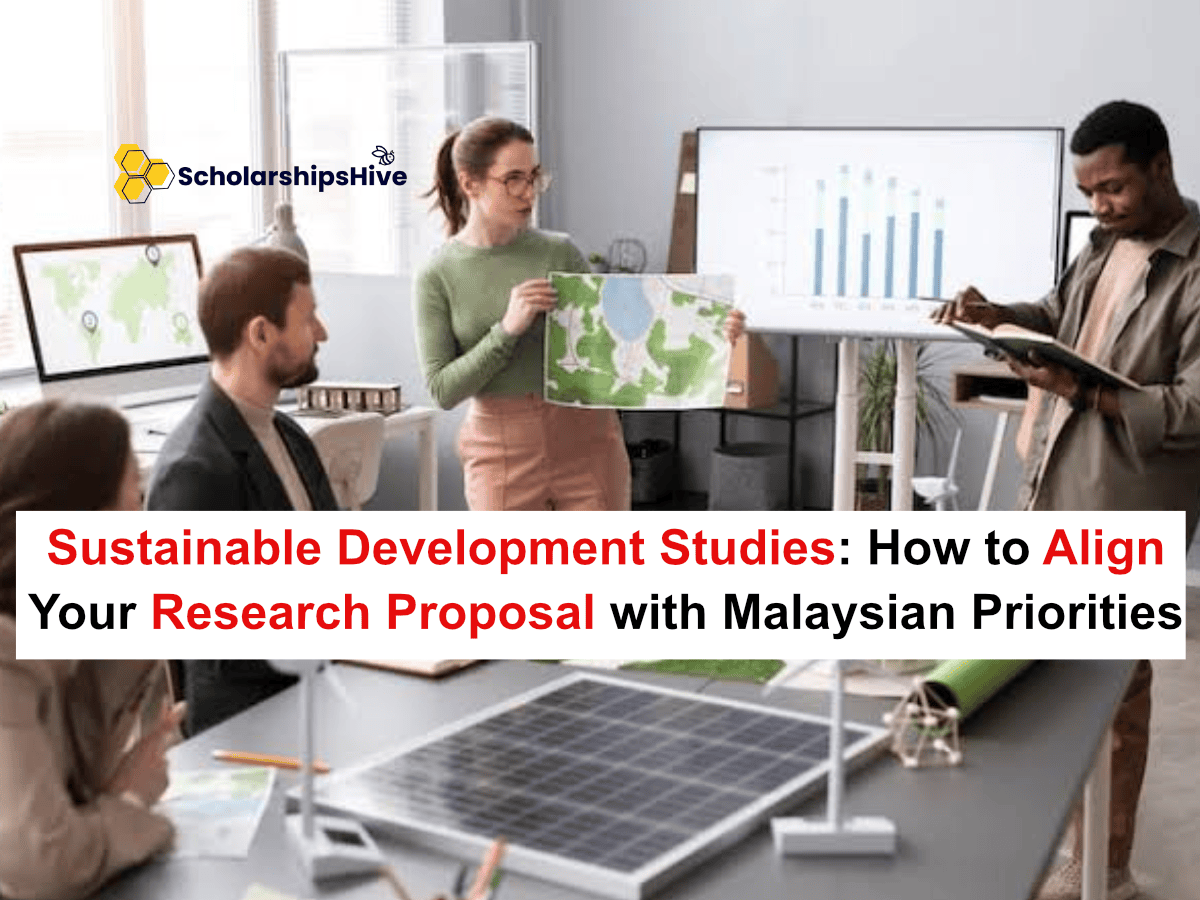
Sustainable development has transitioned from an alternative academic sub-discipline into the core operational framework governing global economic policies, environmental conservation, and social equity. For international scholars, environmental scientists, and public policy researchers aiming to conduct impactful postgraduate studies, Malaysia offers an exemplary living laboratory. Guided by strategic national blueprints such as the Twelfth Malaysia Plan, the Shared Prosperity Vision 2030, and the comprehensive national Sustainable Development Goals (SDG) Roadmap, Malaysia aggressively champions green growth, ecological resilience, and socioeconomic inclusivity.
For international candidates targeting Master’s or Doctor of Philosophy (PhD) degrees, successfully navigating this landscape requires more than academic competence—it demands strategic policy alignment. When students anchor their research proposals to Malaysia’s core developmental vectors, they dramatically increase their eligibility for elite financial backing, such as the Malaysia International Scholarship (MIS) funded by the Ministry of Higher Education (MOHE). Winning this award provides 100% tuition fee coverage alongside a dependable monthly living stipend of RM 1,500. This comprehensive guide explores Malaysia’s core sustainability priorities, high-impact research clusters, funding mechanics, and proposal-writing strategies for the 2026 academic cycle.
Check this: Artificial Intelligence Postgrad Tracks: Public University Admission Criteria, Malaysia | Fully Funded
1. Understanding Malaysia’s Macro-Sustainability Frameworks
To craft a compelling research proposal that captures the attention of university admissions panels and national scholarship reviewers, candidates must thoroughly understand Malaysia’s primary socio-environmental policy drivers:
- The Twelfth Malaysia Plan (RMK-12): Built around the pillars of resetting the economy, strengthening security and inclusivity, and advancing sustainability, RMK-12 explicitly mandates green growth as a fundamental catalyst for long-term national prosperity.
- The National Energy Transition Roadmap (NETR): A transformative blueprint aimed at accelerating Malaysia’s transition toward renewable energy, reducing greenhouse gas emissions, and building a low-carbon economy.
- The SDG Roadmap for Malaysia: A structured, whole-of-nation framework tracking localized indicators across environmental protection, eradicating poverty, fostering responsible consumption, and deploying sustainable urban innovations.
2. Priority Research Clusters in Sustainable Development
Malaysia’s public research universities actively invite postgraduate proposals that address specific, localized challenges falling under national priority study areas:
A. Renewable Energy and Low-Carbon Transitions
- Core Focus: Solar photovoltaic optimization, biomass valorization, green hydrogen production, and energy-efficient smart grid architectures.
- Policy Connection: Directly supports the objectives outlined in the NETR and national carbon-neutrality targets.
B. Circular Economy and Waste Management
- Core Focus: Upcycling industrial byproducts, plastic waste bioremediation, biodegradable packaging innovations, and municipal solid-waste reduction strategies.
- Policy Connection: Aligns with national initiatives promoting sustainable consumption, cleaner production, and industrial waste minimization.
C. Climate Resilience, Biodiversity, and Water Security
- Core Focus: Watershed conservation, tropical rainforest carbon stock accounting, peatland restoration, and integrated water resource management (IWRM).
- Policy Connection: Directly supports planetary health targets, protecting the country’s rich terrestrial and marine ecosystems.
D. Socioeconomic Inclusivity and Community Resilience
- Core Focus: Mitigating regional development disparities, empowering marginalized rural and indigenous communities, and evaluating green job creation.
- Policy Connection: Resonates with the inclusivity pillars of the Shared Prosperity Vision 2030.
You may also like this: Universiti Teknikal Malaysia Melaka (UTeM): Advanced Computing and Software Engineering Awards | Fully Funded
3. Fully Funded Financial Pathways: The Malaysia International Scholarship (MIS)
Securing comprehensive financial support is essential for uninterrupted academic inquiry. The Malaysia International Scholarship (MIS) delivers complete financial backing for elite international postgraduate students:
- 100% Tuition Fee Coverage: Approved tuition fees are paid directly to host public or participating private universities by the Ministry of Higher Education.
- Monthly Living Allowance: Scholars receive a dependable stipend of RM 1,500 every month to comfortably cover local accommodation, nutrition, and research logistics.
- Duration of Support: Up to 24 months for Master’s candidates and up to 36 months for doctoral (PhD) research scholars.
4. Crafting a Winning Research Proposal Aligned with Malaysian Priorities
Under the MIS evaluation criteria, the quality of the research proposal and its explicit contribution to national interests carry massive weight. A successful 1,000-word proposal should follow this structural blueprint:
- Explicitly Link to a National Policy: Begin by referencing a specific Malaysian framework—such as “In alignment with the National Energy Transition Roadmap (NETR), this study investigates…”
- Define a Localized Problem with Global Implications: Focus on real geographical contexts within Malaysia or Southeast Asia—such as evaluating microplastic accumulation in estuarine mangrove belts or optimizing solar thermal integration in tropical commercial buildings.
- Propose Actionable, Scalable Outcomes: Reviewers favor applied research that yields practical policy recommendations, technological prototypes, or community-level interventions rather than purely theoretical musings.
Check this out: The Digital Economy Boom: Why Studying Tech in Malaysia is a Premium Choice
5. Admission Benchmarks and Application Execution
Candidates must satisfy both university entry prerequisites and national scholarship guidelines:
- Academic Qualifications: Applicants must hold a relevant Bachelor’s degree (for Master’s programs) or a Master’s degree (for PhD tracks) in environmental science, engineering, economics, public policy, or related fields with a minimum cumulative CGPA of 3.00 (or Second Class Upper Honours equivalence).
- English Language Proficiency: International candidates must submit valid English test scores (such as an IELTS Band 6.0 or TOEFL equivalent) or provide an official institutional letter confirming English as the medium of instruction during prior degree completion.
- Age Limitations: Candidates must not exceed 40 years of age for Master’s programs or 45 years of age for PhD tracks at the time of application submission.
Official Portals and Resources
- Official Scholarship Application Link: MOHE Malaysia International Scholarship System
- Join our WhatsApp Channel for the latest updates on international scholarships and deadlines.
FAQs
Must my sustainable development research focus exclusively on Malaysia as a country case study?
While direct application to Malaysia’s geographic or socioeconomic landscape significantly strengthens your funding application, comparative studies between Malaysia and other nations or broad regional models addressing ASEAN-wide sustainability challenges are also well-received.
Is an official admission letter mandatory before submitting the MIS scholarship application?
While holding an active conditional admission letter from a Malaysian public university strengthens your candidate dossier, applicants can submit their MIS portal applications while university admission processing is concurrently underway, provided formal acceptance is secured prior to final award placement.
What financial expenses are covered under the fully funded MIS scholarship package?
The scholarship covers 100% of approved tuition fees and provides a monthly living allowance stipend of RM 1,500. Initial international relocation flights, visa processing fees, and security bonds are independently managed by the scholar.
Final thoughts and advice from ScholarshipsHive
Pursuing sustainable development studies in Malaysia under comprehensive scholarship frameworks offers an extraordinary gateway to high-impact research, world-class academic mentorship, and fully funded career acceleration. By meticulously aligning your research proposal with national priorities like the Twelfth Malaysia Plan and the SDG Roadmap, maintaining exceptional academic standards, and executing an immaculate portal submission, you position your profile at the absolute pinnacle of the review pool. Strategic planning throughout 2026 will ensure your transition into Malaysia’s vibrant sustainability research ecosystem is smooth, successful, and fully funded.