📲 Join our WhatsApp for Daily Fully Funded Scholarship Alerts
When transitioning to life as an international student or scholarship scholar in the Kingdom of Saudi Arabia—at major public institutions like King Saud University (KSU), King Abdulaziz University (KAU), King Fahd University of Petroleum and Minerals (KFUPM), or Imam Mohammad Ibn Saud Islamic University—managing daily living expenses is a key priority. While tuition, healthcare, and housing are heavily supported or fully covered under government scholarship packages, daily sustenance remains a recurring line item for any student budget.
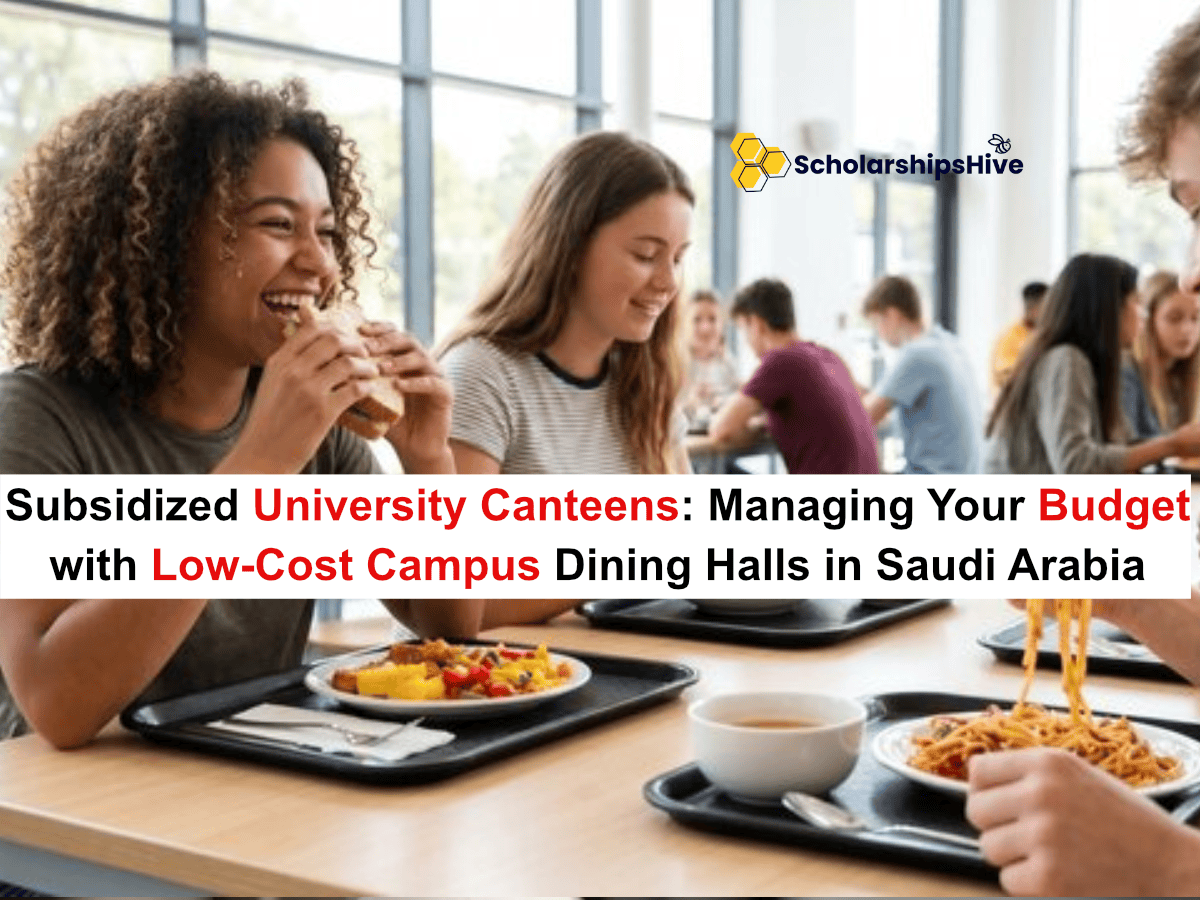
Fortunately, Saudi higher education institutions maintain a robust infrastructure of subsidized university canteens and central dining halls managed directly by their respective Deanships of Student Affairs. These facilities are engineered to provide nutritionally balanced, high-quality meals at a fraction of commercial market rates, ensuring that scholars can protect their monthly stipends without compromising on health or nutrition.
This comprehensive guide explores how university dining subsidies work in Saudi Arabia, what to expect from campus canteens, menu structures, pricing models, and practical budgeting strategies for international students.
1. The Philosophy and Mechanics of University Food Subsidies
Unlike commercial food courts or private restaurants, university canteens in Saudi public universities operate under a public welfare and student support model:
- Institutional Price-Matching: The true cost of preparing, sourcing, and serving fresh daily meals is heavily underwritten by the university administration. Students pay only a nominal economic fee (often ranging from just 3 to 10 Saudi Riyals per meal), while the university bears the remaining bulk of the financial value.
- Strict Health and Nutritional Oversight: Deanships of Student Affairs employ professional nutrition supervisors and health inspectors who audit every stage of the supply chain—from raw material delivery and kitchen preparation to final service—ensuring meals meet rigorous Ministry of Health standards.
- Targeted Distribution: Central dining facilities are strategically positioned both within main academic campuses and inside residential student housing complexes, giving students easy access whether they are between morning lectures or resting in their dormitories.
2. Inside the Canteens: Meal Structure, Options, and Pricing
Central university restaurants and campus canteens provide comprehensive daily meal schedules covering breakfast, lunch, and dinner.
A. Daily Meal Categories and Structure
- Breakfast Services: Typically served early (around 7:00 AM to 10:00 AM), breakfast options include traditional items such as fresh eggs, foul (fava bean stew), local breads, labneh, cheese, olives, tea, and fresh juices.
- Lunch Services (The Main Meal): Lunch serves as the primary cooked meal of the day in Saudi campus culture. Menus feature a balanced combination of carbohydrates (Kabsa, Mandi, or white rice, pasta, or fresh Arabic bread), proteins (grilled or roasted chicken, lamb, beef, or fresh fish), cooked vegetables, and fresh salads.
- Dinner Services: Lighter evening options are served either through the central dining hall or residential housing canteens to wind down the academic day.
B. Typical Subsidized Pricing Models
While exact prices vary slightly between institutions, the tiered pricing structure across major public universities typically reflects nominal student-friendly rates:
- Economic / Basic Meal Tier: Ranges from 3 to 5 SAR per meal, covering essential staples and protein portions.
- Standard / Full Meal Tier: Ranges from 8 to 12 SAR per meal, offering expanded protein choices, side dishes, desserts, or fresh fruit.
- Compared to commercial restaurant meals in cities like Riyadh or Jeddah (which easily run 25 to 50 SAR per sitting), campus canteens save students hundreds of Riyals every month.
You may also like this: Medical Fitness Reports: The Specific Laboratory Checks Required for Saudi University Clearance, Saudi Arabia
3. Budgeting Strategies: Maximizing Your Monthly Stipend
For scholarship students receiving a fixed monthly living allowance, utilizing campus dining facilities effectively is the cornerstone of smart personal finance:
- Adopt the Canteen Routine for Weekdays: By eating breakfast and lunch at the subsidized central dining hall, you can limit out-of-pocket food expenses to a bare minimum during the academic week.
- Balance with Self-Catering: Because campus canteens may have limited operational hours on weekends or holidays, use your apartment’s fully furnished kitchen to prep light weekend breakfasts or late-night snacks using groceries purchased from local supermarkets.
- Monitor Meal Card Systems: Many universities utilize digital student IDs, smartcards, or mobile apps to manage meal quotas and cashless canteen purchases. Register for your campus dining account during your initial university check-in week.
Check this out: The Foreign Police Clearance Certificate: Formatting Your Local Non-Criminal Background Check in Saudi Arabia
Official Scholarship Links & Resources
- King Saud University Student Services: KSU Deanship of Student Affairs
- King Abdulaziz University Catering Services: KAU Student Nutrition Administration
- Unified Government Scholarship Platform: Study in Saudi Arabia Portal
- Join our WhatsApp Channel for the latest updates on international scholarships and deadlines.
Frequently Asked Questions
Are fully funded scholarship students required to pay for meals at university canteens?
While scholarship packages cover housing, tuition, and a monthly living stipend, meals at central canteens are generally billed at the heavily subsidized student rate (a few riyals per meal) rather than being completely free, though your monthly stipend is more than sufficient to cover these nominal costs comfortably.
Are there vegetarian or special dietary options available in campus canteens?
Yes. Standard menus consistently feature vegetarian dishes, rice, lentil soups, fresh salads, and fruit. However, students with strict medical or specialized dietary restrictions can also supplement their meals by cooking in their university residence kitchens.
Can non-student visitors or guests eat at the subsidized university canteens?
Subsidized pricing tiers are strictly reserved for registered university students and faculty holding valid campus IDs. Visitors must typically use commercial cafes or unsubsidized campus food court outlets.
Final thoughts and advice from scholarshipshive
Subsidized university canteens are an invaluable financial and social anchor for international students living in Saudi Arabia. By taking full advantage of these low-cost, nutritious dining halls, you protect your monthly budget, save precious time between lectures, and eat healthily throughout your degree program. Integrate campus dining into your weekly routine, balance your meals with home-cooking when classes pause, and step forward with absolute financial confidence toward your academic success in the Kingdom.