
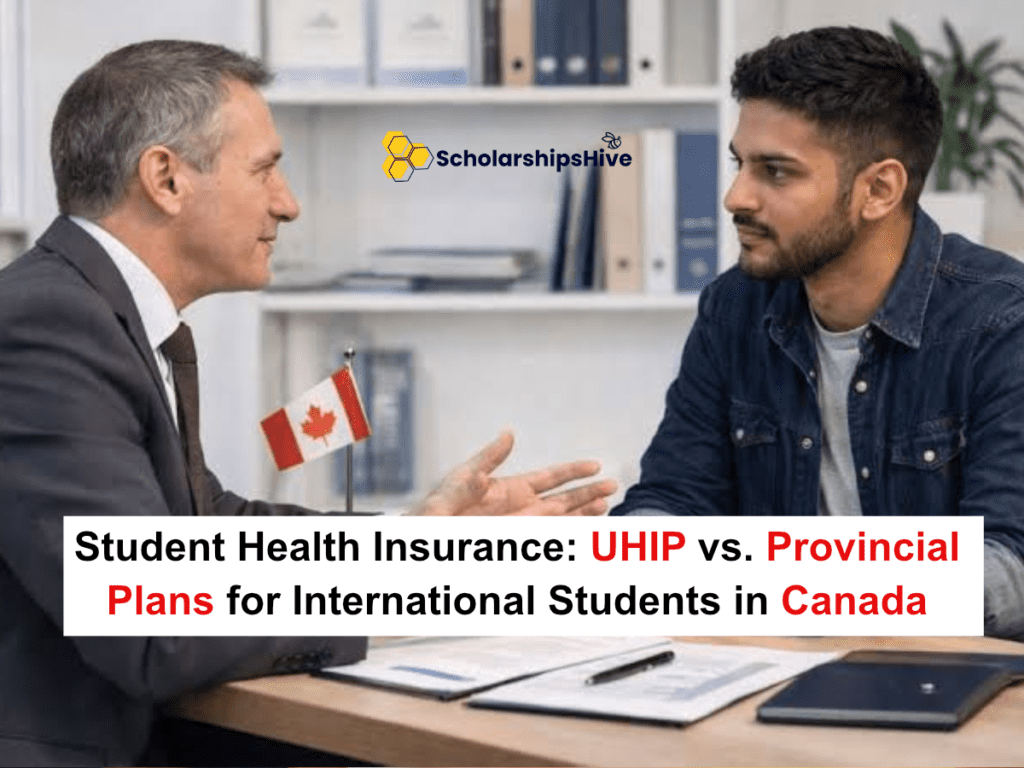
Student Health Insurance: UHIP vs. Provincial Plans for International Students in Canada 2026
Key facts
- Country
- Canada
- Degree level
- Masters Degree, Undergraduate
- Funding
- Fully Funded, Partial Funding
One of the most significant adjustments for international students arriving in Canada is understanding the healthcare landscape. Canada’s world-renowned “universal” healthcare system can be a point of confusion because it is managed at the provincial level, and coverage rules for international students vary drastically depending on where you reside.
In 2026, it is not uncommon for students to land in Canada under the impression that they are automatically covered by the public system, only to realize that they need supplemental insurance. This guide will clarify the differences between the University Health Insurance Plan (UHIP) and provincial public plans as you prepare for your studies in 2026 and 2027.
1. What is UHIP?
The University Health Insurance Plan (UHIP) is a mandatory basic coverage plan designed specifically for international students at participating universities in Ontario.
- Who is it for? It is tailored for international students (and their eligible dependents) who are not eligible for the Ontario Health Insurance Plan (OHIP).
- What it covers: UHIP typically covers medically necessary services, including physician fees, emergency room visits, hospital stays, and certain diagnostic tests.
- Mandatory Status: If you are attending a participating Ontario university, you are usually automatically enrolled, and the premium is added to your tuition bill. You cannot “opt-out” unless you can prove you have a government-approved alternative plan.
Check this: Queen’s University International Admission Scholarship, Canada: Merit-Based Partial Funding
2. Provincial Health Insurance: The “Public” System
Every Canadian province manages its own health card system (e.g., OHIP in Ontario, MSP in British Columbia, AHCIP in Alberta).
- Eligibility varies by province:
- Provinces with direct access: Some provinces, such as Saskatchewan, Prince Edward Island, and the Northwest Territories, offer public healthcare coverage to international students.
- Provinces with no access: Provinces like Ontario, Manitoba, and the Yukon generally do not include international students in their public healthcare plans. In these regions, you must rely on private insurance or institution-specific plans (like UHIP).
- Provinces with requirements: Provinces like British Columbia require a waiting period (often three months) and monthly premiums, even after you become eligible. Quebec generally requires students from countries without social security agreements to purchase private coverage for the full duration of their studies.
3. Side-by-Side Comparison: UHIP vs. Provincial Plans
| Feature | UHIP (Ontario) | Provincial Public Plans |
|---|---|---|
| Eligibility | Mandatory for university students | Varies by province (often residency-based) |
| Cost | Fixed premiums (added to tuition) | Usually free or subsidized (varies by province) |
| Coverage | Essential/Emergency services only | Comprehensive (but rarely includes dental/vision) |
| Dependents | Eligible for family enrollment | Dependent eligibility varies by province |
4. Why You Need Private/Supplemental Insurance
Regardless of whether you are covered by UHIP or a provincial plan, neither typically covers the “extras” that can lead to high out-of-pocket costs:
- Dental Care: Routine checkups, fillings, and emergencies.
- Vision Care: Eye exams and prescription glasses.
- Prescription Drugs: Unless you are hospitalized, many provincial plans do not cover the full cost of medications.
- Paramedical Services: Physiotherapy, massage therapy, or psychological counseling.
Most universities provide Extended Health and Dental Plans in addition to your basic UHIP or private coverage. These are designed to fill these “gaps.”
You may also like this: McMaster University: International Undergraduate Entrance Awards – Partial Funding in Canada
5. Strategic Tips for 2026 and 2027
- Check Your Province First: Before arriving in Canada, check your provincial government’s health website. If you are studying in a province that offers public coverage to students, research the “waiting period” (the time between your arrival and when your coverage starts). You will need private travel insurance for that window!
- Confirm Your DLI Status: If you are at a private college or a language school, you will likely not be eligible for UHIP and will need to arrange for private insurance (often arranged through your school or a provider like Guard.me or Morcare).
- Carry Your Card: Always keep your UHIP or provincial health card in your wallet. Hospitals and clinics may refuse service or require upfront payment if you cannot present your active coverage card.
- Enroll Dependents Early: If you are bringing a spouse or children, enroll them in your insurance plan within 30 days of arrival. Late enrollment often incurs significant financial penalties.
Check this: Carleton University: International Entrance Scholarships, Canada– Merit-Based Partial Funding
Official Scholarship Resources
To find verified funding opportunities and government-backed financial aid for your studies in Canada, please refer to the following official portal:
- EduCanada Scholarship Search: The official Government of Canada website to search for scholarships and funding opportunities specifically for international students.
Join our WhatsApp Channel for the latest updates on international scholarships and deadlines.
Frequently Asked Questions
Is UHIP free?
No. UHIP is not free. You pay a premium (approximately $66–$70 per month) that is charged directly to your student account.
Can I use my home country’s insurance?
Generally, no. Canadian universities require insurance that is specifically recognized by their health service providers to ensure that if you are hospitalized, the bills are paid directly by the insurer. Travel insurance from your home country usually requires you to pay upfront and seek reimbursement, which is not practical for major medical expenses.
Does my health insurance cover me if I travel outside my province?
Most provincial plans provide limited coverage for emergencies in other provinces, but private plans (including UHIP) have specific rules for “out-of-province” travel. Always check your policy summary before booking a trip.
Final Thoughts and Advice From ScholarshipsHive
Healthcare planning is one of the most overlooked parts of your study-abroad strategy. In 2026, ensure you know exactly which plan you are on and what it covers. If you are in Ontario, UHIP is your backbone; if you are in other provinces, confirm your eligibility for public plans immediately upon arrival. As you move toward 2027, keep your coverage current and prioritize your health—it is the best investment you can make in your academic future.
Similar scholarships
 How to Email Professors for Research Supervision (Ph.D. & Master’s Cold Email Templates)
 Banting Postdoctoral Fellowships: Securing a Canadian Host Institution
 McCall MacBain Scholarship at McGill University 2026, Canada: Fully Funded
 Vanier Canada Graduate Scholarships 2026: Fully Funded PhD in Canada
 Fully Funded Banting Postdoctoral Fellowships Canada 2026
 Sanctuary Scholarships: University-Specific Funding for Displaced Students 2026