📲 Join our WhatsApp for Daily Fully Funded Scholarship Alerts
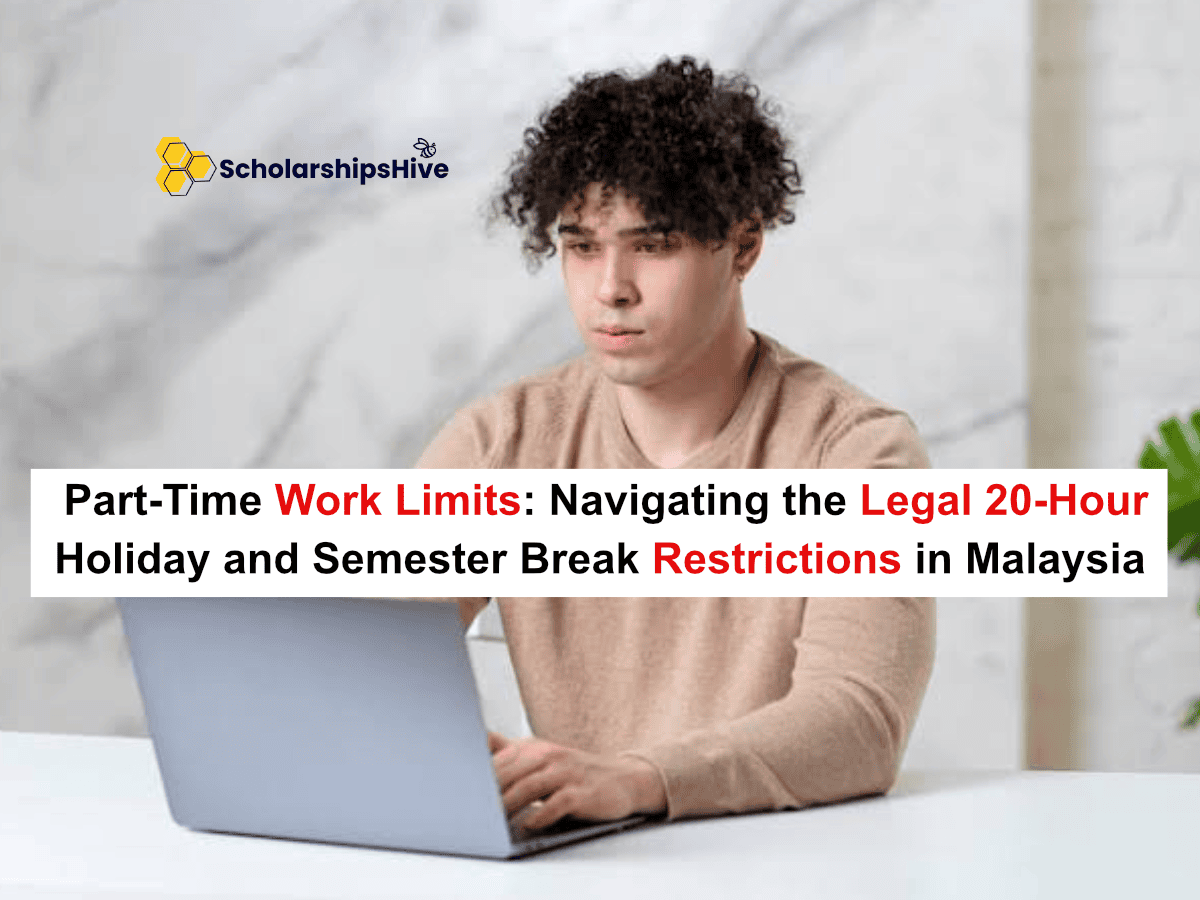
For many international students preparing to study in Malaysia, balancing living expenses and gaining practical workplace experience is a key priority. While global study destinations like the United Kingdom, Australia, or Canada offer flexible, year-round part-time work rights, Malaysia operates under a much stricter regulatory framework.
The Malaysian Ministry of Home Affairs and the Immigration Department permit international students to undertake part-time employment, but under highly specific conditions designed to ensure that academic performance remains the primary focus. Misunderstanding these boundaries can lead to visa cancellations, fines, or deportation. This comprehensive guide breaks down the legal 20-hour rule, the critical distinction between term time and holiday periods, approved employment sectors, application workflows, and compliance safeguards for the 2026 academic intake cycle.
1. The Core Legal Reality: Understanding the 20-Hour Rule
Before accepting any employment offer, international students must understand the core principles governing work rights on a valid Malaysian Student Pass:
- The Absolute Cap (Maximum 20 Hours): When legally permitted to work, students cannot exceed a maximum threshold of 20 hours per week. This is a strict statutory ceiling, not a flexible average.
- Strictly Limited to Academic Breaks: This is the single most important rule separating Malaysia from other study destinations. International students are strictly prohibited from working during active semester terms when classes, lectures, and exams are in session. Part-time work is only allowed during official semester breaks, mid-term holidays, or long vacation periods that exceed seven (7) days.
- Supplement, Not a Lifeline: Because work is confined to extended holiday periods and capped at 20 hours a week, earnings from part-time jobs are intended to serve as supplementary pocket money rather than a viable mechanism to fund full tuition fees or core living expenses.
Check this: Master’s by Coursework vs. Research: Which Degree Structure Is Preferred for Funding in Malaysia?
2. Approved Sectors: Where Are International Students Legally Allowed to Work?
You cannot work in any industry or role of your choosing. The Malaysian Immigration Department restricts international student employment to four specific, non-professional sectors:
- Restaurants and Cafés: Working as a waiter, kitchen helper, or service crew member in local dining establishments, food chains, or campus cafeterias.
- Petrol Kiosks: Working flexible shifts at service stations (such as Petronas, Shell, or Petron), handling store inventory or customer service.
- Mini Markets and Convenience Stores: Assisting with stocking shelves, inventory management, or customer assistance in retail outlets like 99 Speedmart or 7-Eleven.
- Hotels: Taking on hospitality and housekeeping roles within the hotel sector, provided the position complies with strict national guidelines.
Strict Prohibitions and Out-of-Bounds Roles
Even within approved industries, certain jobs are completely off-limits to international students:
- No Cashiers: International students are strictly forbidden from handling cash registers or managing direct monetary transactions.
- No Entertainment or Nightlife Roles: Working as singers, musicians, promoters, or floor staff in bars, clubs, or lounges is illegal.
- No Guest Relations Officers (GRO): Hospitality positions involving front-of-house guest relations or commission-based sales are strictly barred.
- No Freelancing or Self-Employment: Operating an independent online business, driving for ride-hailing apps (like Grab) as an independent contractor, or freelancing without formal institutional sponsorship violates Student Pass conditions.
You may also like this: The HEC Attestation Rule: Verifying Your Pakistani Documents Before Applying to Malaysia
3. Step-by-Step Approval Workflow
You cannot simply walk into a convenience store, get hired, and start working. Securing part-time employment requires official administrative clearance:
- Secure an Official Job Offer: Obtain a formal, written employment offer letter from a registered business operating within one of the four approved sectors. The letter must clearly indicate your prospective job title, working hours, and proposed salary.
- Institutional Endorsement: Submit your job offer letter, academic transcripts proving good standing (maintaining a strong CGPA), and your official academic calendar to your university’s international student office. Your faculty dean or international advisor must endorse your request.
- Immigration Department Submission: Accompanied by your university representative or through your institution’s visa compliance unit, submit your formal application dossier to the Malaysian Immigration Department.
- Passport Endorsement: Once reviewed and approved by immigration officials, your passport will be officially endorsed with a part-time work authorization stamp, allowing you to legally commence employment during designated holiday windows.
Check this out: The Grading System Explanation: What to Upload if Your Transcripts Do Not Explicitly State a CGPA in Malaysia
Official Portals and Resources
- Education Malaysia Global Services (EMGS): EMGS Student Guidelines Hub
- Malaysian Immigration Department: Jabatan Imigresen Malaysia Portal
- Malaysian Ministry of Higher Education: MOHE Official Portal
- Join our WhatsApp Channel for the latest updates on international scholarships and deadlines.
FAQs
Can I work part-time during my regular semester classes if my classes finish early in the day?
No. Working during active semester terms is strictly illegal for international students in Malaysia, regardless of how few classes you have on your schedule. Part-time work is legally restricted exclusively to official semester breaks and holidays lasting longer than seven days.
What happens if I am caught working without immigration approval or during term time?
Working without authorization or breaching the 20-hour holiday rule constitutes a serious violation of Malaysian immigration laws. It can result in the immediate revocation of your Student Pass, heavy fines, detention, and permanent blacklisting from entering Malaysia.
Are formal university internships subject to these same 20-hour restrictions?
No. If an internship or industrial training placement is a mandatory, credit-bearing component of your academic curriculum required for graduation, it is governed by separate institutional training rules and does not fall under the restrictive 20-hour part-time holiday cap.
Final thoughts and advice from ScholarshipsHive
Navigating part-time work regulations in Malaysia during the 2026 intake cycle requires strict respect for legal boundaries. By recognizing that work is a privilege reserved for formal semester breaks exceeding seven days—and restricted strictly to approved sectors like retail, hospitality, and dining—you protect your legal standing. Treat part-time employment as a way to build cross-cultural skills and gain pocket money, ensuring that academic success and visa compliance always remain your top priorities.