📲 Join our WhatsApp for Daily Fully Funded Scholarship Alerts
When international scholars, PhD researchers, and faculty members receive appointments or fully funded fellowships at premier research institutions in the Kingdom of Saudi Arabia—most notably the King Abdullah University of Science and Technology (KAUST) located on the pristine shores of the Red Sea near Thuwal—they often step into a reality that defies conventional expectations of the Middle East.
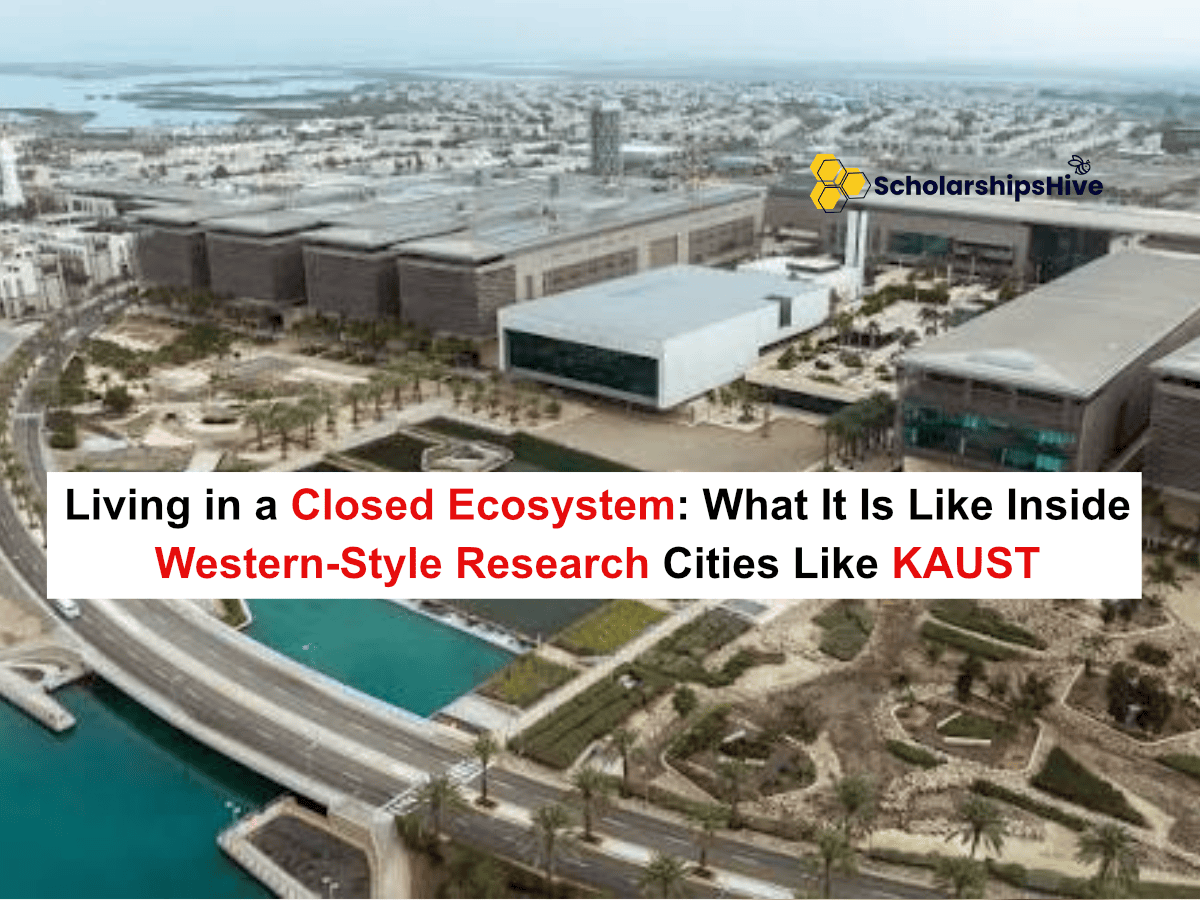
Instead of navigating the bustling, high-density traffic of traditional metropolitan hubs like Riyadh or Jeddah, new arrivals find themselves within a master-planned, self-contained, Western-style research city. Often described as a “closed ecosystem” or an academic bubble, KAUST and similar high-tech enclaves are engineered to provide a seamless fusion of world-class scientific laboratories, luxurious residential neighborhoods, recreational infrastructure, and international cultural pluralism.
This comprehensive guide explores the unique daily experience of living inside Saudi Arabia’s elite Western-style research cities, examining architectural design, community governance, academic freedom, family lifestyle, and practical coping mechanisms for life within a closed campus ecosystem.
1. The Architectural and Spatial Blueprint of a Research City
Unlike traditional university campuses that blend directly into surrounding urban sprawls, KAUST was conceived and built from the ground up as an independent, ultra-modern municipality:
- Self-Contained Infrastructure: The campus functions as an entirely autonomous town. It features its own water desalination plant, wastewater treatment facilities, internal power grids, fire stations, security perimeters, medical centers, supermarkets, banks, postal services, and schools.
- Architectural Harmony: Blending traditional Arabic architectural motifs with sleek, ultra-modern modernist design, buildings are optimized for the desert and coastal climate. Expansive glass facades, shaded courtyards, wind towers, and cutting-edge cooling systems ensure year-round comfort.
- Pedestrian and Eco-Friendly Mobility: Within residential zones, automobile traffic is heavily minimized. Shaded walkways, cycling tracks, golf cart lanes, and electric vehicle charging stations dominate the landscape, allowing residents to commute effortlessly between labs, residential villas, and the campus marine basin.
2. Social Dynamics and Multicultural Pluralism
One of the most striking features of living inside a research city like KAUST is its intense demographic diversity:
- A Global Melting Pot: With faculty, researchers, graduate students, and staff hailing from over 100 nationalities, the community operates as a vibrant global village. English serves as the universal working and social language across laboratories, classrooms, and community centers.
- The “Campus Bubble”: Because the community is physically gated and self-contained, social life revolves tightly around university events, beach clubs, community theaters, sports leagues, and departmental gatherings. Neighbors often become close surrogate families.
- Cultural Blending: While the ecosystem adopts a Western lifestyle standard—featuring private beaches, unsegregated recreational spaces, and western-style retail outlets—it exists respectfully within the broader sovereign context of Saudi Arabia’s rich Islamic heritage and traditions.
You may also like this: Medical Fitness Reports: The Specific Laboratory Checks Required for Saudi University Clearance, Saudi Arabia
3. Academic and Scientific Rigor Within the Ecosystem
The primary purpose of this multi-billion-dollar infrastructure is uncompromised scientific and technological discovery:
- Endless Research Funding: Graduate scholars and principal investigators enjoy access to state-of-the-art core laboratories equipped with world-class electron microscopes, supercomputing facilities (such as the Shaheen supercomputer cluster), and marine research vessels.
- Interdisciplinary Collaboration: Because researchers live just a short walk or bicycle ride from their laboratories, academic collaboration is fluid and continuous. Late-night brainstorming sessions at the campus coffee shop often translate into breakthrough publications.
- Industry Integration: Close partnerships with global energy, technology, and biotechnology giants bridge the gap between pure academic research and commercial innovation, offering graduate students direct pathways into global careers.
4. Daily Life: Recreation, Wellness, and Family Welfare
Life inside a research city is meticulously designed to ensure that intense academic workloads are balanced with holistic well-being:
- Red Sea Recreation: Access to the Red Sea coastline allows residents to engage in world-class scuba diving, snorkeling, sailing, kayaking, and kite-surfing right on their doorstep.
- Comprehensive Athletic Facilities: Modern fitness centers, Olympic-sized swimming pools, tennis courts, golf courses, and indoor gymnasiums are available to all residents at nominal or zero cost.
- Family and Child Education: On-site international schools, nurseries, and Montessori kindergartens provide exceptional education for researchers’ children, making the transition seamless for families relocating from abroad.
Check this out: The Foreign Police Clearance Certificate: Formatting Your Local Non-Criminal Background Check in Saudi Arabia
Official Scholarship Links & Resources
- KAUST Official Admissions & Life Portal: King Abdullah University of Science and Technology
- KAUST Community Life & Services: Campus Housing & Living Guide
- Unified Government Scholarship Platform: Study in Saudi Arabia Portal
- Join our WhatsApp Channel for the latest updates on international scholarships and deadlines.
Frequently Asked Questions
Is living inside a research city like KAUST isolated from traditional Saudi culture?
While the internal campus ecosystem operates as a self-contained, Western-style community with relaxed social norms, residents are free to travel outside the gates. Regular shuttle buses and highways connect the campus directly to major cultural hubs like Jeddah and Mecca, allowing scholars to experience authentic Saudi culture firsthand.
Are spouses and children permitted to live with graduate scholars inside the research city?
Yes. Fully funded graduate and research packages at institutions like KAUST explicitly provide spacious family housing, healthcare insurance, schooling, and community support for accompanying spouses and children.
What language is spoken inside the campus community?
English is the official language of instruction, administration, research, and daily community interaction across the campus, making it accessible to international scholars from around the globe.
Final thoughts and advice from scholarshipshive
Living inside a closed, Western-style research city like KAUST in Saudi Arabia is an extraordinary, transformative experience. By balancing elite, uncompromised scientific infrastructure with a supportive, multicultural community lifestyle, these master-planned ecosystems empower international scholars to achieve peak academic performance while enjoying an exceptional quality of life. Embrace the unique community spirit, explore the Red Sea coastline, and step forward with absolute confidence toward your academic success in the Kingdom.