
Guide to F-1 Student Visa Interview for Scholarship Winners USA 2026: Fully Funded and Merit-Based Grant Verification Timeline
Key facts
- Country
- USA
- Funding
- Fully Funded, Partially Funded
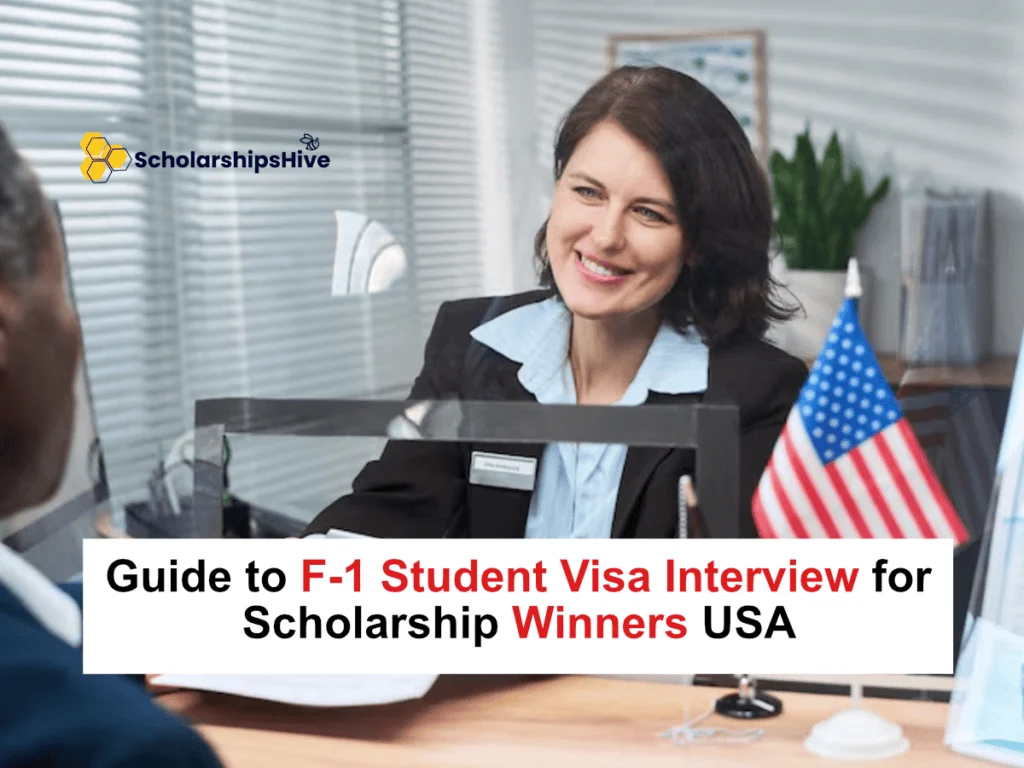
Securing a competitive merit award, an institutional fellowship, or a fully covered graduate stipend from an American university is a massive milestone. However, winning the funding is only the first half of your journey. The final, critical gatekeeper between your home country and an American campus is the consular officer at the US Embassy. For international scholars entering the 2026 and 2027 academic terms, passing this high-stakes, multi-minute conversation requires a unique communication strategy that highlights your award without raising red flags.
A common mistake among funding recipients is assuming that an official university grant guarantee ensures an automatic visa approval. In reality, every applicant enters the consulate under the legal presumption of “immigrant intent” (Section 214(b) of the Immigration and Nationality Act). By mastering the Guide to F-1 Student Visa Interview for Scholarship Winners USA, you can confidently present your financial documents, explain your academic motives, and effortlessly prove your strong ties to your home community.
The Strategic Edge of Being a Scholarship Winner
Consular officers process hundreds of student visas daily, and they are trained to look closely at financial credibility. When you declare that your studies are backed by institutional funds, your profile immediately gains a strong layer of trust.
An official funding letter tells the officer two highly important things:
- Academic Validation: A recognized US institution has thoroughly reviewed your academic background, transcripts, and potential, choosing to invest thousands of dollars of their own capital into your education.
- Minimized Financial Risk: Because your tuition or living costs are covered by an institutional source, you represent a very low risk of working illegally off-campus or experiencing a financial emergency during your stay.
Check this: Boston University Trustee Scholarship: Undergraduate International Students, USA | Fully Funded
Core Pillars of a Successful Funding Interview
- Clear Breakdown of Your Financial Package: You must be ready to explain exactly what your funding covers (e.g., full tuition, partial waivers, or a monthly stipend for living expenses) and how you will cover any remaining balance.
- Articulating Your Value to Your Home Country: The officer needs to see that your degree serves a clear purpose. You must explain how your specialized training will directly benefit your home country’s economy or tech sector upon your return.
- A Confident, Natural Presentation: Avoid reciting a memorized script. Focus on delivering short, honest, and professional answers that highlight your genuine passion for your chosen field.
The Step-by-Step Consular Interview Execution Routine
Navigating your visa appointment smoothly requires an organized approach to arranging documents, prepping answers, and managing the checkout counter.
1.Sync Your Official Form I-20 and SEVIS Payment Confirmations:
Cross-check your printed Form I-20 to ensure your scholarship or assistantship amount is accurately recorded under the “Financials” block. Pay your SEVIS I-901 fee online and print the physical receipt page.
2.Organize Your Scholarship Letters and Financial Records:
Place your official university award letter, department fellowship contract, or stipend breakdown at the very front of your folder. Keep supporting family bank statements behind them to cover any remaining costs.
3.Practice Quick, Clear Explanations of Your Career Goals:
Formulate concise, 30-second responses detailing your program choice, why you received the merit funding, and your definitive plans to return home to work in your local industry after graduation.
4.Present Your Documents Confidently at the Embassy Window:
Maintain direct eye contact with the consular officer. Hand over your passport, DS-160 confirmation page, and I-20, and lead your financial answers by clearly stating your scholarship status.
You may also like this: University of Rochester Dean’s Scholarship: Undergraduate International Students, USA | Partially Funded
Crucial Q&A Scenarios for Scholarship Winners
Officer Question: “I see you have a scholarship. Why did the university award this to you?”
- The Strategic Goal: Avoid giving a vague response like “Because I am a good student.” Instead, highlight your concrete achievements.
- Excellent Response: “The university awarded me a Graduate Research Assistantship based on my undergraduate research in renewable energy systems. This package covers 100% of my tuition and provides a monthly living stipend in exchange for my research contributions to their engineering lab.”
Officer Question: “Your scholarship is partial. How will you cover the remaining $12,000 listed on your I-20?”
- The Strategic Goal: Show that your funding sources are completely solid and transparent, without any gaps.
- Excellent Response: “The remaining $12,000 is fully covered by my parents’ personal savings. I have brought their original certified bank statements and an official affidavit of support showing an available balance that comfortably covers these remaining costs.”
Check this out: Wesleyan Freeman Asian Scholarship Program: Undergraduate International Students, USA | Fully Funded
Official Program Resources and Verification Links
Official US Department of State Student Visa Hub: https://travel.state.gov/content/travel/en/us-visas/study/student-visa.html — The verified government portal outlining core security rules, DS-160 processing instructions, and mandatory interview document checklists.
Join our WhatsApp Channel for the latest updates on international scholarships and deadlines.
Frequently Asked Questions
What should I do if my university scholarship letter arrives after my visa interview date?
You should never attend your F-1 visa interview without a physical copy of your official scholarship letter or an updated Form I-20 that reflects your funding. If your financial packages change after scheduling your slot, log into your admissions portal, request an updated I-20 from your university counselor, and reschedule your visa interview for a later date if necessary.
Can a visa officer still reject my F-1 application if I have a 100% full-ride scholarship?
Yes, a visa officer can still issue a refusal even with full institutional backing if they believe you do not intend to return to your home country after graduation. Remember, your financial stability is only one part of the review process. You must still demonstrate strong career, family, or societal ties to your home country to clear the interview successfully.
Do I need to bring my original academic transcripts if my funding is merit-based?
Absolutely. Even though your university has already verified your academic records to award you the scholarship, the consular officer has the authority to audit your academic background independently. Always bring your original, stamped university degrees, semester transcripts, and standardized test scores to the window to prevent any processing delays.
Final Thoughts & Advice by Scholarships Hive
Approaching your F-1 student visa interview with an official scholarship in hand is an incredible advantage that gives you a confident, highly credible edge at the consulate window. By organizing your funding letters cleanly, clearly mapping out your post-graduation return plans, and explaining your funding details with professional pride, you can smoothly secure your visa. final thoughts and advice from scholarshipshive
For a complete look at how these embassy interactions flow in real life, checking out this US Embassy Student Visa Mock Interview Session can help you observe the pacing, confidence, and professional body language needed to succeed at the window.
Explore similar scholarships
Never miss a deadline
Get new fully funded scholarships every day. Follow Scholarships Hive on your favourite app.
Similar scholarships
 Emily Lester Vermont Opportunity Scholarship Application Guide 2026–2027: Requirements & Deadline
 Richard T. Gates Engineering and Technology Endowed Challenge Scholarship Application Guide 2026–2027: Requirements & Deadline
 Alice C. Coapland Scholarship Application Guide 2026–2027: Requirements & Deadline
 Vermont Police Association Scholarships Application Guide 2026–2027: Requirements & Deadline
 Vermont State Grange Educational Aid Fund Application Guide 2026–2027: Requirements & Deadline
 Vermont John H. Chafee Education and Training Scholarship Application Guide 2026–2027: Requirements & Deadline