📲 Join our WhatsApp for Daily Fully Funded Scholarship Alerts
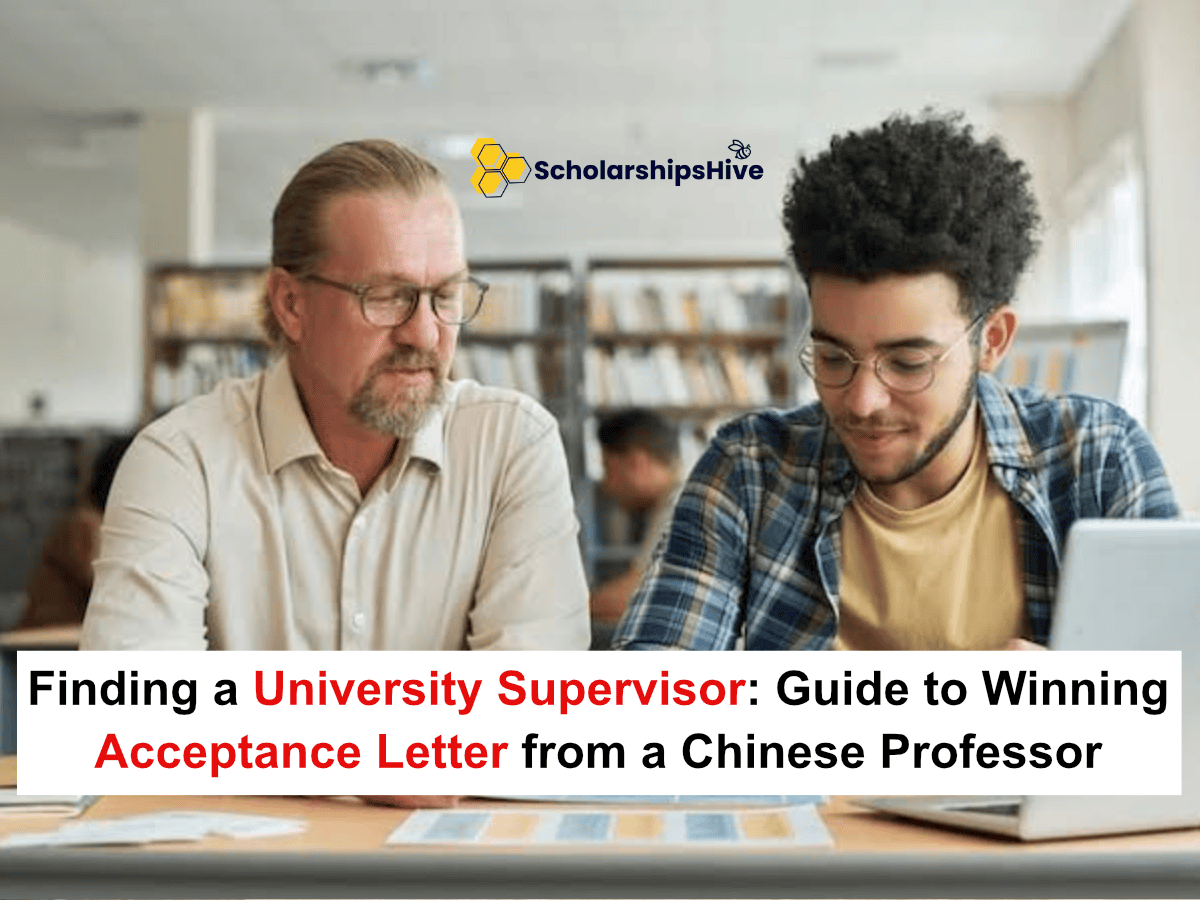
For postgraduate and doctoral applicants aiming to study in China, landing an Acceptance Letter (also known as an Invitation or Pre-Acceptance Letter) from an official faculty supervisor is one of the most powerful ways to secure admission. While certain admission tracks technically allow submissions without one, having a professor explicitly vouch for your research profile shifts your application from a blind stack into the high-priority pool.
This guide breaks down the strategic communication framework required to catch the attention of Chinese faculty for the active 2026 selection window, ensuring you line up the support needed for both fully funded and partially funded educational tracks for the upcoming 2027 academic intake.
Why a Supervisor Letter Matters for Funding Tiers
An acceptance letter from a professor acts as an academic green light. However, how it affects your final financial award depends heavily on your application pathway:
- Fully Funded Tracks (University Programs): For competitive, lab-based STEM, AI, data science, and engineering majors at top-tier universities, a professor’s acceptance letter is often mandatory. If a professor accepts you into their laboratory group, the university’s central international admission board is significantly more likely to grant you a fully funded seat (covering full tuition, free accommodation, and a monthly stipend).
- Partially Funded Routes: If your academic profile or research proposal is strong but funding limits are reached for full allocations, a professor’s backing can occasionally help pivot your application toward regional, provincial, or partial institutional awards (covering tuition-only or providing a modified stipend structure).
Check this: How to Contact US Professors for Research Assistantships (RA) : Strategic Faculty Outreach and Funding Guide
The 3-Step Blueprint to Landing an Acceptance Letter
Spamming hundreds of professors with a generic, copy-pasted email will almost certainly result in your messages landing straight in the trash folder. To achieve a high response rate, apply this precise, highly tailored approach:
Step 1: Track Down the Right Faculty Profiles
Do not browse blindly. Visit the official international student portal or departmental directory of your target Chinese university (e.g., Tsinghua, Peking, or Shanghai Jiao Tong University). Filter the faculty list strictly by your specific field of study.
Select 3 to 5 professors whose current research themes closely intersect with your undergraduate or master’s thesis background. Make a note of their official institutional email address and look up the titles of their last three published research papers.
Step 2: Structure a High-Conversion Cold Email
Your introductory email needs to be concise, professional, and clear about your objectives. Use a structured format that respects the professor’s time:
- Subject Line: Keep it descriptive and clear. Example: “Prospective 2026 PhD Applicant: Research Inquiry on [Insert Specific Subfield] – [Your Name]”
- The Hook: State your current academic standing, your cumulative GPA, and your intent to apply for the university’s international scholarship programs.
- The Connection: Explicitly mention their recent research work or publications. Explain in two sentences how your academic background or proposed project directly aligns with their active laboratory projects.
- The Request: Politely ask if they have an open slot for an international student under their supervision for the upcoming cycle and request a brief virtual call or an evaluation of your CV.
Step 3: Package Your Professional Documents
Never send an email without attaching well-structured, clear documentation. Ensure your email contains exactly three attachments, cleanly labeled with your full name:
- An Academic CV: Highlight your technical skills, published papers (if any), research projects, and graduation GPA.
- A Draft Research Proposal: A focused, realistic plan outlining what you intend to study under their supervision (minimum 800 to 1,000 words).
- Transcripts & Language Proof: A clean scan of your university transcripts alongside your IELTS/TOEFL scores or an HSK certificate.
You may also like this: How to Get a Letter of Recommendation (LOR) for US Professors: Strategic Academic Outreach and Reference Guide
Crucial Rules to Keep in Mind During Correspondence
The Supervisor vs. Pre-Admission Distinction: A supervisor’s invitation letter or email agreement is an informal academic asset. It is not an official institutional Pre-Admission Letter. You must still upload this supervisor letter into the campus system and pass the university’s central admissions office review to receive a formal university admission notice.
- Avoid Multi-Emailing the Same Faculty: Never email multiple professors within the exact same department at the same time. Chinese faculties collaborate closely; if two professors discover you sent them the exact same generic inquiry simultaneously, it can compromise your credibility. Wait at least 7 to 10 days for a response before gently moving on to an alternative faculty contact.
- Account for Regional Timing: Professors in China manage heavy instructional and administrative workloads. Send your inquiries during regular working hours in China Standard Time (CST), preferably mid-week, to prevent your message from being buried under weekend emails.
The Strategic Post-Acceptance Process
Once a professor responds positively and provides a signed acceptance format, follow these system steps to finalize your application:
1.Upload the Letter to the University Portal:
Log into your account on the official admission portal of your chosen Chinese university. Upload the scanned PDF copy of the supervisor’s signed acceptance letter directly into the designated “Supporting Documents” field.
2.Complete the Academic Profiles:
Complete the remaining sections of the application form, making sure to explicitly input your approved supervisor’s name within the faculty selection dropdown to link your profile directly to their lab.
3.Keep Your Supervisor Updated on Status:
Send a brief, professional confirmation note back to the professor once your official portal submissions are complete. Let them know your application tracking reference code so they can easily track your file when the departmental review phase begins.
Check this out: Comparison: Fully Funded vs. Partially Funded US Scholarships for International Students
Official Program Resources and Verification Links
Official Campus China Online Portal: http://www.campuschina.org — The primary master platform where international applicants register accounts, look up institutional directories, and cross-reference government funding pipelines.
Official China Scholarship Council Informational Directory: https://www.chinesescholarshipcouncil.com/ — The main policy and guide archive outlining general admission rules, requirements, and institutional application protocols across mainland China.
Join our WhatsApp Channel for the latest updates on international scholarships and deadlines.
Frequently Asked Questions
Can I change my university choices if a professor from a different school accepts me?
Yes, since you apply to individual universities independently, you can manage separate portals. If you receive an acceptance letter from a professor at a different institution, you simply create or update an application on that specific university’s system using their custom template.
What should I do if a professor asks for an interview over WeChat or Zoom?
Treat this as a formal academic review. Be ready to explain your past research thesis work, your specific data collection models, and why their unique laboratory setup matches your long-term milestones. Ensure your web connection is fully stable, and review their recent research papers before the call starts.
Is a supervisor letter from an associate professor valid for the PhD track?
Yes, letters from both full Professors and Associate Professors are completely valid and highly respected by university admissions boards. The key factor is making sure the faculty member has the legal authority within their department to take on international graduate students for the upcoming cycle.
Final Thoughts & Advice by Scholarships Hive
Finding a willing supervisor requires patience, clear research alignment, and a highly professional digital presentation. Treat your cold outreach as a formal academic introduction; proving you understand a professor’s research direction before you reach out will make your profile stand out instantly. Take the time to tailor your proposal, double-check your documents, and reach out early in the season to secure that critical endorsement well ahead of the heavy portal deadline rush.