📲 Join our WhatsApp for Daily Fully Funded Scholarship Alerts
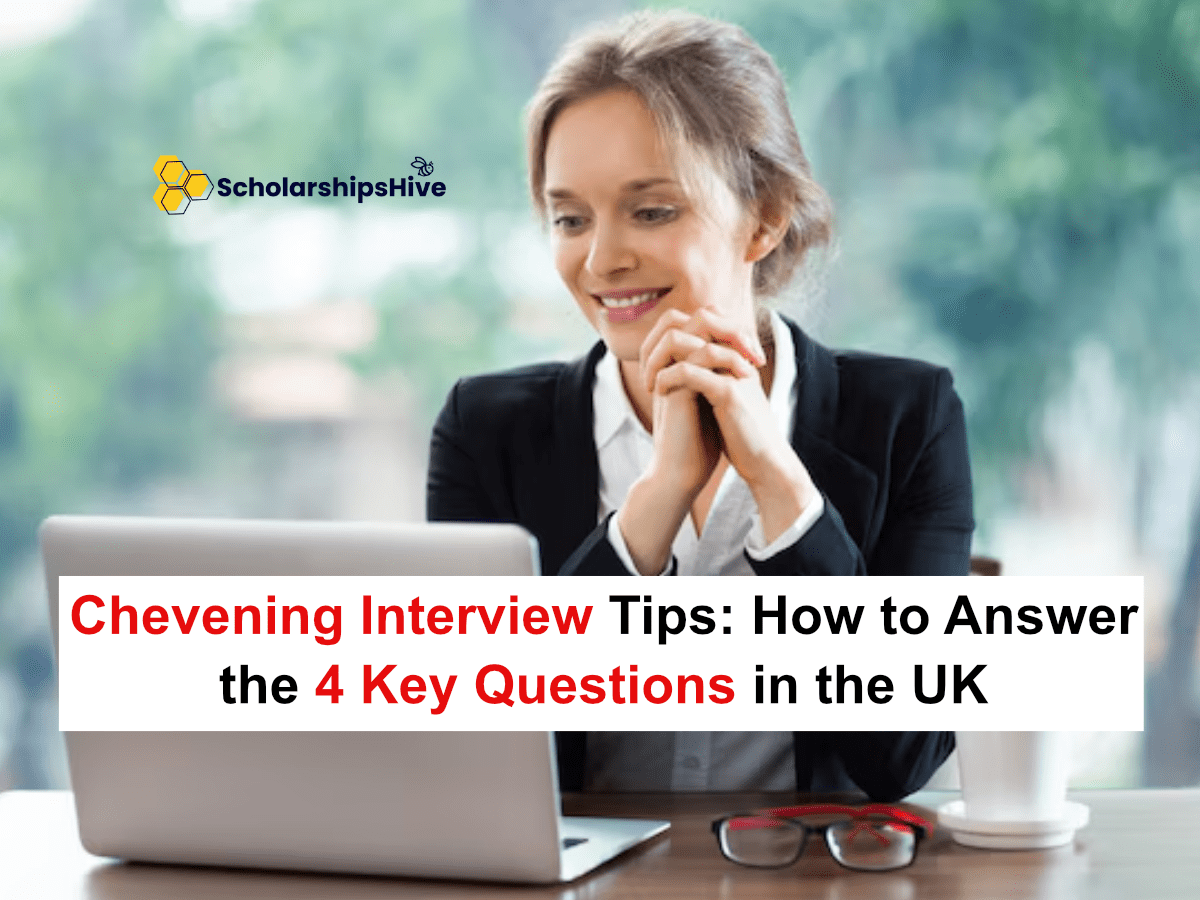
Being invited to the interview stage for the UK government’s prestigious, fully funded Chevening Scholarship is a massive achievement. It signifies that the selection panel recognizes future leadership potential within your written paper application. However, the interview is where the vital selection takes place. The panel is not looking for candidates who simply memorize their essays word-for-word; they want to see the authentic, passionate global change-maker behind the text.
The core of the interview centers around 4 key questions that map directly to the foundational pillars of the Chevening program. To secure your spot at a top-tier UK university, you must understand exactly what the panel is testing with each question, how to deliver high-impact responses, and how to expand your arguments to meet the rigorous standard of British academic excellence.
The Secret Weapon: The STAR Interview Method
Before diving into the exact questions, you need a reliable structural framework to keep your stories concise, logical, and impact-driven. The selection panel interviews thousands of candidates globally; generic, rambling, or unstructured answers are a swift route to rejection. To prevent this, anchor every single behavioral example you share in the STAR method:
- Situation: Set the scene clearly. Describe the specific professional context, project environment, or organizational crisis you were facing. Keep this part brief but sufficiently detailed to provide adequate context.
- Task: Explain your exact responsibility, target goal, or the precise challenge that needed to be overcome in that situation. What was required of you as a professional?
- Action: Detail the exact, deliberate steps you took to solve the problem or lead the initiative. Focus heavily on your individual choices, skills, and strategic thinking rather than just describing the team’s work.
- Result: Highlight the final, quantifiable, and positive outcome of your actions. Whenever possible, use concrete data, percentages, or structural changes to prove your real-world impact.
You may also like this: Low-GPA Scholarships: Getting into German Public Universities with a 2.5 CGP | Partial Funding
How to Master the 4 Key Chevening Questions
1. The Leadership and Influencing Question
- What the panel is testing: Your capacity to drive meaningful change, influence opinions, solve complex problems under pressure, and lead projects with tangible, sustainable impact.
- The Common Trap: Giving a vague, textbook definition of what leadership means to you, or using the collective pronoun “We” too much, which dilutes your personal contribution.
- The Winning Strategy: Focus strictly on a specific, real-world scenario where you actively took initiative. Walk the panel through how you negotiated a conflict, managed challenging team dynamics, or built an innovative solution with limited resources. Emphasize your personal choices and communication strategy. Conclude your answer by reflecting on what the experience taught you about your evolving leadership style and how it prepares you for global networks.
2. The Networking Question
- What the panel is testing: Your ability to build, maintain, and strategically leverage professional relationships across diverse sectors to achieve a positive, systemic outcome.
- The Common Trap: Confusing simple social media connection (like accumulating thousands of random LinkedIn connections) with true, impactful professional networking.
- The Winning Strategy: Tell a compelling story about a time you connected diverse stakeholders—such as bridging an operational gap between an NGO, a government department, and a local community—to achieve a shared public goal. Explain the deliberate methods you used to maintain those professional ties over time. Crucially, explain how you intend to engage with the global Chevening alumni network during your stay in the United Kingdom and how you will leverage those connections upon returning home.
Check this out: Finding a “WG”: How to Find Shared Housing in German Cities
3. The Studying in the UK Question
- What the panel is testing: Your academic readiness, intellectual curiosity, and the depth of your institutional research. The panel wants to know why your choices genuinely align with your professional future.
- The Common Trap: Focusing entirely on generic university rankings or stating that you want to study in the UK because it is a historic country with beautiful landscapes.
- The Winning Strategy: Focus your discussion primarily on your first-choice UK university and course, while showing equal familiarity with your second and third options. Highlight specific, specialized academic modules, unique research labs, or specific professors whose published work directly impacts your field. Connect these academic resources explicitly to the specific development gaps or priority industry areas existing within your home country, showing exactly how this British degree will bridge that knowledge gap.
4. The Career Plan Question
- What the panel is testing: Your long-term vision, realistic execution strategy, and your commitment to returning home to drive sustainable development.
- The Common Trap: Presenting a vague, overly ambitious plan (e.g., “I want to become a United Nations ambassador” or “I want to end poverty” ) without providing any practical steps.
- The Winning Strategy: Provide a highly structured career timeline divided into three clear, logical phases:
- Short-Term (1–3 years): The immediate operational job, research role, or project management position you will step into upon returning from the UK.
- Mid-Term (5 years): Senior management, policy-shaping, or institutional leadership roles where you can implement structural adjustments based on your UK education.
- Long-Term (10+ years): Large-scale leadership goals that directly support national development goals or align with UK priority areas in your region.
Check this: Free University of Berlin without IELTS: Is it possible? in Germany | Partial Funding
Critical Mistakes That Can Cost You the Scholarship
- Reciting Your Essays Verbatim: The panel has your application printed in front of them. If you repeat your written sentences word-for-word, you miss the valuable opportunity to add fresh depth, human emotion, and updated professional milestones achieved since your initial submission in 2026.
- Lack of UK-Specific Context: You must demonstrate a clear, logical link between your career ambitions and how British expertise can act as a catalyst. Research the active projects the UK Foreign, Commonwealth & Development Office (FCDO) is supporting in your home country to ensure alignment.
- Failing to Prepare Questions for the Panel: Closing the interview by saying “No, I don’t have any questions” shows a lack of engagement and curiosity. Prepare one or two thoughtful, high-level questions about the future of the Chevening community or alumni engagement to leave a strong, lasting final impression.
Official Portals and Resource Links
Official Chevening Scholarship Interview Guidance Hub — Review the official statutory rules, book your interview slot, and confirm required physical documentation guidelines.
Chevening Resource Hub: Application Criteria — Refresh your knowledge on the core pillars, global priorities, and leadership expectations directly from the selection committee.
Join our WhatsApp Channel for the latest updates on international scholarships and deadlines.
Frequently Asked Questions (FAQs)
What should I wear to my Chevening interview, and what documents must I bring?
You should dress in formal, professional business attire to reflect the prestige of the award. You are required to bring valid physical identification, such as your passport, along with printed copies of your academic transcripts, your undergraduate degree, and the official interview invitation letter sent via the portal.
How long does the Chevening interview last, and who is on the panel?
The interview typically lasts between 30 to 45 minutes. The panel usually consists of two to three interviewers, including representatives from the British Embassy or High Commission in your country, along with local experts or Chevening alumni who understand your sector’s developmental challenges.
Can I change the order of my three university preferences during the interview?
Yes, you can discuss updates to your university and course choices during the interview if your professional goals have evolved. You must provide a strong, academic reason for the shift, and ensure that any new courses you mention still fit the strict eligibility guidelines for Chevening funding.
Final thoughts and advice from scholarshipshive
The Chevening interview is less of a rigid interrogation and more of a high-level dialogue about your vision for global development. The key to standing out is profound authenticity—own your professional triumphs, speak openly about the lessons learned from past projects, and show unshakeable clarity regarding your future goals. Use the STAR method to keep your narrative tight, stay polished and professional, and remember that the panel genuinely wants you to succeed. Take a deep breath, trust your preparation, and showcase your true potential as a future leader. Best of luck with your interview journey!