
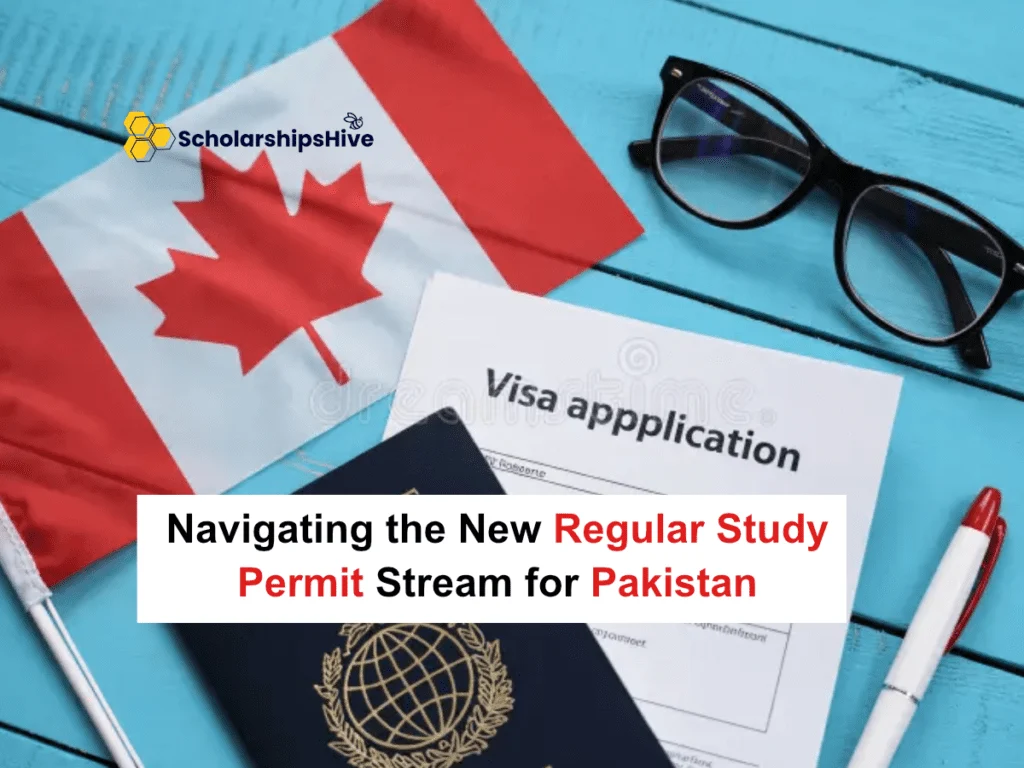
Canada Student Visa 2026: Navigating the New Regular Study Permit Stream for Pakistan
Key facts
- Country
- Canada
- Degree level
- Masters, Undergraduate
If you are a student in Pakistan planning to study in Canada for the 2026 intake, you have likely encountered conflicting information regarding the “Student Direct Stream” (SDS). It is crucial to clarify a major policy shift: The Student Direct Stream (SDS) was permanently discontinued by the Canadian government on November 8, 2024. This change marks a significant turning point for international applicants. As of 2026, there is no longer a choice between an “SDS” or “Non-SDS” visa path. All international students, regardless of their country of residence, now apply through the single Regular Study Permit stream. The previously celebrated 20-day “fast-track” visa process is no longer applicable. Understanding this change is the most important step in preparing your application, as relying on outdated information could lead to significant delays, unnecessary confusion, or complications in your study permit journey. It is time to align your expectations with the current regulatory framework.
Previously, the SDS offered an expedited processing route specifically for students from countries like Pakistan, provided they met strict criteria such as a full first-year tuition payment and a $10,000 CAD Guaranteed Investment Certificate (GIC). Since the closure of the SDS, the Canadian immigration authorities have moved to a unified, centralized assessment model. This shift means that there is no longer a “priority” lane or a guaranteed shorter timeline for specific nationalities. Every applicant, regardless of their academic merit or country of origin, is now evaluated under the same regulatory framework, which focuses on proving genuine student intent, long-term financial capacity, and academic readiness. The requirements for proof of funds, standardized language proficiency scores, and supporting documentation are now applied consistently across the board. While this change demands more careful planning, it provides a standardized and transparent process for all students seeking to pursue their education in Canada.
Check this: York University Global Leader of Tomorrow Scholarship, Canada: Partial Funding
1. What Changed? Why the “SDS vs. Non-SDS” Comparison is Outdated
Previously, the SDS offered an expedited processing route for students from specific countries, including Pakistan, provided they met strict criteria such as a full first-year tuition payment and a $10,000 CAD Guaranteed Investment Certificate (GIC).
Since the closure of the SDS, the Canadian immigration authorities have moved to a unified assessment model. This means:
- No Fast-Track: There is no longer a “priority” lane for specific nationalities.
- Standardized Processing: Every applicant is evaluated under the same regulatory framework, focusing on genuine intent, financial capacity, and academic readiness.
- Consistency: The requirements for proof of funds, language proficiency, and documentation are now applied consistently across the board.
2. Current Requirements for the Regular Study Permit Stream
Even without the SDS, Canada remains a welcoming destination for Pakistani students who are well-prepared. To succeed in the current system, you must meet the following mandatory requirements:
Essential Documentation
- Letter of Acceptance (LOA): An official offer from a recognized Canadian Designated Learning Institution (DLI).
- Provincial Attestation Letter (PAL): A mandatory document for most undergraduate and college-level programs. (Note: Master’s and PhD students at public institutions are generally exempt).
- Proof of Funds: You must demonstrate financial stability. For a single applicant outside Quebec, the current requirement is roughly $22,895 CAD for living expenses, in addition to your first-year tuition. A GIC remains a highly recommended way to provide clear, liquid evidence of these funds.
- Language Proficiency: Standardized test scores (IELTS Academic, PTE, etc.) that meet your institution’s minimum requirements.
You may also like this: Concordia University Presidential Scholarship, Canada: Fully Funded
3. Managing Your Timeline in 2026
Because the “20-day SDS promise” no longer exists, planning is your greatest asset.
| Application Stage | Estimated Timeline |
| Admission & Offer | 2–6 Weeks |
| PAL Acquisition | 1–4 Weeks |
| Visa Processing | 8–12 Weeks (Average) |
Pro Tip: Start your application process 6–8 months before your intended intake. Since you are now in a standard stream, processing times can vary based on application volume, document completeness, and security screenings. Submitting a “complete” file with all required biometrics and medical exams immediately will prevent unnecessary back-and-forth, which is the primary cause of delays.
4. Strategic Advice for a Successful Application
With the end of the fast-track stream, the quality of your application—specifically your Statement of Purpose (SOP)—has become more critical than ever.
- Be Authentic: Since visa officers are scrutinizing “genuine student intent,” your SOP should clearly articulate why you chose your specific program, how it aligns with your academic background, and how it fits into your long-term career goals in Pakistan.
- Financial Clarity: Use a combination of sources—bank statements, tax returns, and GICs—to paint a clear picture of your financial strength.
- Stay Updated: Immigration rules in Canada are subject to change. Always refer to the official IRCC website rather than relying on third-party guides that may still be referencing the defunct SDS program.
Check this out: Université de Montréal (UdeM) Exemption Scholarship: Tuition Waivers in Canada
Official Scholarship Resources
To maximize your funding opportunities while applying, explore these official portals:
- EduCanada Scholarship Search: The official Government of Canada portal for finding scholarships for international students.
- ScholarshipsCanada: A comprehensive database featuring thousands of awards, bursaries, and grants.
Join our WhatsApp Channel for the latest updates on international scholarships and deadlines.
Frequently Asked Questions
Is a GIC still necessary for my visa?
While the “SDS-specific” GIC requirement is gone, a GIC remains the most reliable and “clean” way to prove to a visa officer that you have the necessary funds for your living expenses. It is highly recommended to include one in your application.
Will my visa take 90 days?
Processing times vary. While 8–12 weeks is a common average in 2026, some complete applications are processed faster, while others take longer due to additional verification. Always check the official IRCC processing time tool for the most current data.
Does this change affect my PGWP eligibility?
No. Your eligibility for the Post-Graduation Work Permit (PGWP) is determined by your program of study and the DLI you attend, not by the stream under which you applied for your study permit.
Final Thoughts and Advice From ScholarshipsHive
The transition to a single study permit stream means that every application is now judged on its own merit. While you may miss the speed of the old SDS route, the current system is fair for students who provide transparent, high-quality documentation. My final advice for your 2026 application is to focus on completeness. Ensure your PAL is ready, your financial proof is beyond question, and your SOP tells a compelling story. By treating your application with the rigor it deserves, you can navigate the regular stream with confidence and move closer to your academic goals in Canada.
Explore similar scholarships
Never miss a deadline
Get new fully funded scholarships every day. Follow Scholarships Hive on your favourite app.
Similar scholarships
 How to Email Professors for Research Supervision (Ph.D. & Master’s Cold Email Templates)
 Banting Postdoctoral Fellowships: Securing a Canadian Host Institution
 McCall MacBain Scholarship at McGill University 2026, Canada: Fully Funded
 Vanier Canada Graduate Scholarships 2026: Fully Funded PhD in Canada
 Fully Funded Banting Postdoctoral Fellowships Canada 2026
 Sanctuary Scholarships: University-Specific Funding for Displaced Students 2026