📲 Join our WhatsApp for Daily Fully Funded Scholarship Alerts
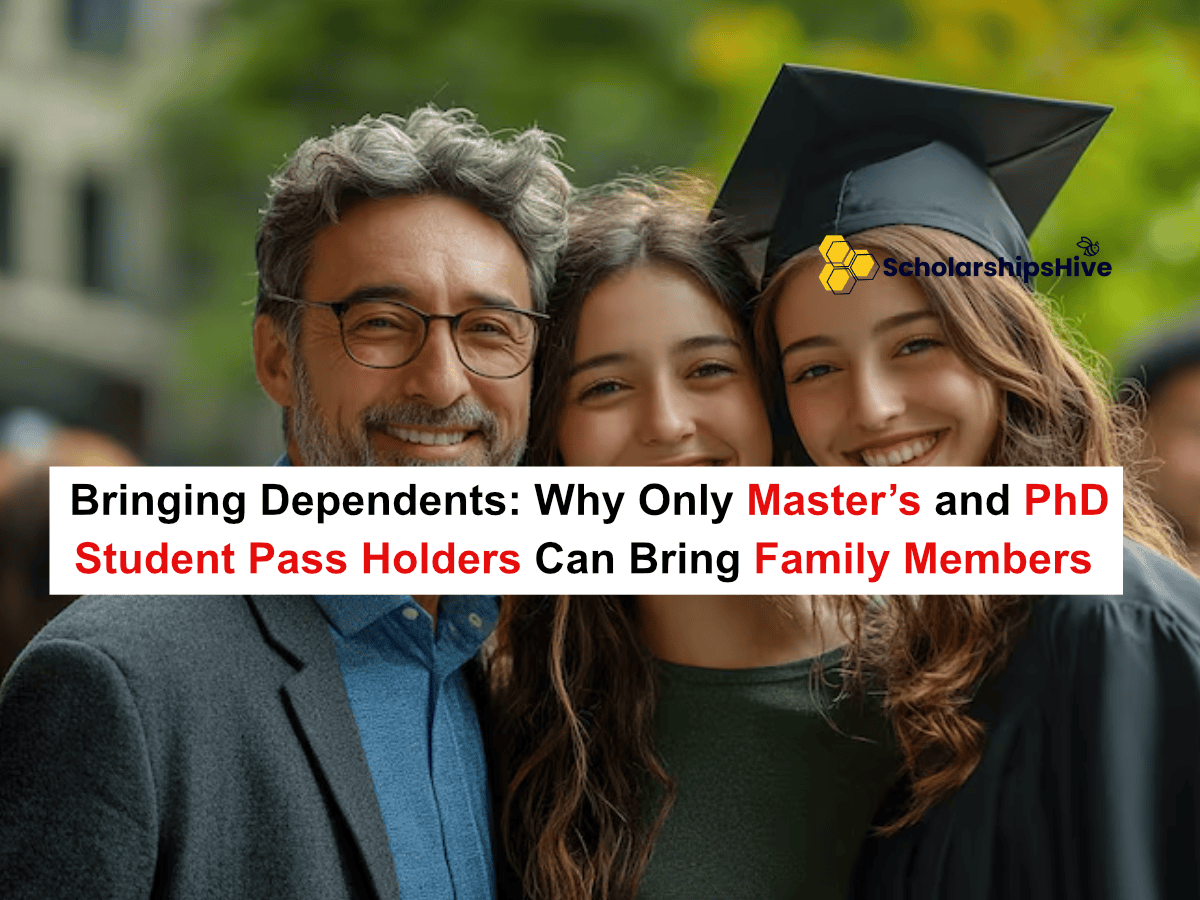
Deciding to pursue higher education abroad is a monumental choice, and for married students or those with families, the ability to bring loved ones along is often a decisive factor. When evaluating study destinations across the globe, Malaysia stands out for its high academic standards, affordability, and globally competitive universities. However, navigating its immigration framework reveals a distinct policy boundary: the privilege of bringing family members on a Dependent Pass is strictly reserved for postgraduate students enrolled in Master’s and PhD programs.
For international students looking at undergraduate or diploma tracks, this restriction often comes as a surprise. Understanding the rationale behind this policy enforced by the Malaysian Immigration Department and Education Malaysia Global Services (EMGS), along with the precise mechanics of family sponsorship, is vital for prospective applicants planning their educational journey for the 2026 intake cycle.
1. The Core Policy: Who Can Bring Dependents to Malaysia?
Under current Malaysian immigration regulations, the legal mechanism that allows an international student to sponsor family members is known as the Dependent Pass (issued as a Long-Term Social Visit Pass – LTSVP).
- The Postgraduate Threshold: Eligibility is explicitly tied to academic tier. Only international students pursuing full-time Master’s degrees (by research or coursework) or Doctor of Philosophy (PhD) programs lasting more than twelve (12) months are universally permitted to apply for dependent passes for their immediate family members.
- Exclusion of Undergraduate Tracks: Students enrolled in undergraduate bachelor’s degrees, foundation studies, diploma programs, or short-term language certificates are generally not eligible to sponsor dependents.
- Who Qualifies as a Dependent? For eligible Master’s and PhD candidates, the immigration framework strictly defines who can be brought along: a legal spouse (husband or wife) and children under the age of 18. Extended family members, siblings, or parents generally fall outside this automatic policy structure (though parental sponsorships may occasionally be reviewed under exceptional, highly restrictive circumstances).
Check this: Master’s by Coursework vs. Research: Which Degree Structure Is Preferred for Funding in Malaysia?
2. Why Does Malaysia Restrict Dependent Passes to Postgraduate Students?
The limitation restricting family sponsorship to advanced postgraduate researchers is built on several strategic administrative, economic, and social policy pillars:
A. Academic Focus and Intensity Control
Undergraduate studies in Malaysia (typically lasting 3 to 4 years) involve rigorous foundational learning, packed lecture schedules, continuous continuous assessments, and rigid credit structures. Immigration and educational authorities design undergraduate student passes with the assumption that the student’s undivided attention must remain on academic completion. Master’s and PhD programs, by contrast, involve advanced research, independent study schedules, and higher levels of academic maturity, making long-term family integration more manageable for the student.
B. Financial Self-Sufficiency and Economic Risk Mitigation
Supporting multiple individuals in a foreign country requires robust financial proof. Postgraduate students are presumed to possess better financial planning capabilities, scholarships, research grants, or personal funds capable of covering housing, medical insurance, and living expenses for multiple people. Restricting dependents helps prevent financial distress, unpaid utility bills, or students turning to unauthorized employment to feed extra household members.
C. Infrastructure and Resource Allocation
Malaysian universities and urban centers manage student housing complexes tailored primarily for single occupants. Master’s and PhD candidates are more likely to seek independent, private off-campus accommodation (such as residential condominiums) that naturally suit family units, whereas undergraduate student villages are built for individual communal living.
You may also like this: The HEC Attestation Rule: Verifying Your Pakistani Documents Before Applying to Malaysia
3. Key Rules and Compliance Standards for Dependent Pass Holders
If you qualify as a Master’s or PhD student and successfully bring your family to Malaysia, you must adhere strictly to several governing conditions:
- Validity Tied to the Student Pass: A Dependent Pass is entirely derivative. Its legal validity matches your primary Student Pass. If your student visa is shortened, revoked, or expires without renewal, your dependents’ passes immediately lose validity.
- Strict No-Work Rule for Dependents: A common misconception is that spouses holding a Dependent Pass can freely enter the Malaysian workforce. By law, dependents cannot work on a standard Dependent Pass. If a spouse wishes to secure formal employment in Malaysia, they must independently find a registered employer willing to apply for a separate, full-fledged Employment Pass (EP).
- Schooling Options for Children: Children under 18 holding a Dependent Pass are permitted to reside in Malaysia and can enroll in local international schools, private institutions, or expatriate schools, provided the parents submit a formal Permission to Study application endorsed by the immigration authorities.
4. Step-by-Step Application Workflow for Eligible Postgraduate Students
For qualifying Master’s and PhD candidates, applications cannot be filed casually; they follow a strict institutional pipeline:
- Secure Your Own Student Pass First: Your personal Student Pass and Visa Approval Letter (VAL) must be fully processed, approved, and endorsed before any dependent paperwork can be initiated.
- Document Compilation: Gather certified, translated English copies of marriage certificates (for spouses), birth certificates (for children), valid passports (with a minimum 12-month validity), financial statements proving sufficient funds, and official passport-sized photographs.
- Institutional Submission via EMGS: Submit the complete dependent dossier through your university’s international student office, which will log the request into the EMGS portal for immigration review.
- Visa Fee Settlement: Pay the required immigration processing fees, single-entry visa charges, and “journey performed” administrative fees associated with dependent entry clearance.
Check this out: The Grading System Explanation: What to Upload if Your Transcripts Do Not Explicitly State a CGPA in Malaysia
Official Portals and Resources
- Education Malaysia Global Services (EMGS): EMGS Dependant Pass Guidelines
- Malaysian Immigration Department: Jabatan Imigresen Malaysia Hub
- Join our WhatsApp Channel for the latest updates on international scholarships and deadlines.
FAQs
Can an undergraduate student bring their spouse to Malaysia on a tourist visa instead?
Family members can enter Malaysia on short-term Social Visit Passes (tourist visas), but these passes have strict limits (typically 30 to 90 days) and cannot be converted into long-term residency permits from within the country. Attempting to have family members reside long-term on recurring tourist entries violates immigration laws.
What happens to my dependents if I complete my Master’s or PhD early?
Because dependent passes are strictly tied to your active student status, completing your thesis or graduating early triggers the cancellation of your student pass. Your dependents will similarly be issued a short-term checkout memo to facilitate departure alongside you.
Are financial requirements higher when sponsoring family members?
Yes. When applying for dependent passes, the Malaysian Immigration Department and EMGS require proof of supplementary financial resources or increased bank balances to ensure you can support your dependents without public assistance.
Final thoughts and advice from ScholarshipsHive
Navigating family integration policies during your 2026 intake cycle requires careful upfront planning. By recognizing that Malaysia restricts dependent sponsorship strictly to advanced Master’s and PhD candidates, undergraduate applicants can avoid misplaced expectations. For postgraduate researchers, understanding financial thresholds, visa timelines, and strict no-work rules ensures a legally compliant, harmonious, and successful family study experience in Malaysia.