
Cost of Living in Romania 2026: Detailed Student Budget for Bucharest vs. Cluj
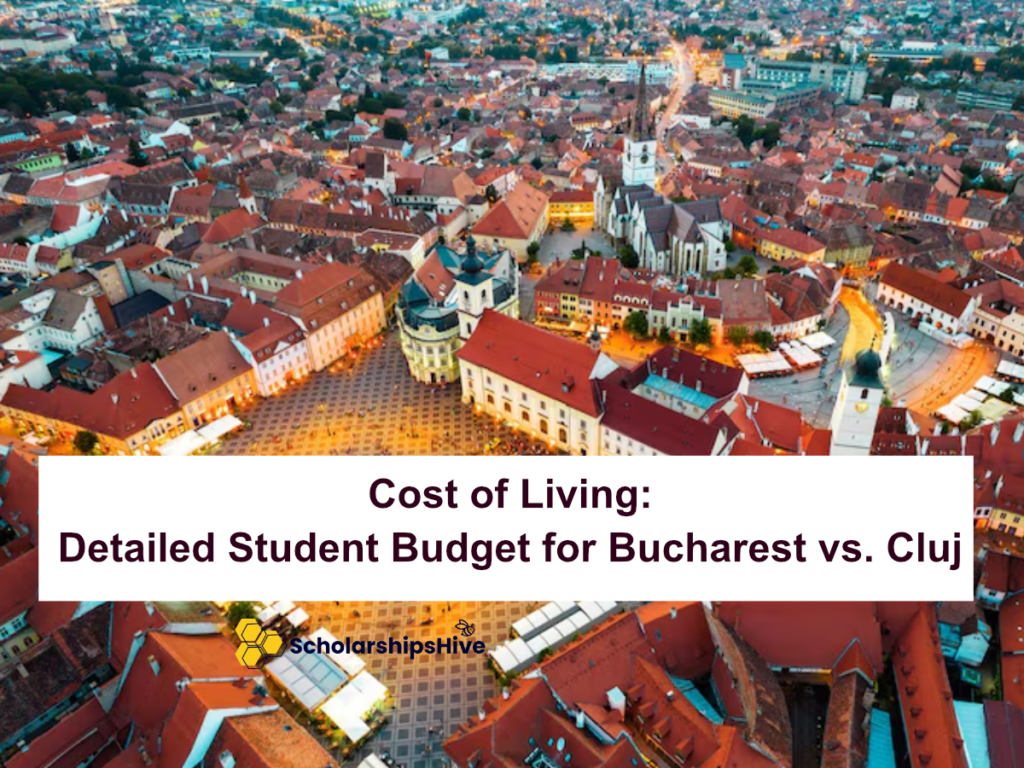
So, you’re trying to figure out if you should head to Bucharest or Cluj-Napoca? It’s a massive call. Both cities have great schools, but let’s be honest—your day-to-day life (and your bank account) will look pretty different depending on which one you pick.
We’re skipping the typical ‘brochure’ talk to look at what it actually costs to be a student in 2026. Whether you’re planning to live on a tight budget or you’ve got a bit more breathing room, this breakdown is here to help you plan. After all, you’re moving there to get a degree, not to spend the whole semester stressing over whether you can afford a coffee with friends.
1. Accommodation: The Biggest Monthly Expense
Housing will take up the largest portion of your budget. While Bucharest has more options, Cluj-Napoca has seen a massive surge in demand, making it surprisingly expensive.
Bucharest Accommodation
- University Dorms: €80 – €150 per month (limited for international students).
- Private Shared Room: €200 – €300 per month.
- Private Studio (City Center): €400 – €550 per month.
- Utilities (Internet, Electricity, Heating): €80 – €120 depending on the season.
Cluj-Napoca Accommodation
- University Dorms: €70 – €130 per month.
- Private Shared Room: €250 – €350 per month.
- Private Studio: €450 – €600 per month.
- Utilities: €90 – €130 (Winters in Cluj can be colder, leading to higher heating bills).
Verdict: Basically, since Bucharest is a massive city with apartments hitting the market constantly, you’ll usually have a much easier time finding a decent place that doesn’t drain your entire bank account compared to Cluj, where the supply is so tight that you almost always end up paying a premium just to secure a roof over your head.
Check out: Manaaki New Zealand Scholarship (Fully Funded)

2. Food and Groceries: Eating Like a Local
Grocery prices are relatively similar across Romania, as most students shop at hypermarkets like Kaufland, Lidl, or Carrefour.
Average Grocery Basket (Monthly): €200 – €250
- Loaf of Bread: €0.80
- 1kg Chicken Fillet: €7.00
- 1 Liter of Milk: €1.20
- 12 Eggs: €2.80
Dining Out
- Student Canteen (Mensa) Meal: €4 – €7
- Budget Restaurant Meal: €10 – €15
- Cappuccino in a Trendy Café: €3.50
Verdict: Both cities are equal here, though Cluj has a more “boutique” café culture which can be tempting for your wallet.
You may also like: Vanier Canada Graduate Scholarships (Fully Funded)
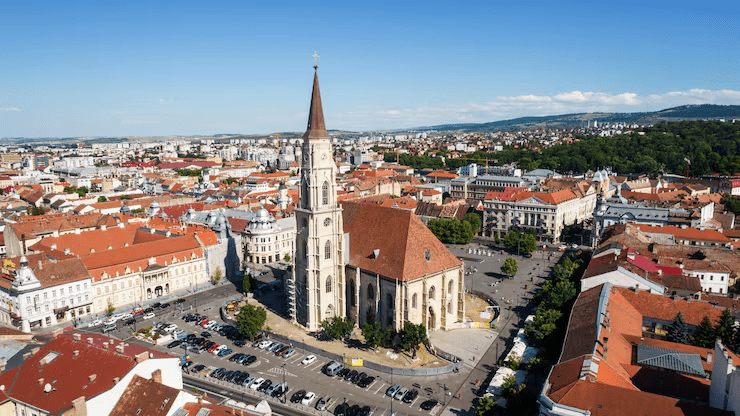
3. Public Transport and Mobility
Both cities are very walkable, but you will definitely need a transit pass for those early morning lectures.
- Bucharest: Has a massive Metro system and a surface network of buses and trams. A monthly student pass (with 90% discount) is incredibly cheap, costing roughly €1.60 (8 RON).
- Cluj-Napoca: No Metro (yet!), but has a very modern bus and trolleybus fleet. Students at accredited universities often get free or heavily subsidized monthly passes.
- Taxis/Rideshare (Uber/Bolt): Start at €0.60 per km in both cities.
Verdict: Bucharest wins due to the Metro, which saves you from heavy traffic during rush hour.
Check out our Guide on Romanian Government ARICE Scholarship: Fully Funded Tech Path for International Students (No IELTS Required)
4. Entertainment and Social Life
Being a student isn’t just about books! You need to budget for the weekend.
- Movie Ticket: €6 – €9
- Gym Membership: €30 – €50 per month
- Beer in a Pub: €3.00 – €5.00
- Nightclub Entry: €5.00 – €15.00
Verdict: Bucharest has a more diverse nightlife, while Cluj offers a cozy, community-driven “festival” vibe (especially around UNTOLD season).
Don’t forget that your budget must also include International Student Health Insurance, which is often a visa requirement.
5. Comparison Table: Monthly Student Budget 2026
| Category | Bucharest (Estimate) | Cluj-Napoca (Estimate) |
| Rent (Shared) | €250 | €300 |
| Food & Groceries | €220 | €220 |
| Transport | €2 (Subsidized) | €0 – €5 (Subsidized) |
| Utilities | €100 | €110 |
| Leisure/Misc | €150 | €150 |
| Total Monthly | €722 | €785 |
6. Hidden Costs to Consider
When moving to Romania in 2026, don’t forget these one-time or occasional costs:
- Residence Permit (Permis de Ședere): Approx. €50 for the fee and health insurance.
- Books & Supplies: €30 – €50 per semester (mostly digital now).
- Winter Clothing: If you come from a warm climate, budget at least €200 for a proper heavy coat and boots.
You may also like: The Ultimate Guide: Top 10 Universities in Romania
7. Tips to Save Money as an International Student
- Use Your ISIC Card: Always ask for “Reducere pentru studenți” (Student discount). It works for museums, trains, and many shops.
- Shop at Local Markets: For fresh fruits and vegetables, the “Piața” (Local Market) is much cheaper than supermarkets.
- Cook in Groups: Sharing meals with roommates is the #1 way to slash your food budget.
- Travel by Train: Students in Romania get massive discounts on domestic trains. Explore Brasov or Sibiu for almost nothing!
Conclusion: Which City Should You Choose?
Look at it like this: if you’re someone who actually enjoys that ‘big city’ hustle—the kind of person who wants to be surrounded by skyscrapers, a fast-paced lifestyle, and a endless sea of multinational companies to launch your career—Bucharest is your calling. It’s the heart of the action, and surprisingly, your bank account will actually be happier there, since rent and getting around tend to be much friendlier on a student budget.
On the flip side, if you’d rather have a ‘Silicon Valley’ vibe where everything feels safe, cozy, and walkable, Cluj-Napoca is definitely where you want to be. It’s a tech-driven, compact city where it feels like every second person you meet is either a fellow student or a startup founder. You might pay a few extra Euros each month for the privilege, but for that tight-knit ‘university town’ atmosphere, most students find it’s worth every cent.
Similar scholarships
 Erasmus Mundus Joint Masters Scholarship 2026 (Fully Funded Masters in Europe)
 Never Miss a Deadline: Follow the ScholarshipsHive Facebook Page for Real-Time Alerts in 2026
 Europe Without IELTS: 10 Fully Funded Scholarships Guide for 2026
 Never Miss an Opportunity Again: Join the ScholarshipsHive WhatsApp Channel!
 Final Checklist: 5 Things to Check Before the March 31 Deadline
 Document Legalization & Apostille for Romania: The Ultimate Student Guide for 2026