📲 Join our WhatsApp for Daily Fully Funded Scholarship Alerts
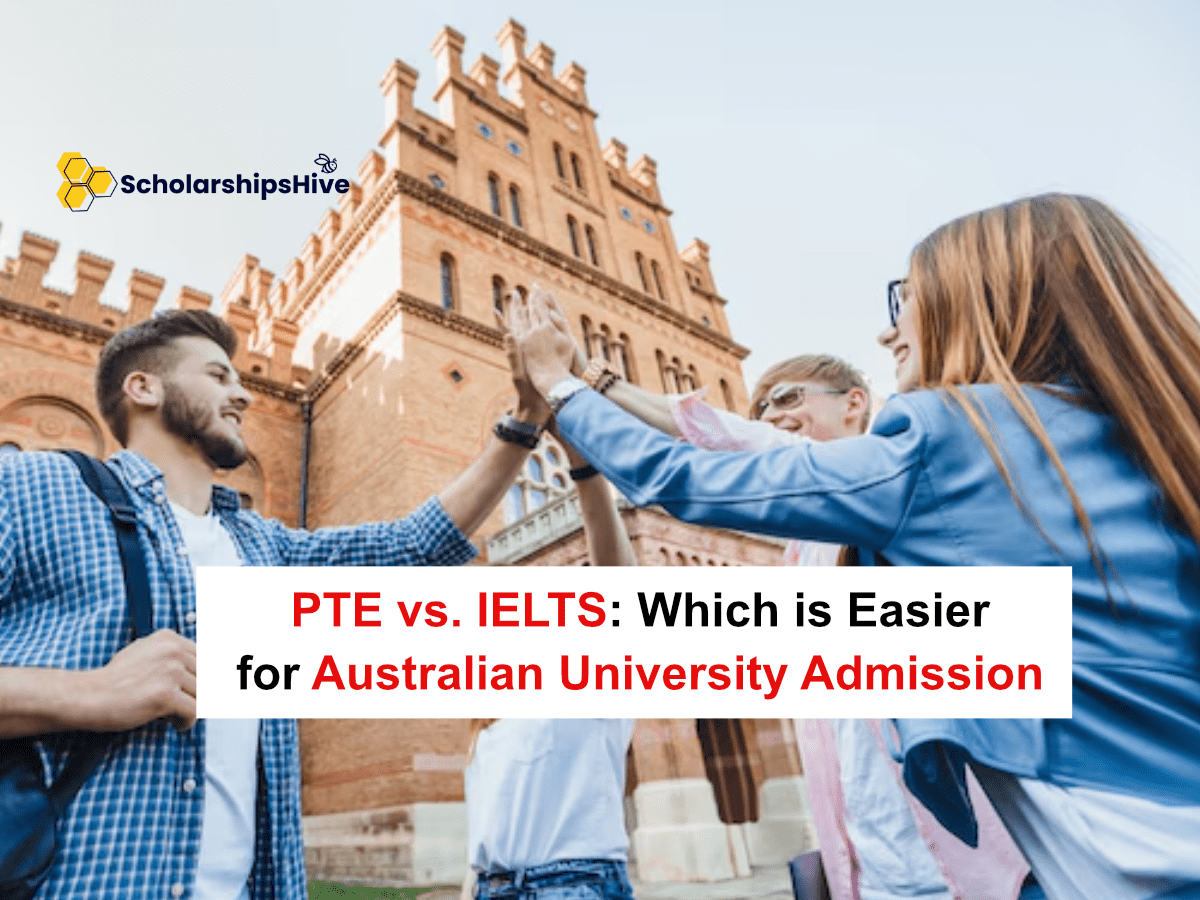
For thousands of international students, the most significant hurdle on the road to an Australian university degree is proving English language proficiency. With the Department of Home Affairs and top-tier Australian universities accepting both the PTE Academic and the IELTS Academic, students are often left wondering which one is “easier.”
The truth is that neither test is objectively easier; they simply test your skills differently. One is a highly structured, AI-driven digital experience, while the other is a traditional, human-led assessment. This comprehensive guide will help you decode which exam fits your testing style for the 2026 and 2027 intakes, ensuring you make the right choice for your future in Australia.
The Fundamental Difference: AI vs. Human Assessment
The core distinction between the two tests lies in how they are graded. Understanding this is the first step in deciding which one to take.
- PTE Academic (Pearson Test of English): This is a 100% computer-based, AI-scored exam. From the moment you begin the test to the final essay, an algorithm evaluates your performance based on pre-programmed criteria. There is no human examiner in the room, and the scoring is purely algorithmic.
- IELTS Academic (International English Language Testing System): This is a balanced test that combines computer-based or paper-based assessment with a face-to-face human interview for the Speaking component. The writing sections are also graded by trained examiners, allowing for a nuanced human perspective on your language usage.
Check this: University of Tasmania International Student (TIS) Scholarship, Australia: 25% Tuition Fee Reduction
PTE Academic: Why Students Often Find It “Easier”
Many students gravitate toward the PTE because it feels like a strategic game. If you are tech-savvy and comfortable with digital interfaces, the PTE may feel more natural to you.
1. AI Predictability
Because the PTE is graded by an AI, it is highly “coachable.” If you learn the specific templates, sentence structures, and strategies that the algorithm is programmed to recognize, you can often reach your target score faster than you could through raw linguistic improvement alone.
2. Fast Turnaround Times
In the competitive world of Australian university admissions, time is of the essence. PTE results are typically available within 48 hours. If you are close to an application deadline for the 2026 intake, this rapid reporting can be the difference between getting your offer letter on time and missing out.
3. No Subjectivity
The lack of a human examiner means no “bad day” bias. If you speak clearly and follow the required structure, the AI will score you based on your performance in that specific moment. Many students find the lack of eye contact during the speaking section—where you speak into a microphone—much less nerve-wracking than sitting across from a person.
You may also like this: UniSC International Bright Futures Scholarship, Australia: 20% Tuition Fee Reduction
IELTS Academic: The Gold Standard of Nuance
While the PTE has gained massive popularity in Australia, IELTS remains the global benchmark. For many, its traditional structure is actually the “easier” path.
1. The “One Skill Retake” Advantage
IELTS recently introduced the One Skill Retake (OSR). If you sit the full exam and score perfectly in three sections but fall slightly short in one (for example, missing your target in Writing), you can retake just that section. This removes the stress of having to sit through a three-hour exam a second time, saving you both money and mental energy.
2. Natural Conversation
If you have strong interpersonal skills, the face-to-face speaking interview can be an advantage. Human examiners can understand your intent, tone, and the context of your arguments better than a machine. If you are naturally articulate but struggle with the rigid structure of “robotic” templates, you will likely perform better in IELTS.
3. Global Legacy
While both are accepted in Australia, IELTS is universally recognized. If your career or academic plans eventually take you beyond Australia—to the UK, Canada, or the US—IELTS is often the more versatile credential to have on your resume.
Side-by-Side Comparison: Scoring and Logistics
| Feature | PTE Academic | IELTS Academic |
| Duration | Approx. 2 hours | Approx. 2 hours 45 minutes |
| Speaking Section | Speaking to a microphone | Face-to-face with an examiner |
| Results | Within 48 hours | 3–5 days (computer), 13 days (paper) |
| Writing Style | Template-driven, analytical | Creative, structured, argumentative |
| Retake Policy | Must retake the entire exam | One Skill Retake (OSR) available |
| Global Status | High (mostly for AU/NZ/UK) | Extremely High (Global standard) |
How to Choose for Your Australian Degree
To decide which is easier for you, do not rely on hearsay from friends. Use this systematic approach:
- Take a Diagnostic Mock Test: Spend an afternoon taking one free official practice test for both PTE and IELTS. Compare your results. You will almost always find that your score in one test is higher due to your personal test-taking style.
- Verify Your University Requirements: Some specific programs—particularly in Healthcare (Nursing/Medicine) and Teaching—may occasionally have specific requirements regarding how the English score is achieved (e.g., they may require a minimum score in every single component). Check the university’s admission page for 2026 and 2027 intakes.
- Check Visa Risk Levels: While both tests are accepted for the Student Visa (subclass 500), ensure you check the specific requirements for your country of passport. Some countries fall under higher assessment levels that might mandate specific scores.
Strategic Tips for Success in 2026
- If choosing PTE: Focus on mastering the templates for the “Describe Image” and “Retell Lecture” tasks. Efficiency in the test software is just as important as your English fluency.
- If choosing IELTS: Focus on your “Band Descriptor” criteria. Understand exactly what the examiner is looking for in your Writing task responses (Task Achievement, Coherence, Lexical Resource).
- Use the Right Tools: Utilize the British Council or IDP portals for IELTS, and the Pearson portal for PTE. Avoid unofficial study materials that may be outdated.
Official Resources
- PTE Academic Official: https://www.pearsonpte.com/
- IELTS Official: https://www.ielts.org/
- Study Australia English Requirements: https://www.studyaustralia.gov.au/
Join our WhatsApp Channel for the latest updates on international scholarships and deadlines.
FAQs
Is it true that Australian universities prefer PTE over IELTS?
No. Australian universities do not hold a bias. Both tests are held to strict quality assurance standards by the Australian government. Your preference should be based entirely on your personal strengths.
If I have an MOI letter, do I still need PTE or IELTS?
Some universities accept an MOI letter to waive the English requirement for admission. However, always confirm if your chosen university or the Department of Home Affairs requires a test score for your specific visa application, as these are separate processes.
How long should I study before taking either test?
If you are already proficient in English, 4 to 8 weeks of intensive practice is usually sufficient. Focus on understanding the test format rather than just studying “English” in general.
Final Thoughts and Advice
The “easier” test is simply the one that allows you to demonstrate your English proficiency in the most natural way for you. If you perform better with structure, patterns, and computer-based scoring, the PTE is your pathway. If you prefer human interaction and want the safety net of the One Skill Retake, IELTS is your best option. Do not overthink the test; instead, focus on the format that feels the most manageable, commit to a consistent 4-week practice schedule, and ensure your documents meet the 2026 standards for your university. Your goal is to secure your offer letter—choose the tool that gets you there fastest.
Explore Strategic Guides to Studying in Australia Without High Costs or IELTS Hurdles:
- No IELTS for Australia: How to Use Medium of Instruction (MOI) Letters for Admission
- Low-Cost Universities: How to Study in Australia for Under $20,000 Per Year
- Scholarships for 2.5 GPA: How to Get Funded with Average Academic Marks
- Application Fee Waivers: A Complete List of Australian Universities with $0 Entry Fees
- Duolingo Accepted: Comprehensive Guide to Universities in Australia Accepting DET in 2026
- July Intake: Last-Minute Academic Scholarships You Can Still Apply For
- Automatic Scholarships: How to Get a Tuition Discount Without an Extra Application
- Sports Scholarships: Dedicated Funding for Athletes in Australian Universities
- Diploma to Degree Pathways: How Choosing a Pathway Course Can Save You $30,000